From penicillin discovery to medicine
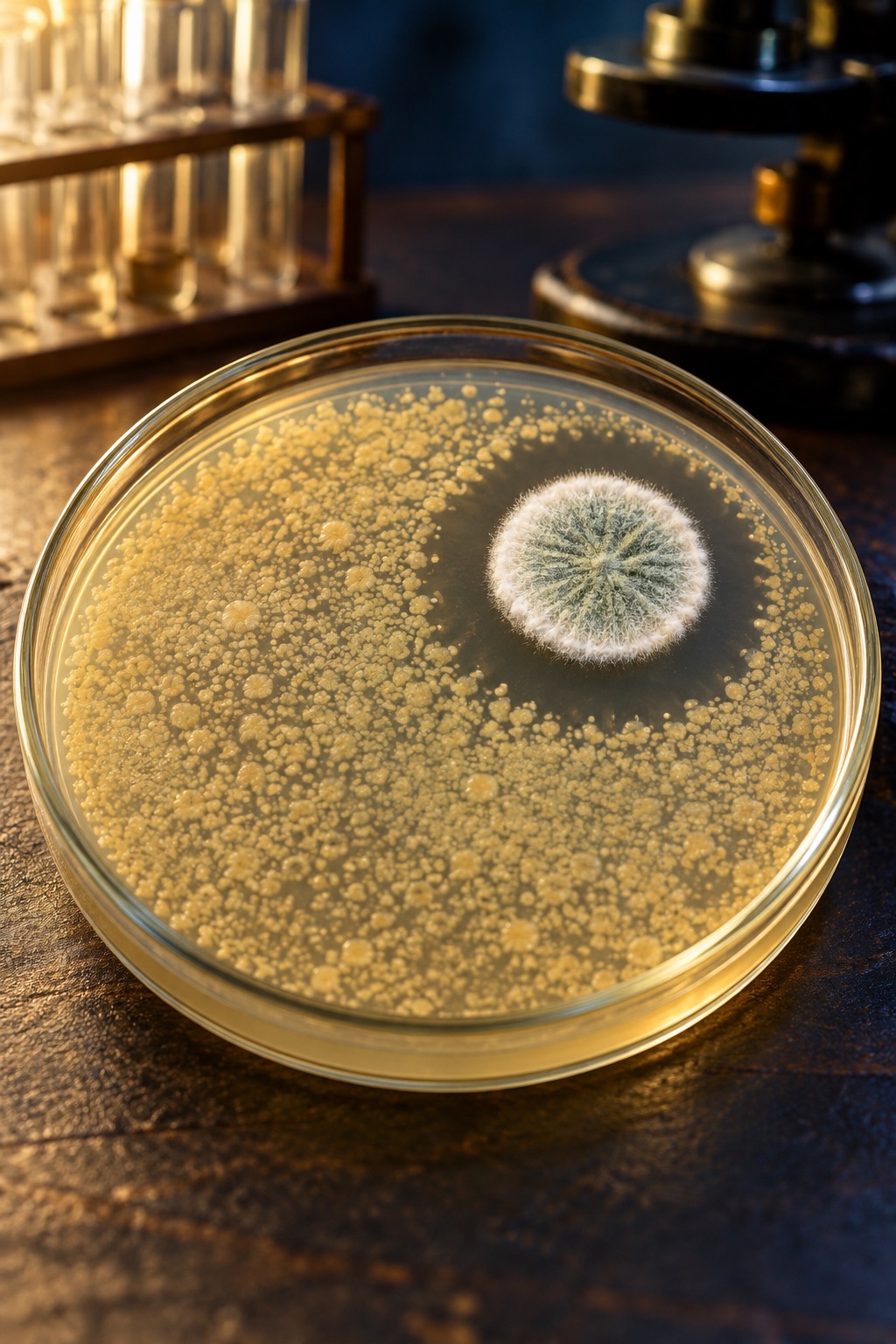
AI-generated conceptual illustration of a laboratory culture plate with a mould colony and a clear zone where bacterial growth is inhibited. It is not Fleming’s historical plate, a real specimen, or documentary evidence. Prompt: “Conceptual editorial science illustration, not a historical photograph: close view of a 1920s-era glass petri dish with a pale mould colony and a clear ring in a field of bacterial growth, suggesting the observation that led to penicillin. No label, handwriting, real person, lab logo, text, or claim to depict Alexander Fleming’s actual culture plate. Museum-science illustration, muted cream, amber, and deep blue, vertical 4:5 crop.” Generated 2026-10-29; no external source or documentary role.
In 1928, Alexander Fleming noticed that a mould inhibited bacterial growth and named the active substance penicillin. But his extract was unstable, so the discovery was not yet a ready medicine. In the late 1930s, a University of Oxford team set out to turn the finding into a drug; penicillin was tested in infected mice in 1940 and began to be used in patients in 1941.