A little wonder, every day
A sea slug retains borrowed chloroplasts
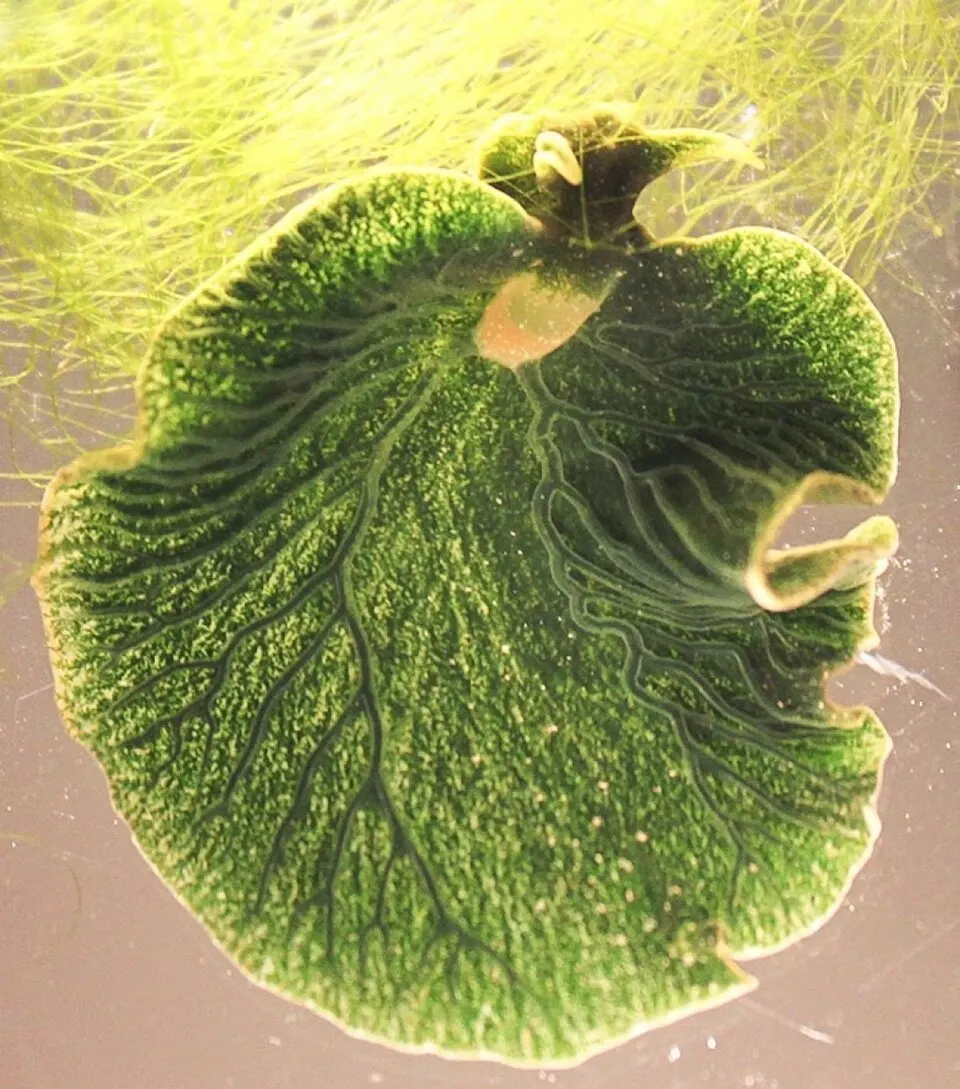
Справжнє зображення Elysia chlorotica з наукової публікації, зі збереженими хлоропластами / Actual Elysia chlorotica image from a scientific publication, showing retained chloroplasts. Credit: Karen N. Pelletreau et al.; CC BY 4.0. https://creativecommons.org/licenses/by/4.0 Source: https://commons.wikimedia.org/?curid=38619279
Listen to fact0:00 / —
The sea slug Elysia chlorotica can retain functional chloroplasts from algae it eats. They continue photosynthesis inside its tissues, a phenomenon called kleptoplasty. The slug neither becomes a plant nor creates these chloroplasts from scratch. The claim that no other animals do this is false: other sea slugs also retain algal chloroplasts.