WattSearch
Your WattLeaderboard
Language
Autoplay narration
Appearance

Feedback

Have a question or an idea? Something not working? Send us a message.

What would you like to share?
Up to 3 files, 5 MB each, 12 MB total.
Or contact us directly

Direct contacts open a separate chat or email. Files attached here are not included.

arohalya@gmail.com
A little wonder, every day

Fact 1654 — Jules Verne’s Moon voyage

AI-generated cover image (created 2026-10-19): a generic open antique book, astronomical globe and cannon model evoke Verne’s fictional lunar voyage. Exact prompt: “Photorealistic editorial cover for Jules Verne's 1865 lunar voyage: an antique open blank novel beside a brass astronomical globe and a small engraved-style model of a giant 19th-century cannon aimed toward a luminous Moon, dramatic but realistic tabletop scene, vertical 4:5. Fictional literary concept, no readable text, no logos, no claim this was real engineering.”
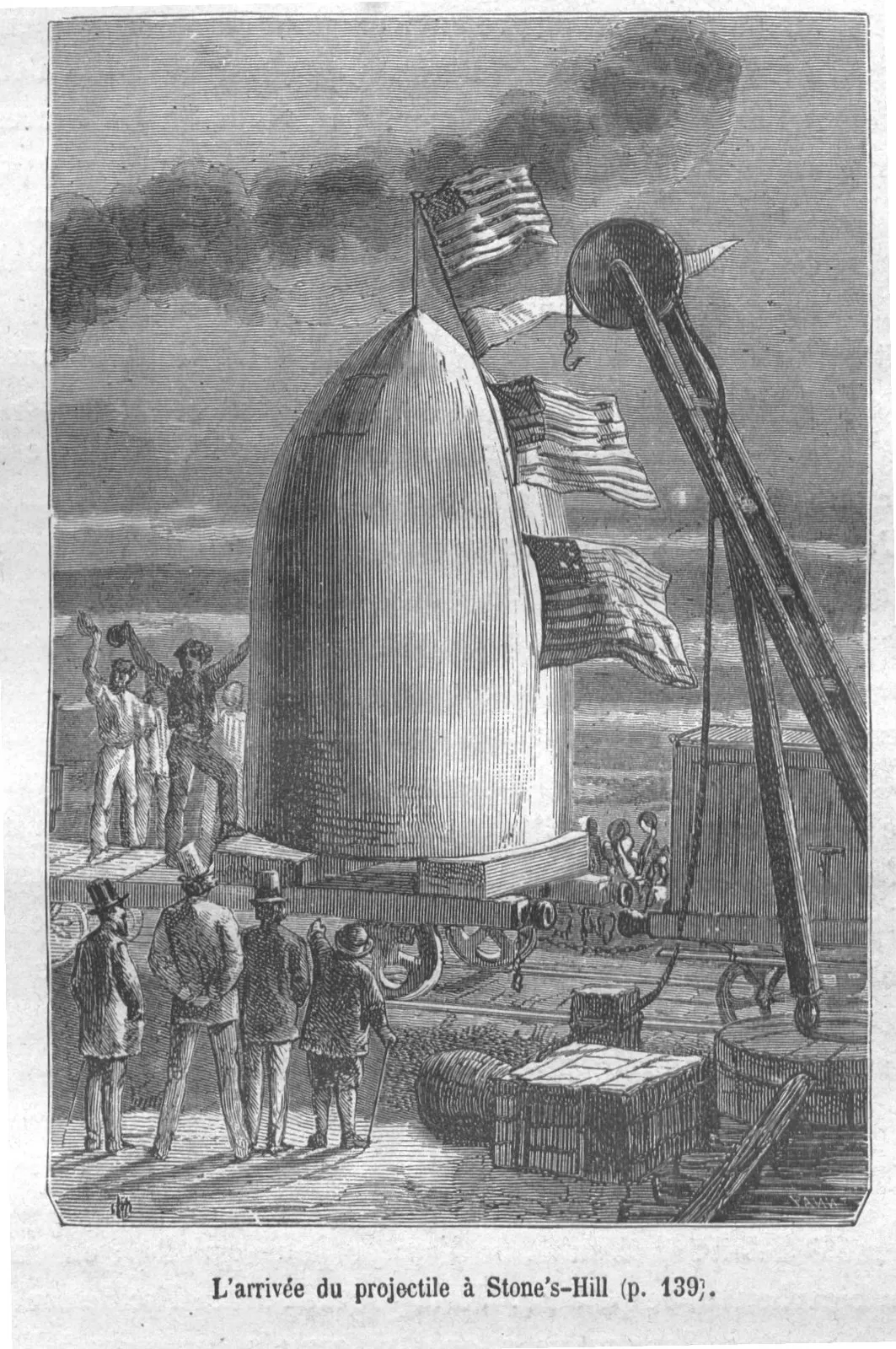
Documentary reproduction of Henri de Montaut’s and François Pannemaker’s 1865 illustration, “The arrival of the projectile at Stone-Hill,” from Verne’s novel. It depicts the fictional projectile/cannon project, not a real spaceflight. The original work is public domain; Commons notes jurisdictional details and identifies the scanned reproduction as public domain in the U.S. No edits. Original: https://commons.wikimedia.org/wiki/File:Arrivee_Projectile_DTAL.jpg.
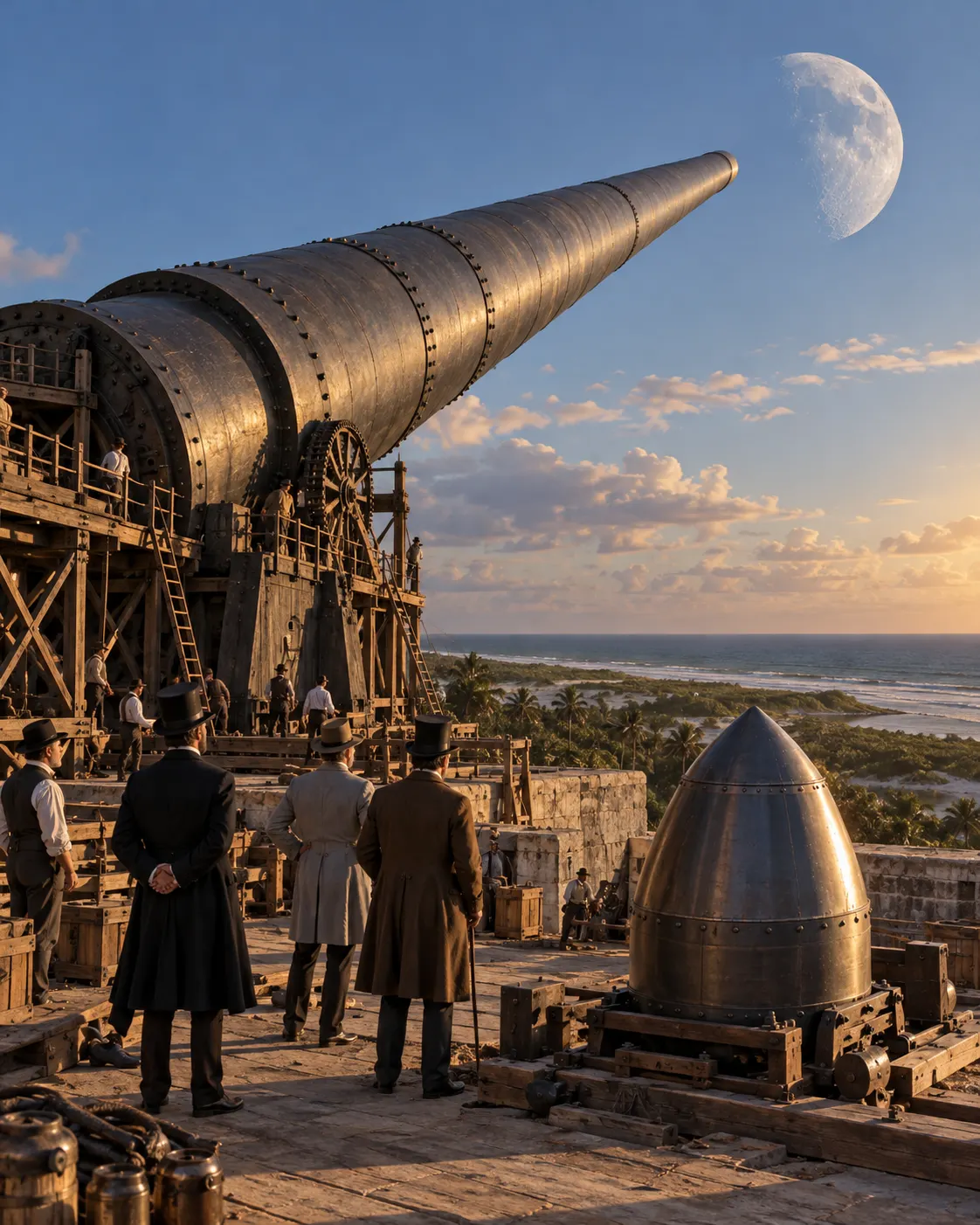
AI-generated editorial reconstruction (created 2026-10-19) of the novel’s imaginary cannon launch site; it is not real history or viable engineering. Exact prompt: “Photorealistic editorial reconstruction of a 19th-century fictional lunar cannon project inspired by Jules Verne: an enormous iron cannon barrel and a compact projectile capsule at a Florida-like coastal launch site, engineers in period clothing looking on, moon visible low in the sky, vertical 4:5. Clearly imagined literary scene, not real history or viable engineering; no readable text or logos.”
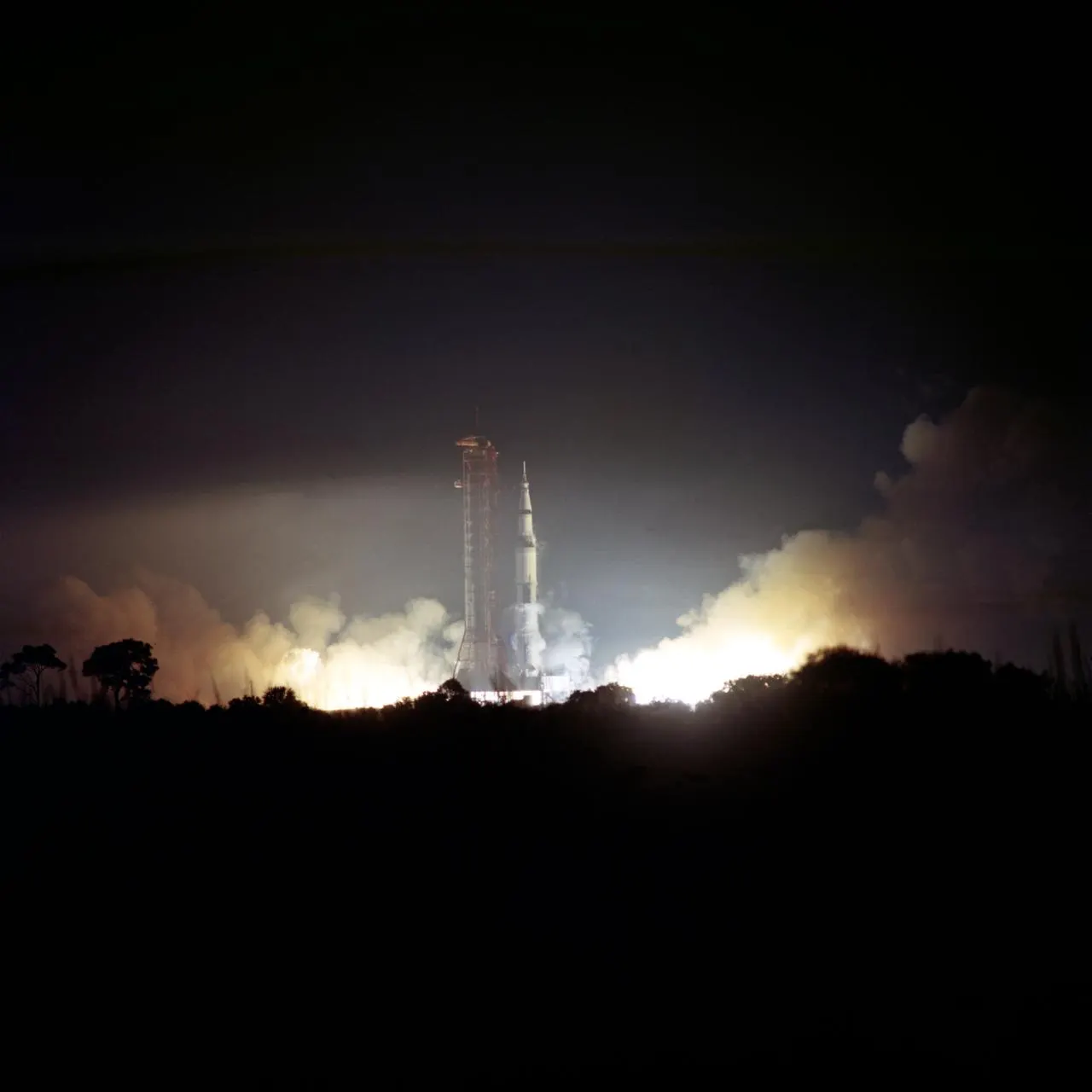
NASA documentary photograph of the Apollo 17 Saturn V launch on 7 December 1972. Author not identified on the source file page; public domain in the U.S. as NASA-created material. Original: https://commons.wikimedia.org/wiki/File:Apollo_17_launch,_December_7,_1972.jpg; NASA image record S72-55482: https://images.nasa.gov/details/S72-55482. No edits.
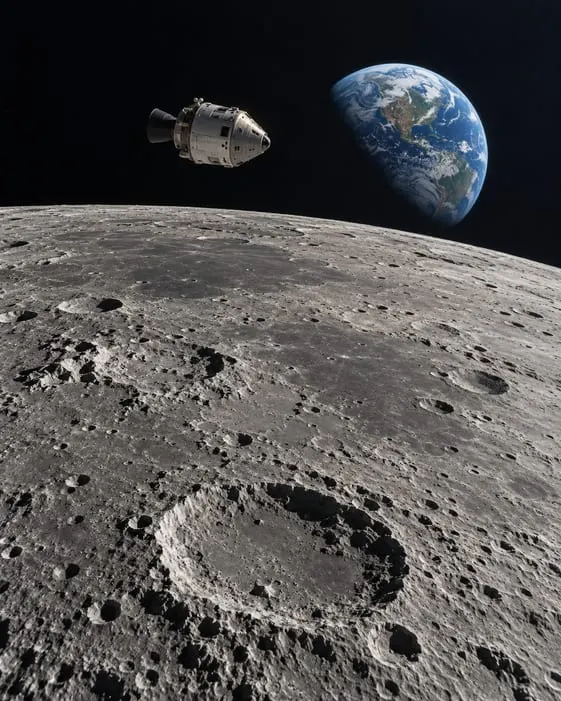
оптимізовано з `media/ai-lunar-flyby-visualization.png`: 561×701 px (половина початкової ширини й висоти), JPEG quality 82.

AI-generated cover image (created 2026-10-19): a generic open antique book, astronomical globe and cannon model evoke Verne’s fictional lunar voyage. Exact prompt: “Photorealistic editorial cover for Jules Verne's 1865 lunar voyage: an antique open blank novel beside a brass astronomical globe and a small engraved-style model of a giant 19th-century cannon aimed toward a luminous Moon, dramatic but realistic tabletop scene, vertical 4:5. Fictional literary concept, no readable text, no logos, no claim this was real engineering.”

Listen to fact0:00 / —

In Jules Verne’s 1865 novel *From the Earth to the Moon*, a crew travels toward the Moon inside a projectile fired from a giant cannon. In the sequel, *Around the Moon* (1870), the characters circle the Moon but do not land; there are no solar sails in these novels. Some details resemble real Apollo flights, including a launch from Florida and a crewed trip around the Moon, but Verne’s cannon was not a rocket, and a landing came only in the separate Apollo 11 mission in 1969.