Cloning Dolly the Sheep
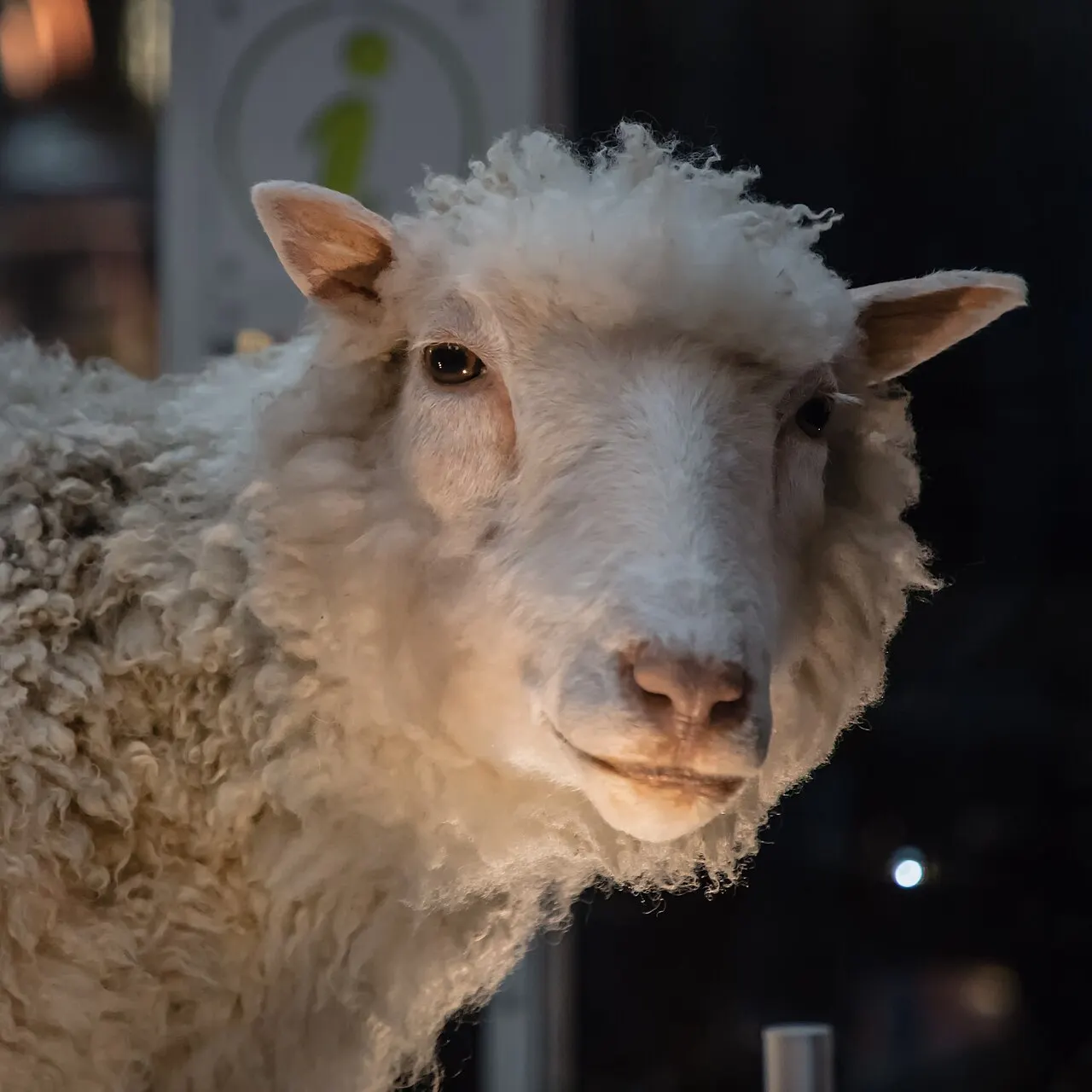
Dolly the sheep at the National Museum of Scotland.
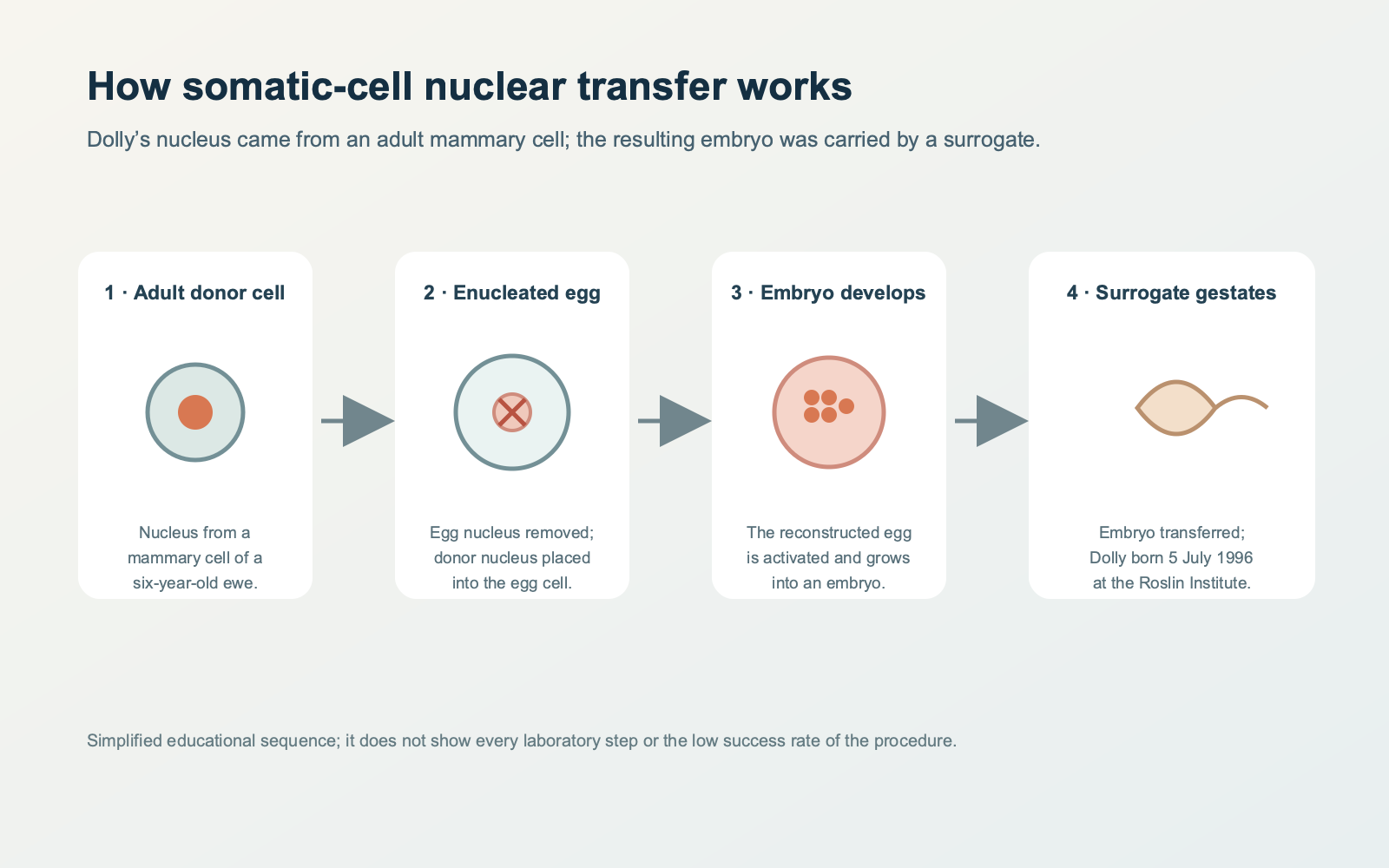
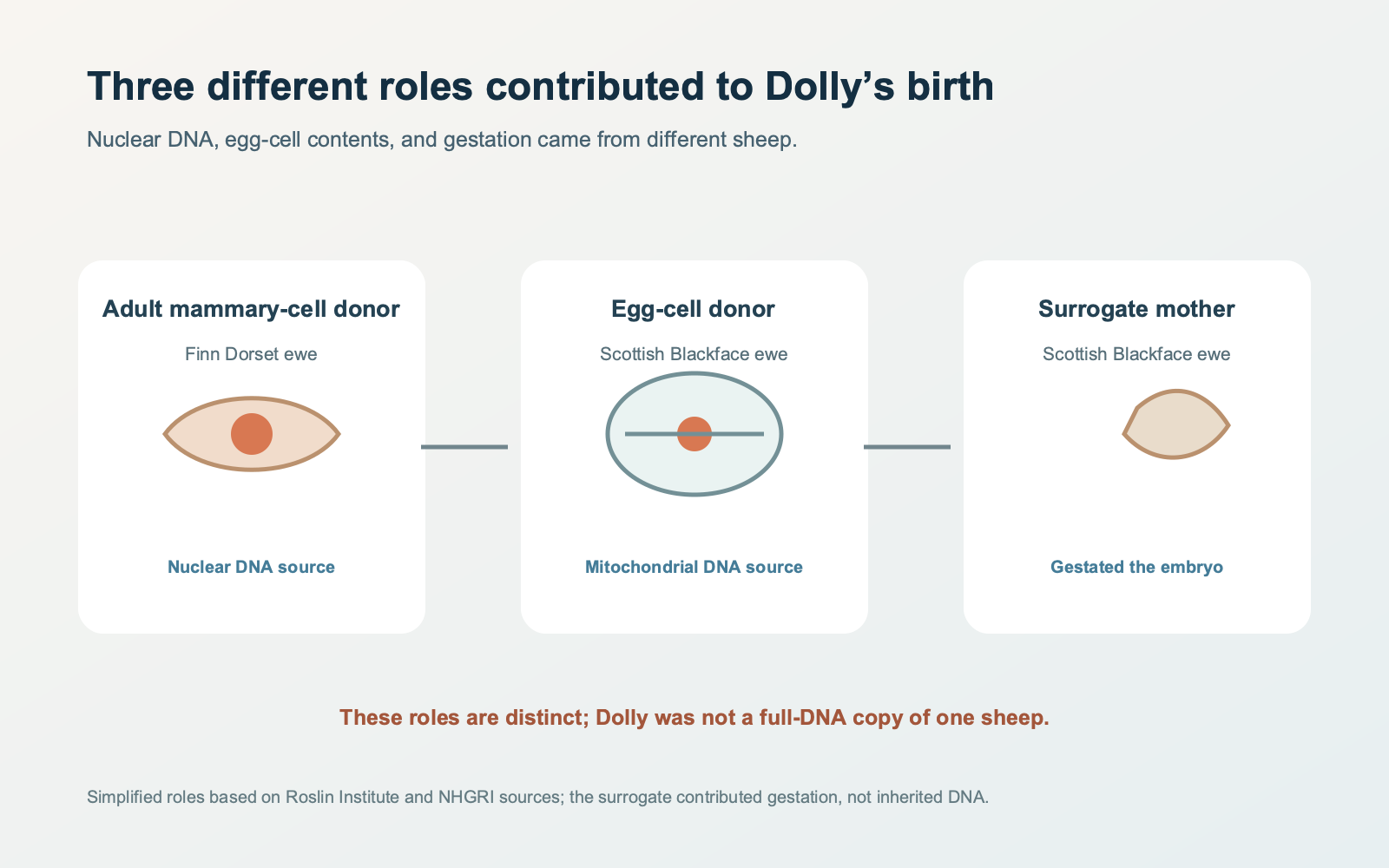
Dolly was born on 5 July 1996 at the Roslin Institute and became the first mammal cloned from an adult animal cell. The team used somatic cell nuclear transfer: they moved the nucleus from a six-year-old sheep’s mammary cell into an egg whose own nucleus had been removed. They then transferred the resulting embryo to a surrogate mother.
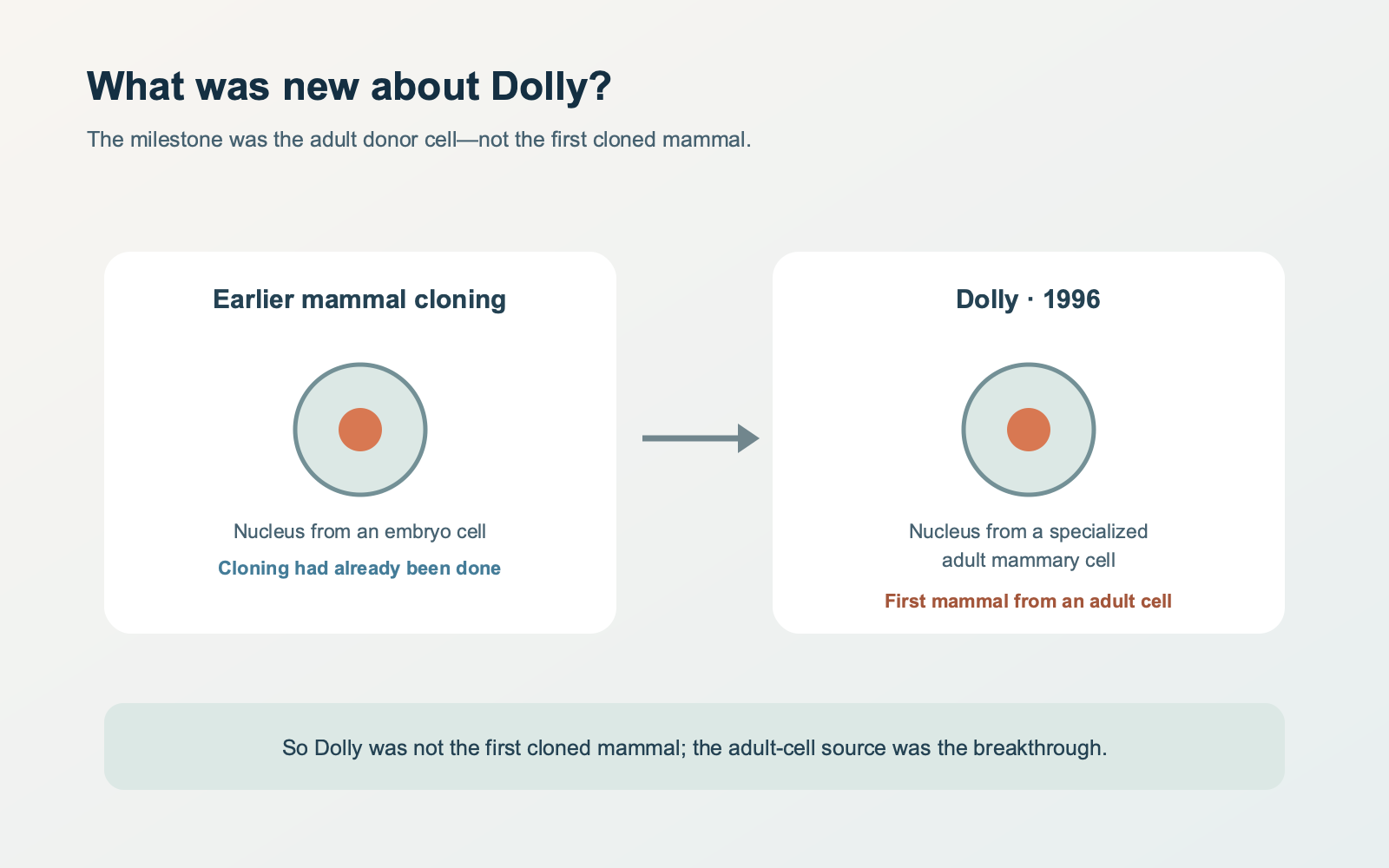
Dolly was not the first cloned mammal: animals had previously been cloned from embryonic cells. The new step was using a specialized cell from an adult animal as the source of the nucleus. Dolly’s birth was announced on 22 February 1997, the same month the scientific report of the experiment appeared in *Nature*.
The nucleus used for Dolly came from a white-faced Finn Dorset sheep; the egg and surrogate mother came from Scottish Blackface sheep. Dolly’s white face was an early visible clue: if she had been genetically related to her surrogate mother, she would have had a black face. A clone is not a copy of every DNA molecule from the donor: mitochondrial DNA comes mainly from the egg. The 1997 paper also reported live lambs produced from adult mammary-gland, fetal, and embryonic cell populations.