Icons and saint veneration cross tradition boundaries
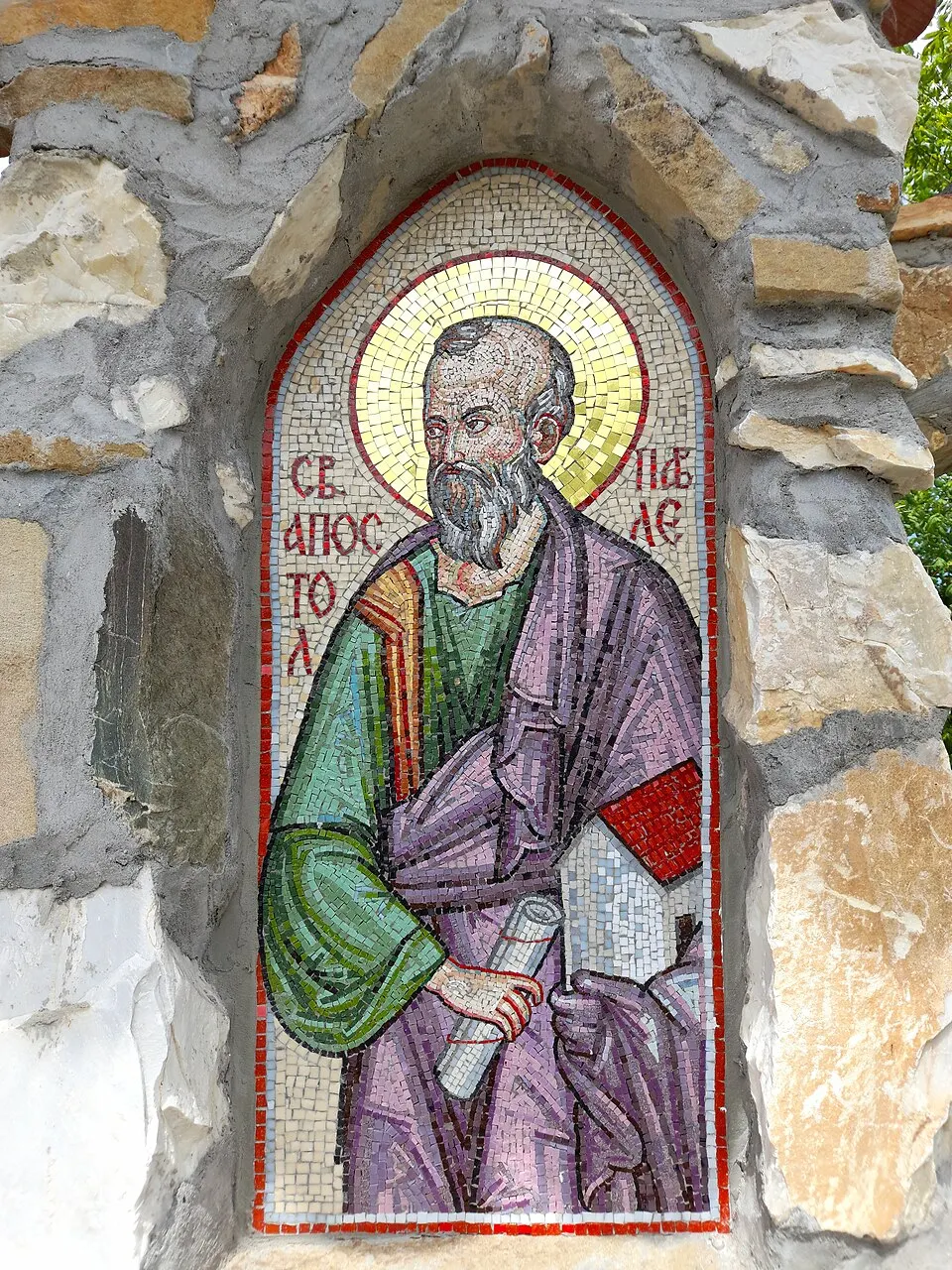
Мозаїчна ікона Павла в Сербії; пізніший релігійний образ, не прижиттєвий портрет / Paul mosaic icon in Serbia; later religious image rather than a lifetime likeness. Credit: Bis-Serjetà?; CC0. http://creativecommons.org/publicdomain/zero/1.0/deed.en Source: https://commons.wikimedia.org/wiki/File:Church_of_Saints_Peter_and_Paul%2C_Kriva_Reka_-_Saint_Paul_Mosaic_Icon.jpg
Orthodox and Catholic traditions both venerate saints and sacred images, with differing forms and theological emphases. Orthodox explanation relates an icon’s honor to the represented person rather than wood or paint. Catholic teaching likewise distinguishes image veneration from worship of God. A simple opposition of Orthodox icons versus Catholic saints is therefore misleading.