Ancient air bubbles in ice cores
As snow gradually compacts into glacial ice, some surrounding air is trapped in pores and eventually sealed into tiny bubbles. Analyzing these bubbles in ice cores from Antarctica and Greenland lets scientists measure ancient atmospheric gas concentrations, including carbon dioxide and methane. Some Antarctic records span hundreds of thousands of years, and individual cores reach further back.
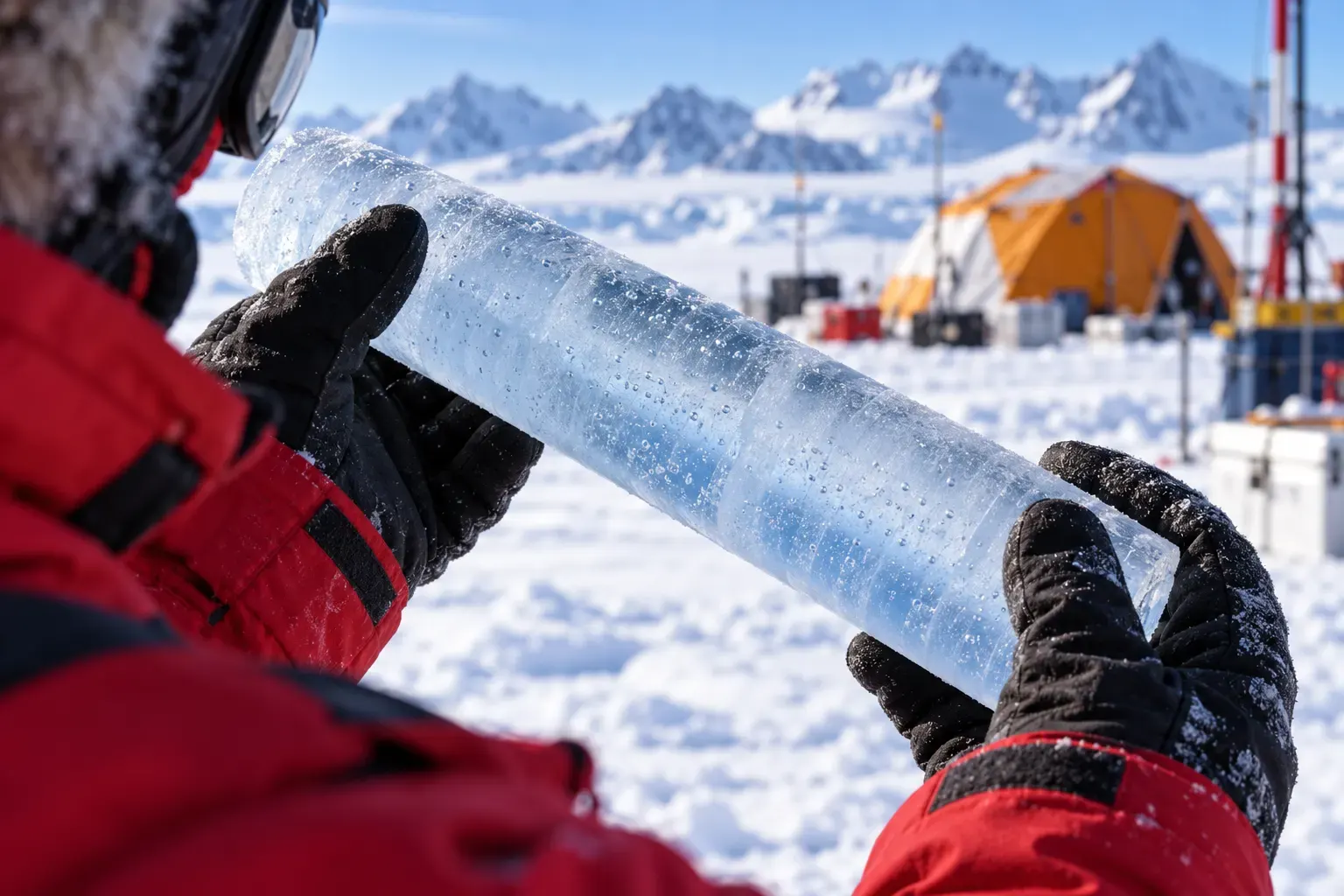
Illustration is AI-generated and conceptual, not an actual core.
The isotopic composition of the ice itself, dust, volcanic ash, and other impurities help reconstruct temperature and environmental changes. An important dating detail is that gas in bubbles is usually younger than the surrounding ice: air remains mobile in firn snow before it is fully sealed. Researchers therefore date the ice and gas separately and account for this difference.