Tambora and the Year Without a Summer
The powerful April 1815 eruption of Tambora in Indonesia released large amounts of sulfur dioxide into the atmosphere. In the stratosphere it formed sulfate aerosols that reduced incoming solar energy and cooled much of the Northern Hemisphere. The following year, 1816, became known as the “Year Without a Summer”: failed harvests contributed to food crises, famine, and sharply higher prices in parts of Europe and North America; impacts were also recorded in China and other regions.
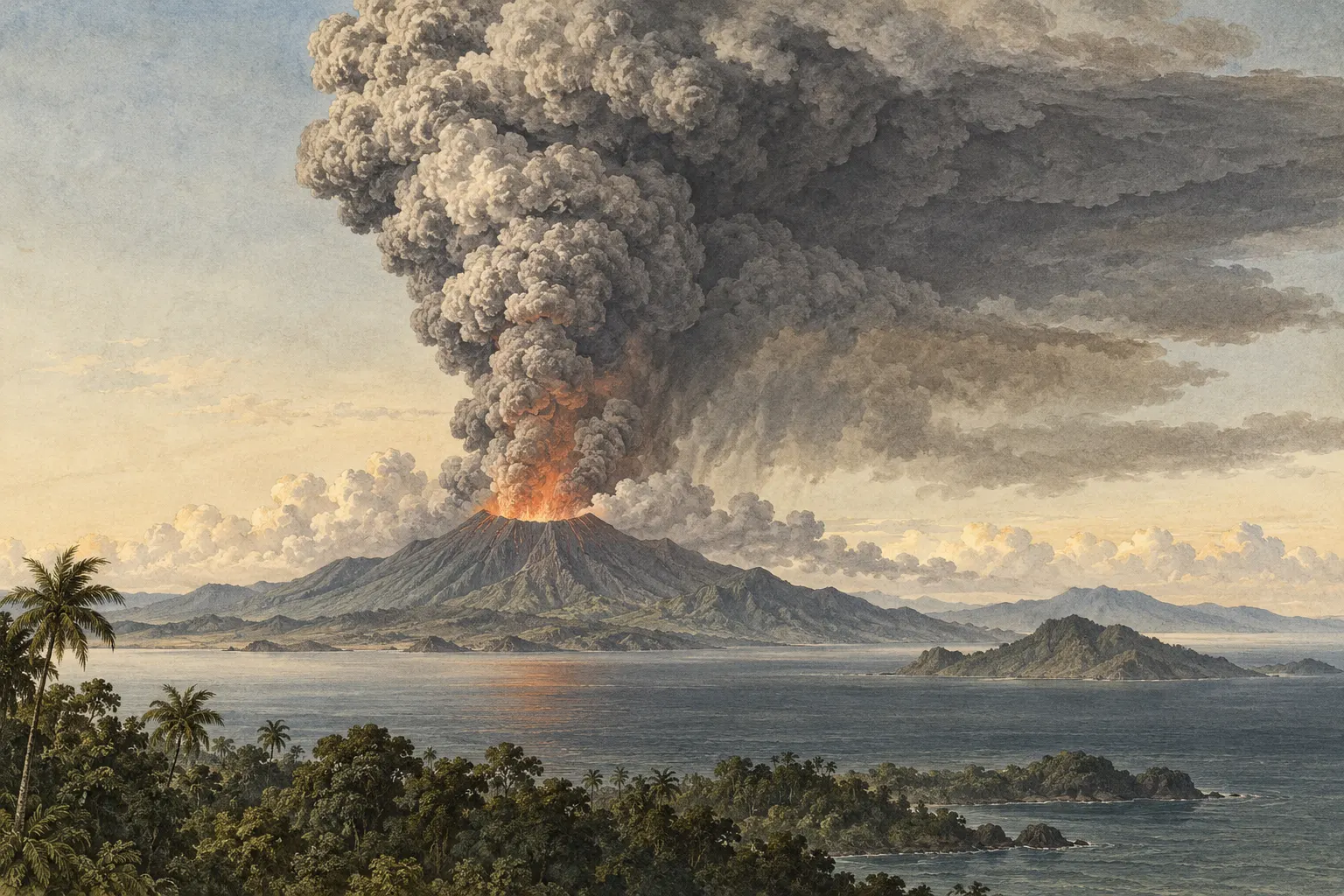
The 1815 Tambora eruption — an AI-generated historical concept illustration.