WattSearch
Your WattLeaderboard
Language
Autoplay narration
Appearance

Feedback

Have a question or an idea? Something not working? Send us a message.

What would you like to share?
Up to 3 files, 5 MB each, 12 MB total.
Or contact us directly

Direct contacts open a separate chat or email. Files attached here are not included.

arohalya@gmail.com
A little wonder, every day

Pigeons guiding a missile
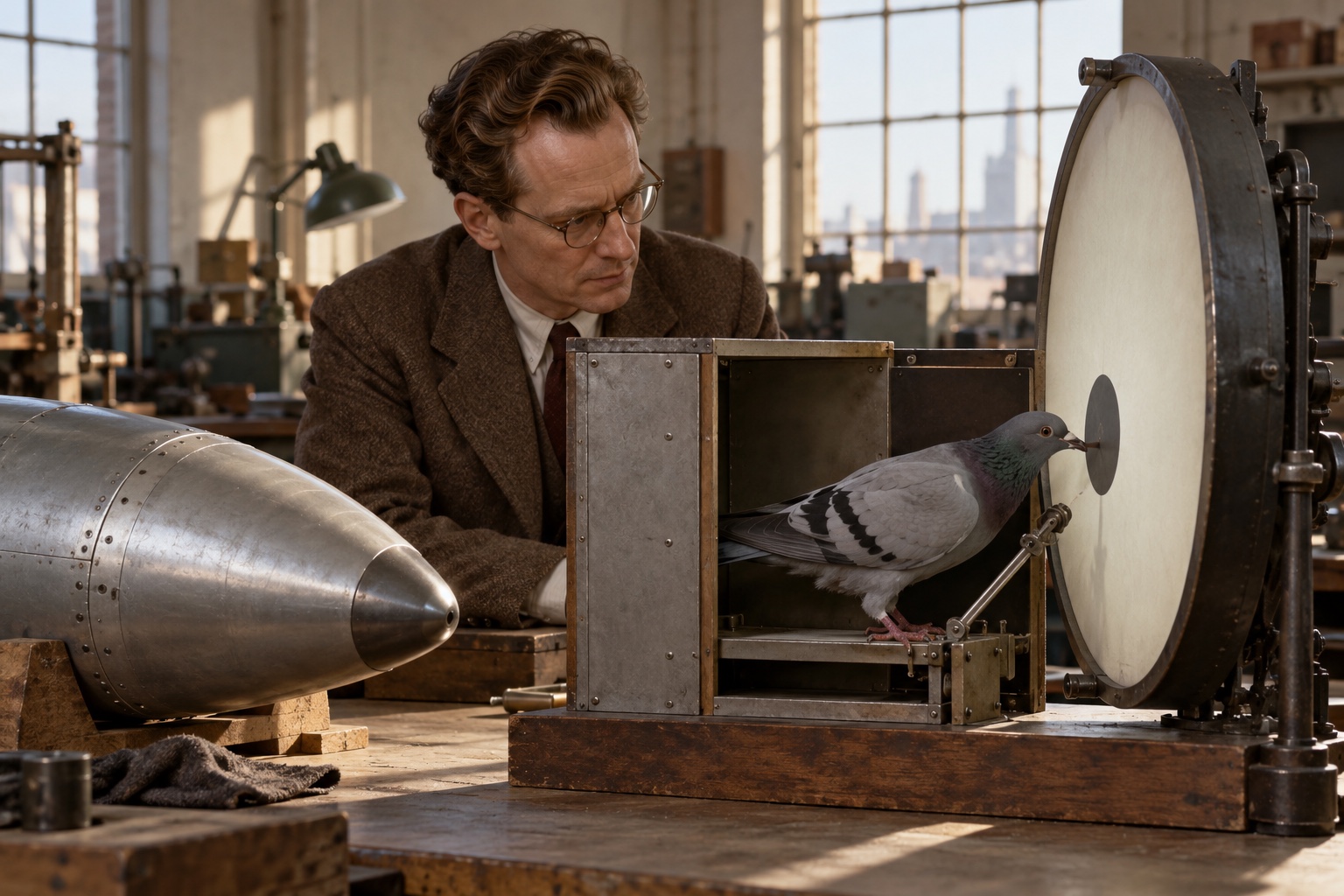
AI-generated cover illustration / Титульна AI-згенерована ілюстрація. A period-style reconstruction of a pigeon pecking a target in a laboratory test fixture beside an unarmed prototype nose cone. Not a documentary photograph.
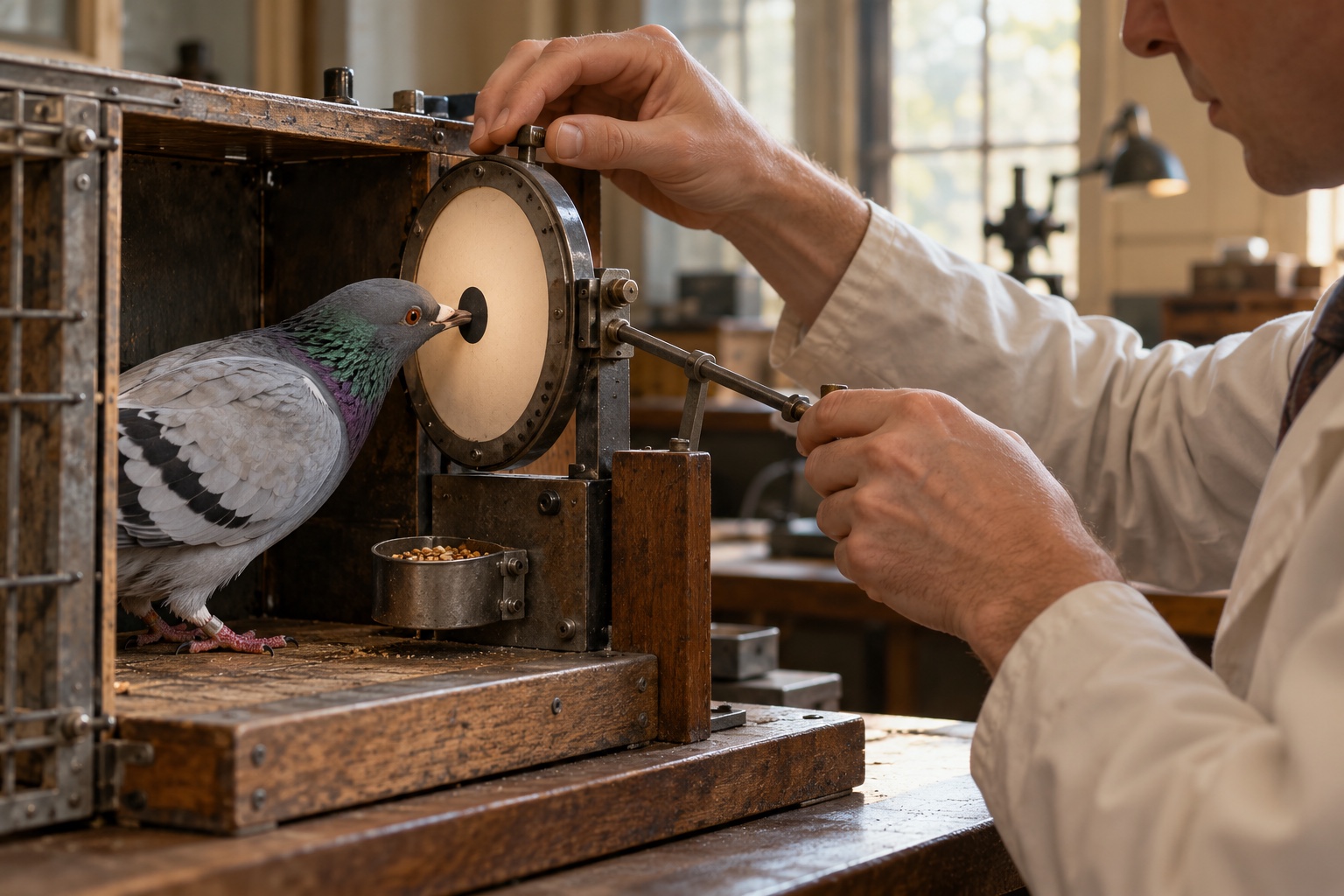
AI-generated supporting illustration / AI-згенерована додаткова ілюстрація. Close view of a pigeon pecking a target image while a researcher adjusts the test mechanism; reconstruction, not a documentary photograph.
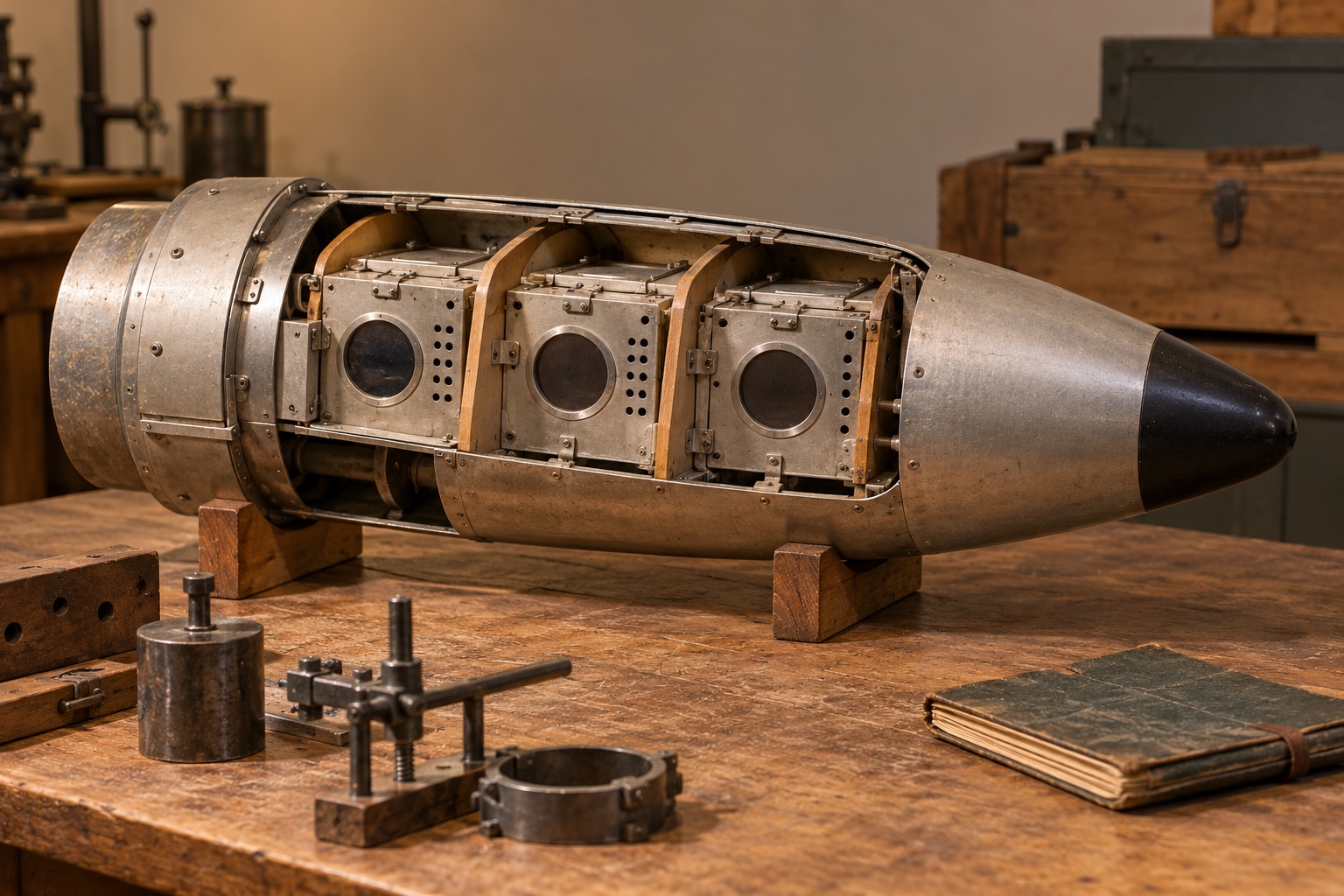
AI-generated supporting illustration / AI-згенерована додаткова ілюстрація. Reconstructed cutaway of the proposed nose cone with three separate pigeon compartments and viewing windows, based on the museum description; not the actual artifact.

AI-generated cover illustration / Титульна AI-згенерована ілюстрація. A period-style reconstruction of a pigeon pecking a target in a laboratory test fixture beside an unarmed prototype nose cone. Not a documentary photograph.

Listen to fact0:00 / —

During World War II, psychologist B. F. Skinner proposed guiding a missile with trained pigeons. The birds would peck at an image of the target on a screen, and a system would turn their movements into steering commands. Project Pigeon received funding in 1943 but was discontinued in 1944; the weapon was never used in combat. The U.S. Navy revived the idea as Project Orcon in 1948, then ended it in 1953 as electronic guidance became more promising.