the stethoscope and Laennec’s first trial
In 1816, René Laennec described how, while examining a young patient suspected of heart disease, he rolled a sheet of paper into a tube and heard the heart sounds more clearly than by placing his ear directly on her chest. In his account, he mentioned both practical and propriety-related reasons for avoiding direct contact. The paper tube was later replaced by a wooden instrument, a predecessor of the stethoscope. So the story about embarrassment has a basis in his own account, but it was not the only reason for the invention. The illustration is AI-generated.
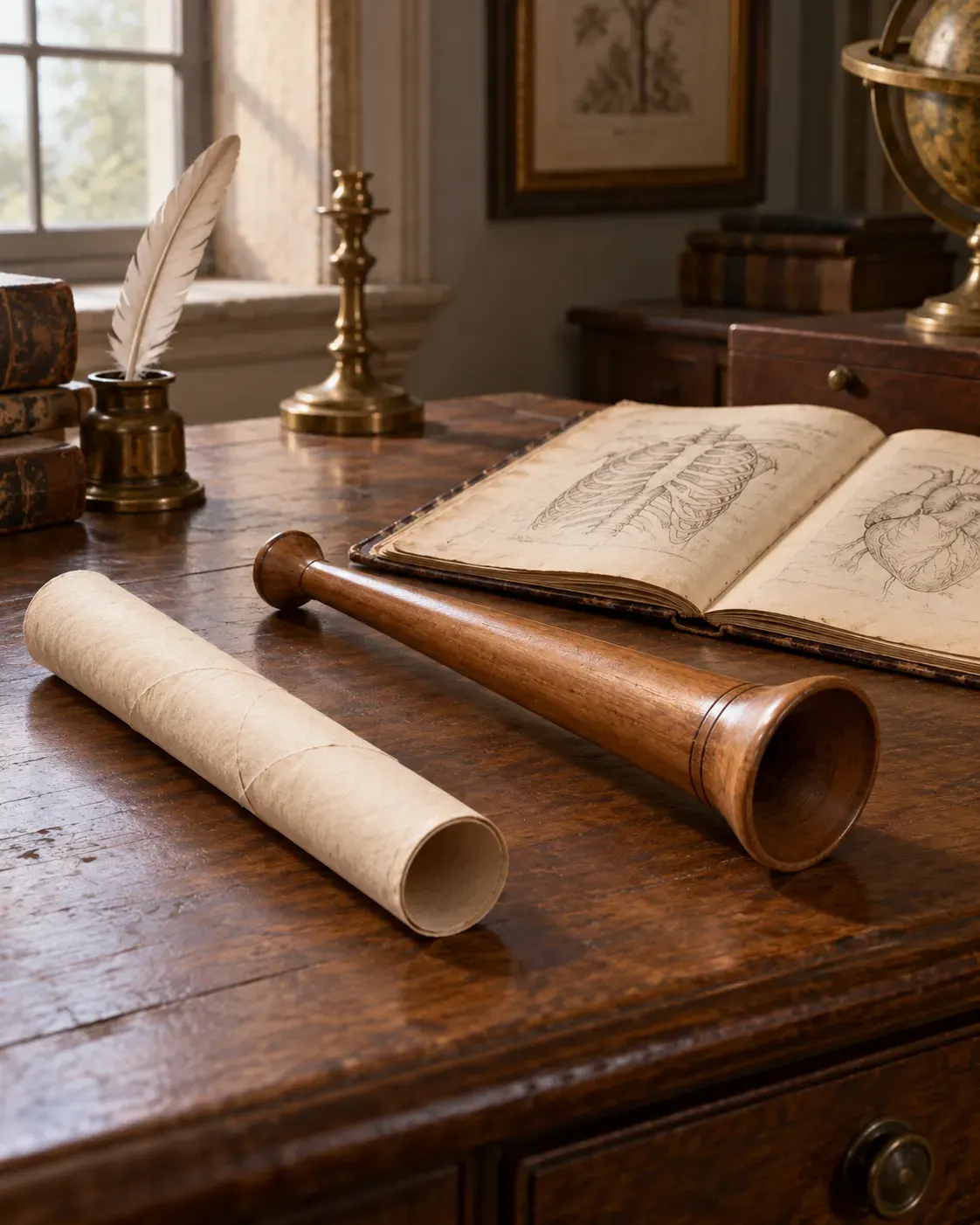
AI-generated symbolic still life of a rolled paper tube, wooden listening tube, and old notebook. No patient or physician is shown; not a historical reconstruction or documentary artifact. Creator: OpenAI image generation. Prompt summary: early nineteenth-century desk scene illustrating the paper-tube origin story. No external media used.