WattSearch
Your WattLeaderboard
Language
Autoplay narration
Appearance

Feedback

Have a question or an idea? Something not working? Send us a message.

What would you like to share?
Up to 3 files, 5 MB each, 12 MB total.
Or contact us directly

Direct contacts open a separate chat or email. Files attached here are not included.

arohalya@gmail.com
A little wonder, every day

Heinlein’s waterbed

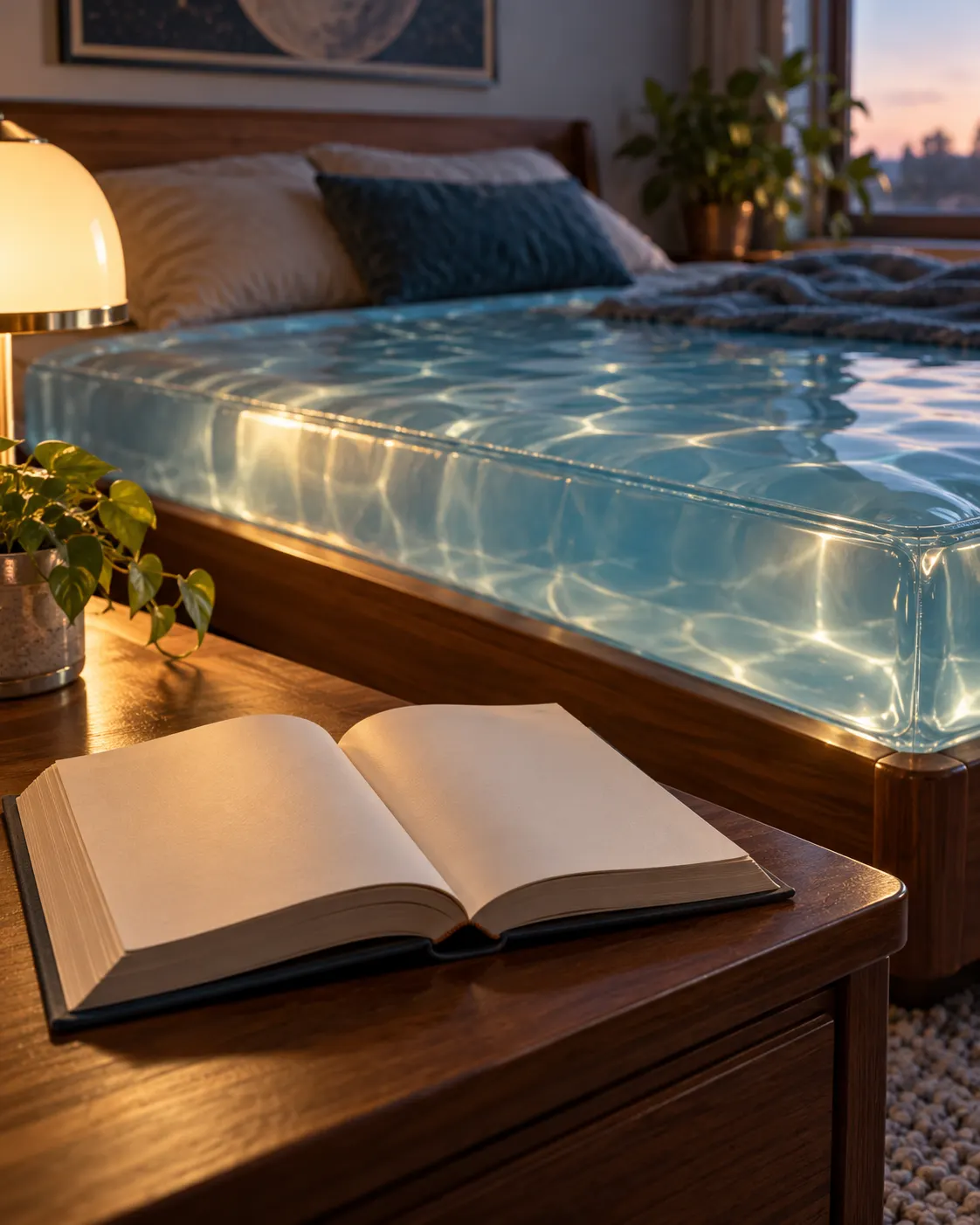
AI-generated cover image (created 2026-10-19). A photorealistic editorial scene pairing an open blank book with a clear waterbed; it illustrates the connection between Heinlein’s fictional “hydraulic bed” and later waterbeds without depicting a specific historical model. Exact generation prompt: “Photorealistic editorial cover for a story about Robert Heinlein's fictional hydraulic bed and Charles Hall's later waterbed design: an open blank science-fiction novel resting beside a clear water-filled mattress in a calm bedroom, vertical 4:5. Generic book and bed only; no readable text, recognizable book cover, logos, or claim the bed is a specific historical model.”
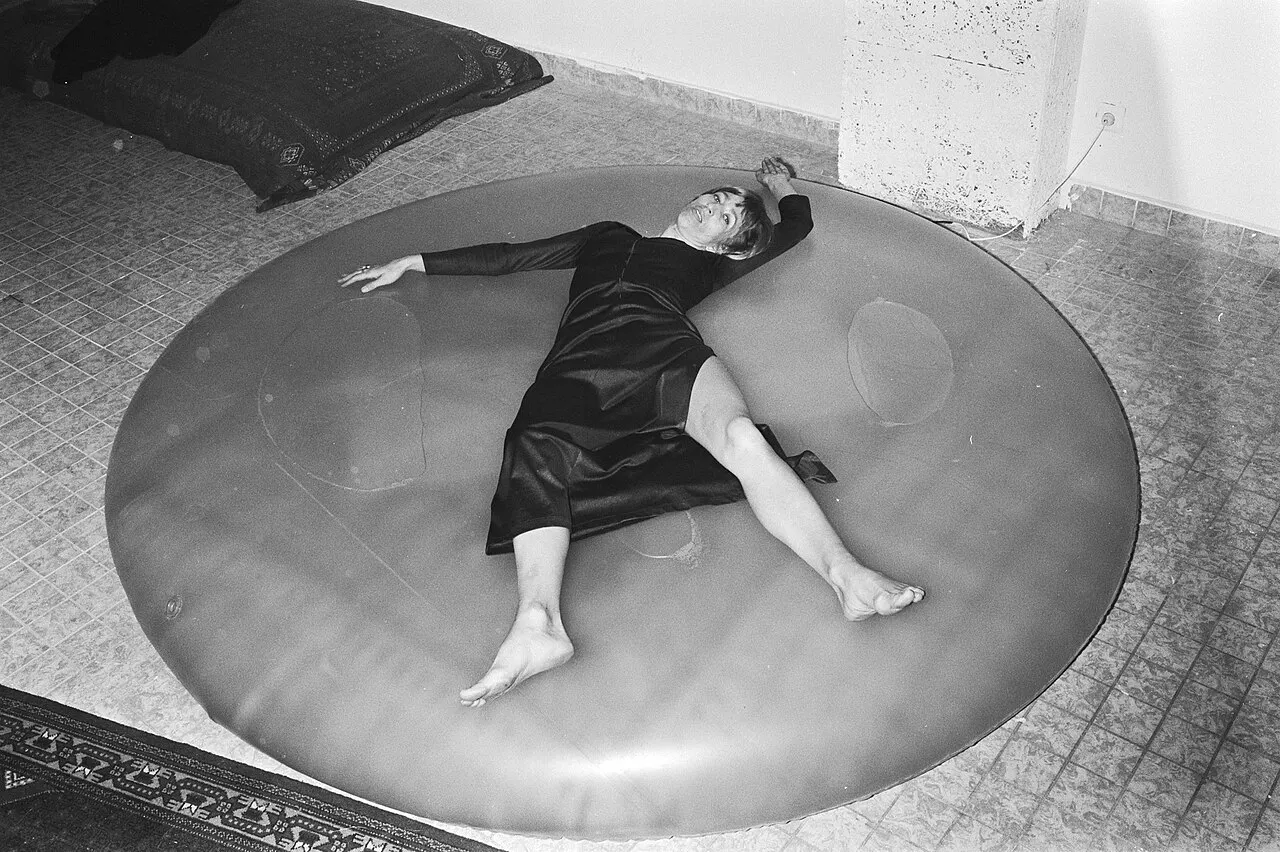
Archival black-and-white photograph of a waterbed demonstration in Amsterdam on 28 May 1971. Photographer: Hans Peters / Anefo; collection and rights holder: Nationaal Archief; Wikimedia Commons license: CC0 1.0. Original file page: https://commons.wikimedia.org/wiki/File:Demonstratie_van_een_waterbed,_Bestanddeelnr_924-5941.jpg. Attribution is not required by CC0; credit retained here for provenance.
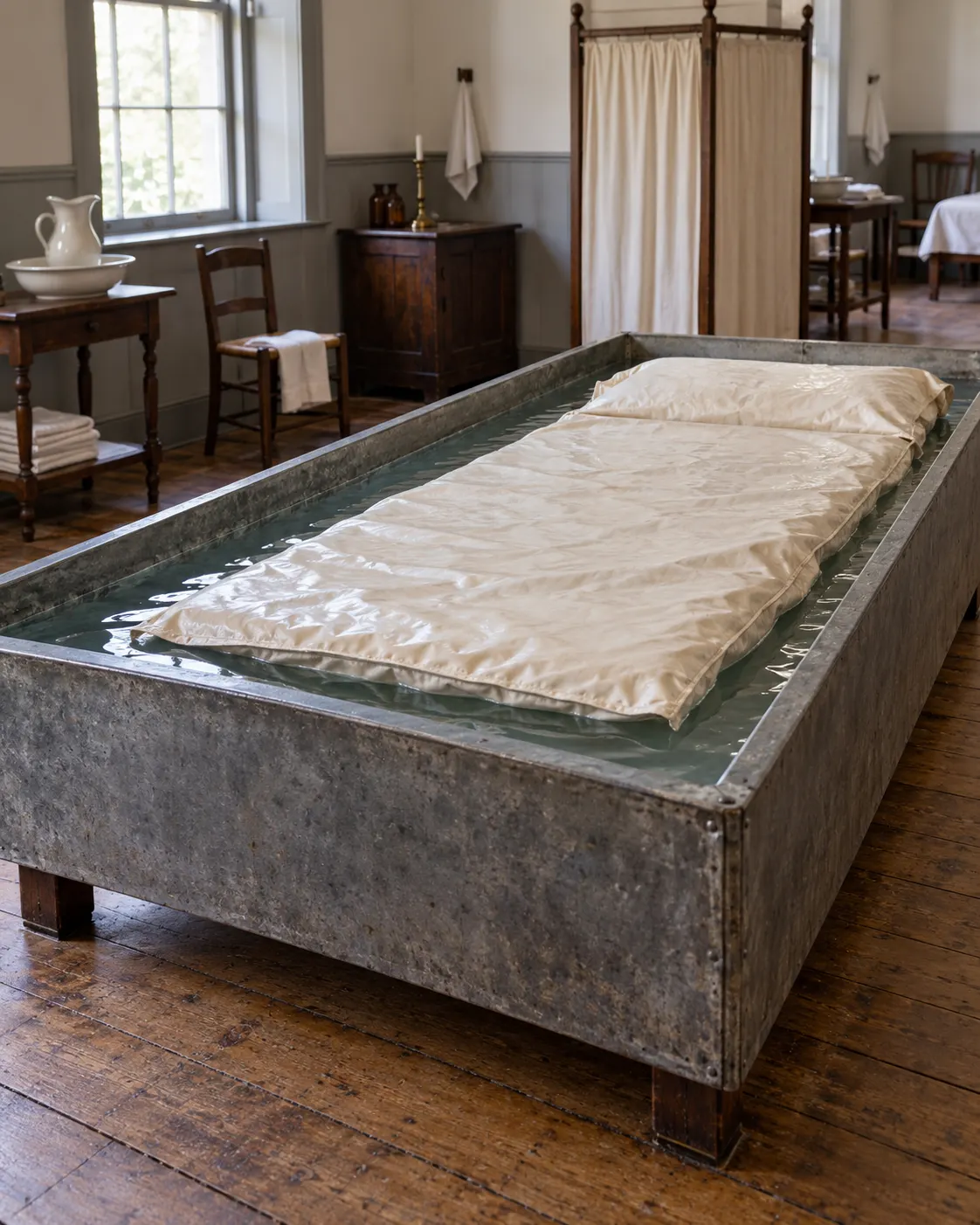
AI-generated historical reconstruction (created 2026-10-19) of the kind of shallow water-filled hydrostatic bed described by Neil Arnott in 1832; illustrative, not a surviving historical image or exact replica. Exact generation prompt: “Photorealistic historical editorial reconstruction of Neil Arnott's early 1830s hydrostatic bed: a simple shallow metal-lined trough filled with water, a loose waterproof sheet and thin mattress floating on top, inside a period hospital room, no patient present, vertical 4:5. Based on a written 1832 description, not a surviving photograph; no labels, text, or claim of exact historical accuracy.”
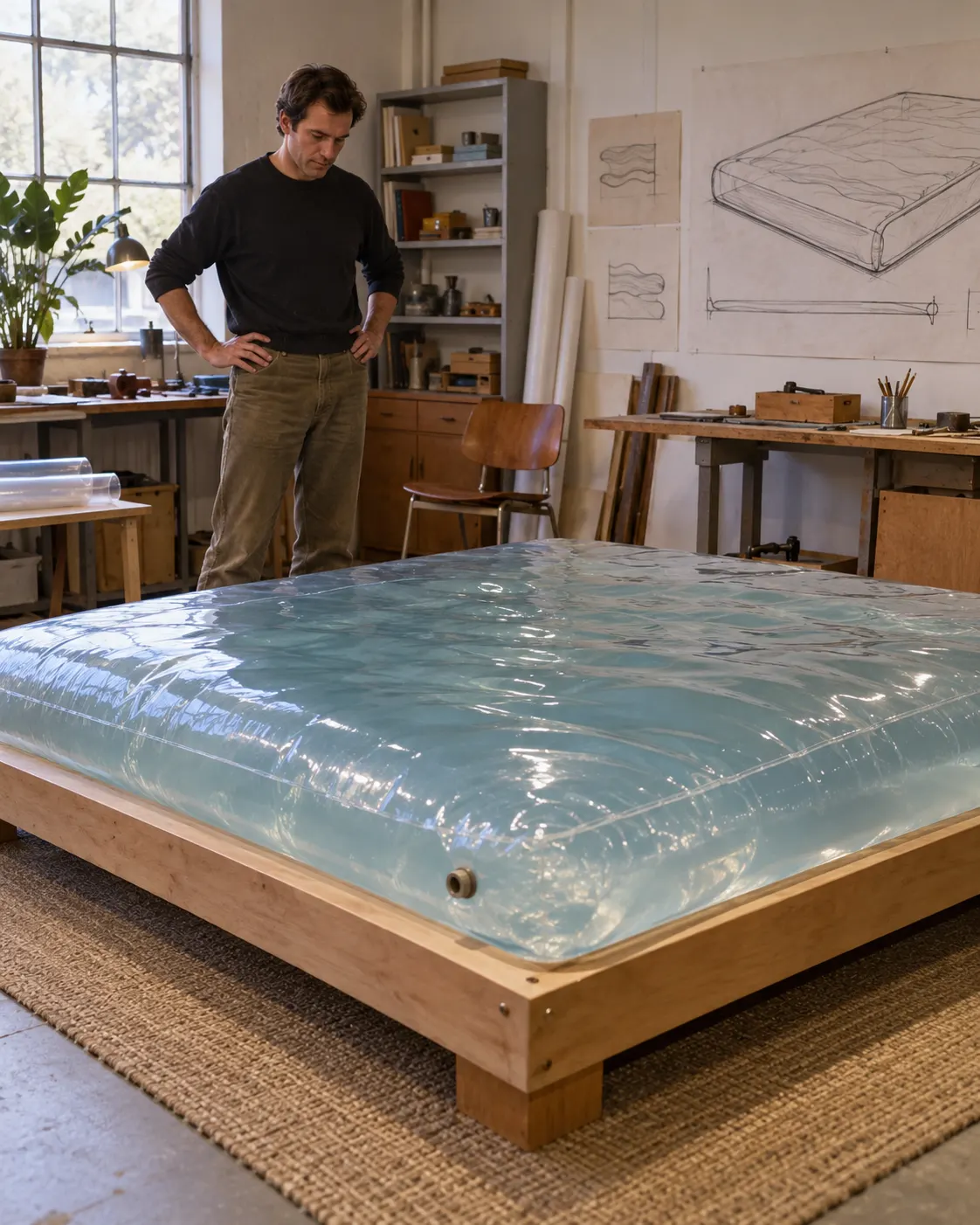
AI-generated editorial reconstruction (created 2026-10-19) of an experimental late-1960s water-filled mattress in a design workshop; not a photograph of Charles Hall or an exact historical prototype. Exact generation prompt: “Photorealistic editorial reconstruction of a 1968 experimental home waterbed prototype being shown in a modest design workshop, a simple plastic water-filled mattress on a low platform, anonymous adult designer standing nearby, vertical 4:5. Generic illustration, not a photograph of Charles Hall or an exact historical prototype; no readable text or logos.”
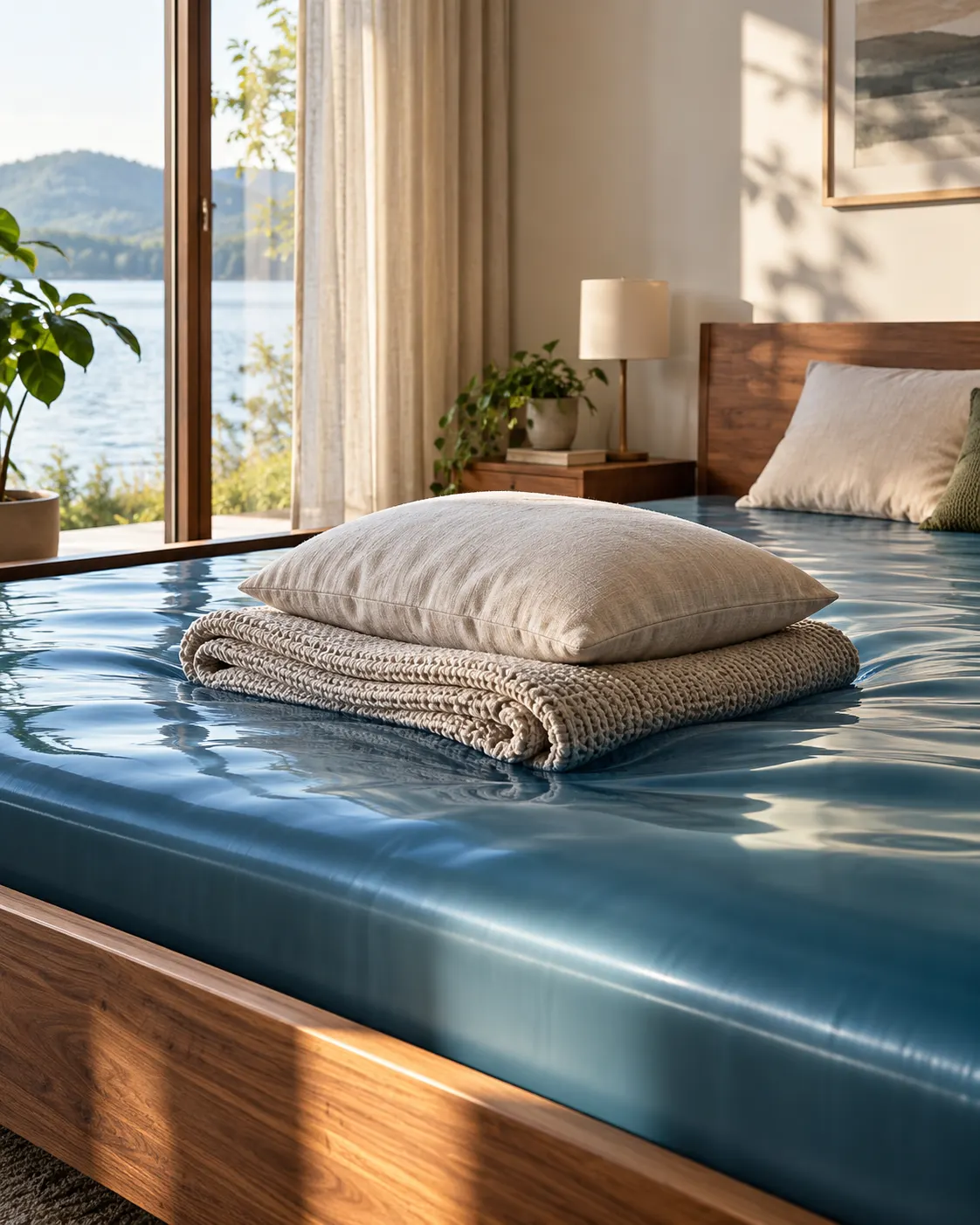
AI-generated editorial image (created 2026-10-19) of a contemporary waterbed in a bright bedroom, illustrating the later product category without identifying a brand. Exact generation prompt: “Photorealistic editorial image of a contemporary bedroom with a waterbed mattress gently conforming to a folded blanket and pillow, soft natural morning light, vertical 4:5. Generic modern product context, no logos or branding, not a specific commercial model.”

AI-generated cover image (created 2026-10-19). A photorealistic editorial scene pairing an open blank book with a clear waterbed; it illustrates the connection between Heinlein’s fictional “hydraulic bed” and later waterbeds without depicting a specific historical model. Exact generation prompt: “Photorealistic editorial cover for a story about Robert Heinlein's fictional hydraulic bed and Charles Hall's later waterbed design: an open blank science-fiction novel resting beside a clear water-filled mattress in a calm bedroom, vertical 4:5. Generic book and bed only; no readable text, recognizable book cover, logos, or claim the bed is a specific historical model.”

Listen to fact0:00 / —

Robert Heinlein’s 1961 novel *Stranger in a Strange Land* describes a “hydraulic bed” in which water supports the body. A few years later, designer Charles Hall developed a modern waterbed for home use: in 1968 he exhibited a mattress with a water-filled plastic cover. The novel therefore preceded this design by about seven years, but waterbeds had existed in other forms earlier.