Fictional handheld screens and modern e-readers

, [CC BY-SA 4.0](https://creativecommons.org/licenses/by-sa/4.0/). Attribution: “Hexafluoride / Wikimedia Commons / CC BY-SA 4.0”; no edits. Downloaded original 2841 × 1728 JPEG and visually checked.](https://xtotam-watt-media-442809139467.s3.eu-central-1.amazonaws.com/facts/229f70c4-e3fe-4348-afa3-95176103b1ff/media/9b8deea7f71df8e5d155b54ebc8d978c8c749aea98f6a413e22a19f50ea5374e/kindle-fourth-generation.webp)
, [CC BY-SA 3.0](https://creativecommons.org/licenses/by-sa/3.0/). Attribution: “NotFromUtrecht / Wikimedia Commons / CC BY-SA 3.0”; no edits. Downloaded original 2256 × 3328 JPEG and visually checked.](https://xtotam-watt-media-442809139467.s3.eu-central-1.amazonaws.com/facts/229f70c4-e3fe-4348-afa3-95176103b1ff/media/3ec510480c0d46f4d8637484372818aa55c20398d16d2e917abf8dab6418f2b3/kindle-third-generation.webp)
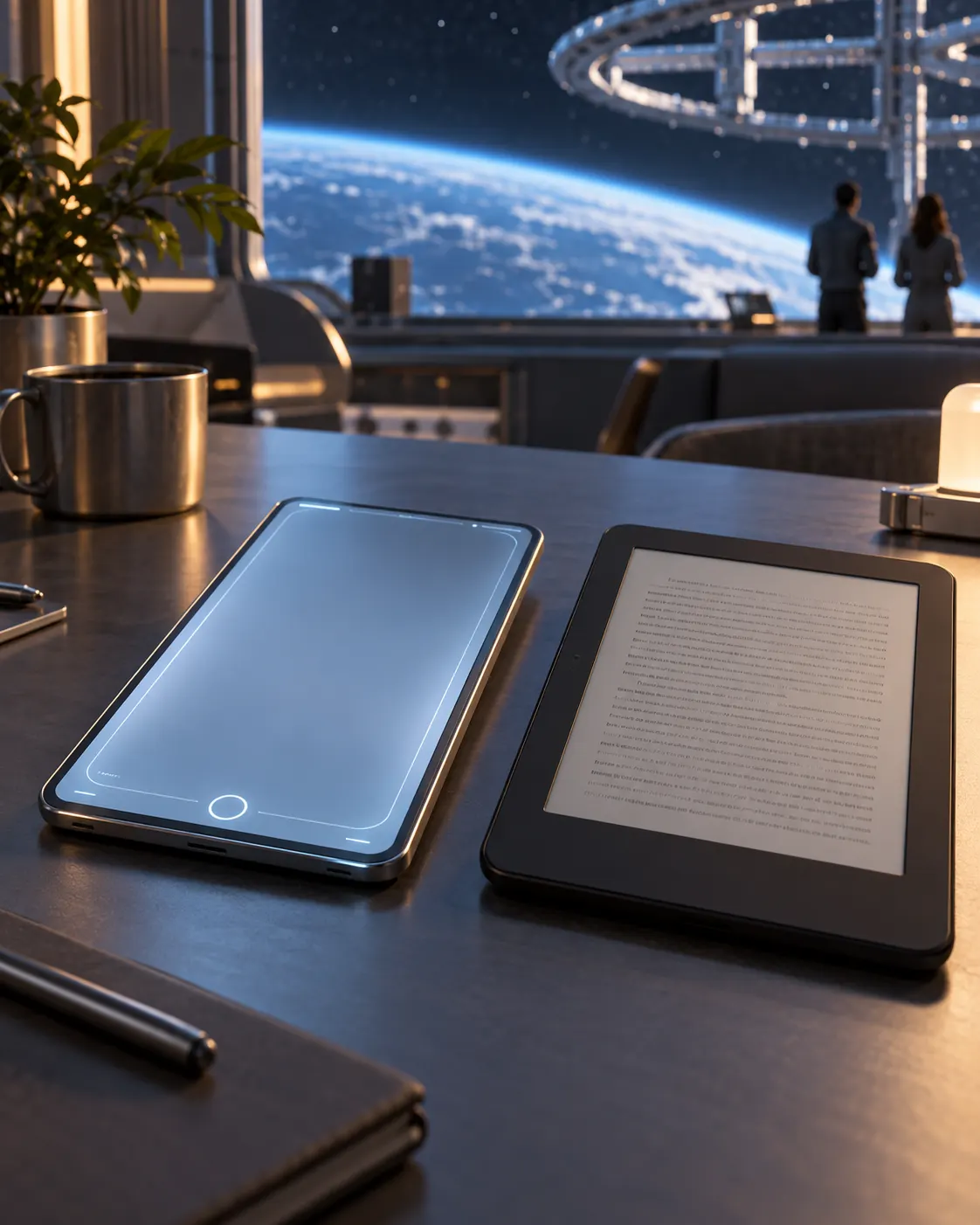
AI-generated cover: conceptual comparison of imagined portable screens with a modern e-reader. Generic design; no specific franchise prop or direct invention claim. Prompt: “Photorealistic editorial cover illustrating how science fiction imagined portable reading screens: a slim futuristic handheld slate beside a modern e-reader on a desk, one blank glowing interface and one e-ink page, subtle space-station background, vertical 4:5. Devices are generic conceptual designs; no Star Trek logos, recognizable props, readable text, or claim of direct invention influence.” Generated 2026-10-19.
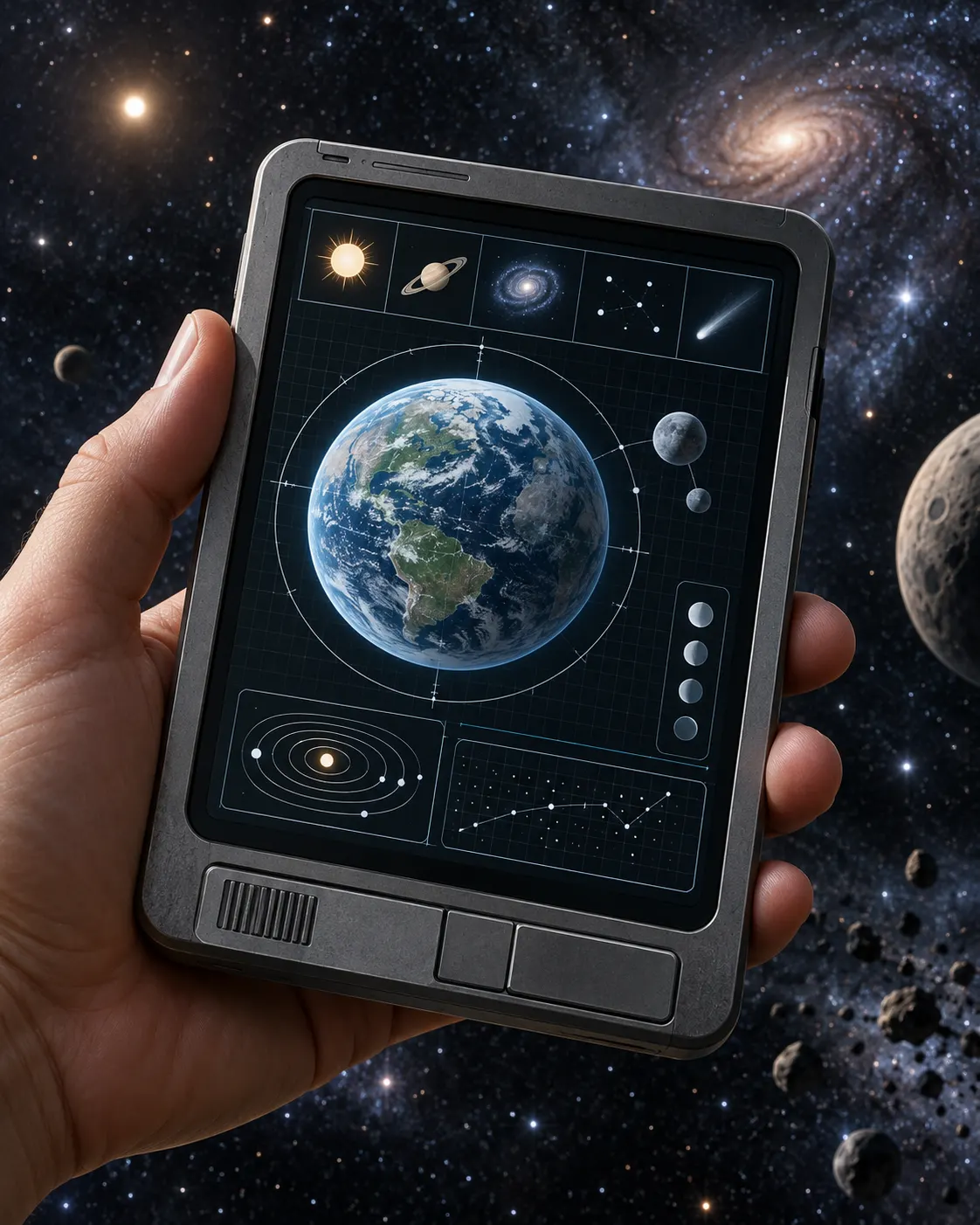
In *Star Trek: The Next Generation*, the crew uses PADDs, fictional portable screens for accessing information. In Douglas Adams’s 1979 novel *The Hitchhiker’s Guide to the Galaxy*, the Guide is also a fictional electronic device containing entries about planets. They are often compared with modern tablets and e-readers because all let people read digital information on a portable screen. But resemblance does not prove that these works directly caused modern devices to be invented: Star Trek designer Rick Sternbach described the PADD as an outgrowth of earlier science-fiction ideas.