A snake's forked tongue
A snake collects chemical particles from its surroundings with the tips of its forked tongue, then transfers them to paired vomeronasal organs in the roof of the mouth. The fork allows it to sample odor trails at two nearby points. This supports chemosensory searching for prey and mates, but the popular explanation that a snake simply compares the “stronger side” is not universally established: experiments with rattlesnakes did not support one proposed form of directional prey trailing.
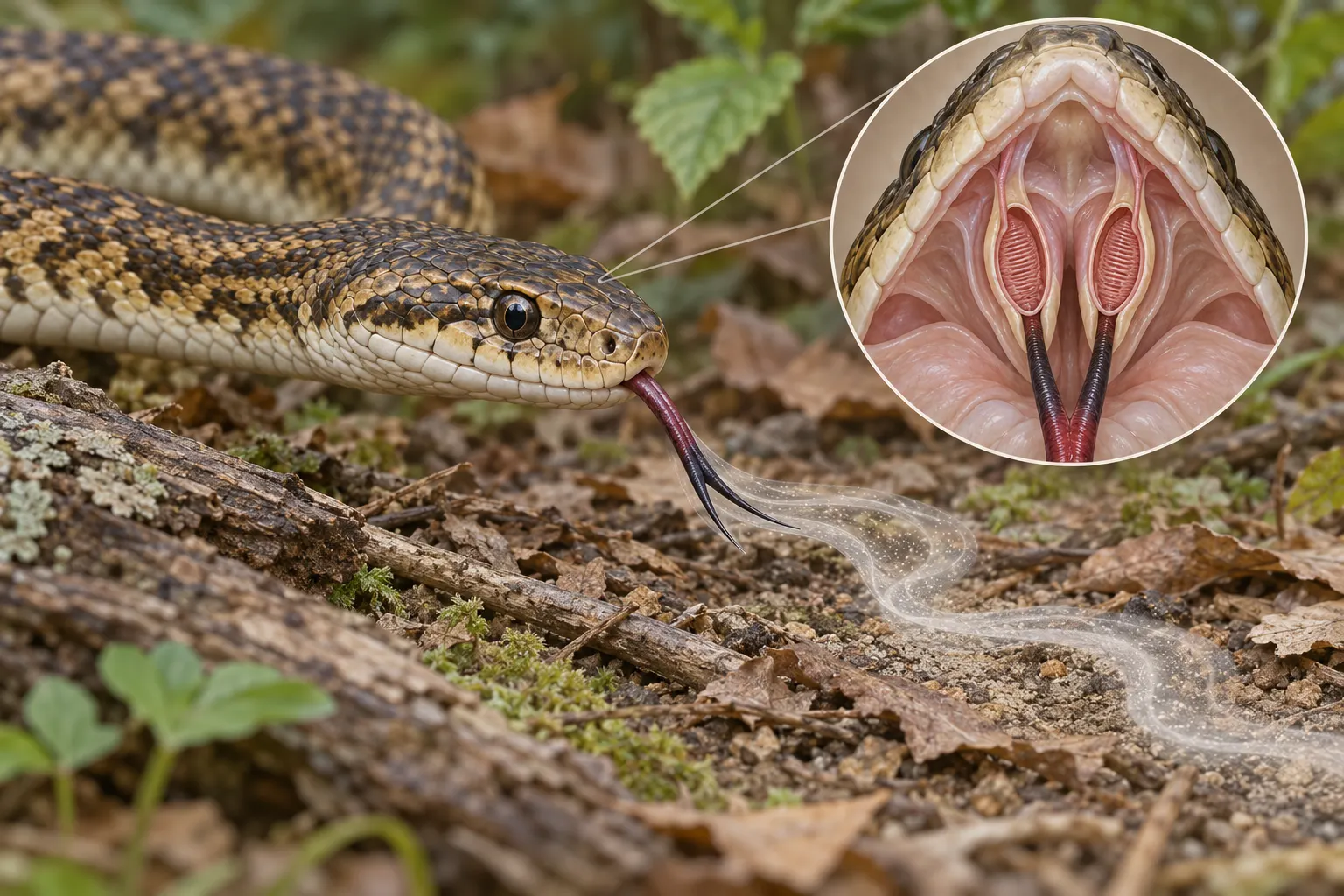
A snake samples chemical cues with its forked tongue — an AI-generated conceptual illustration.