How nails were made
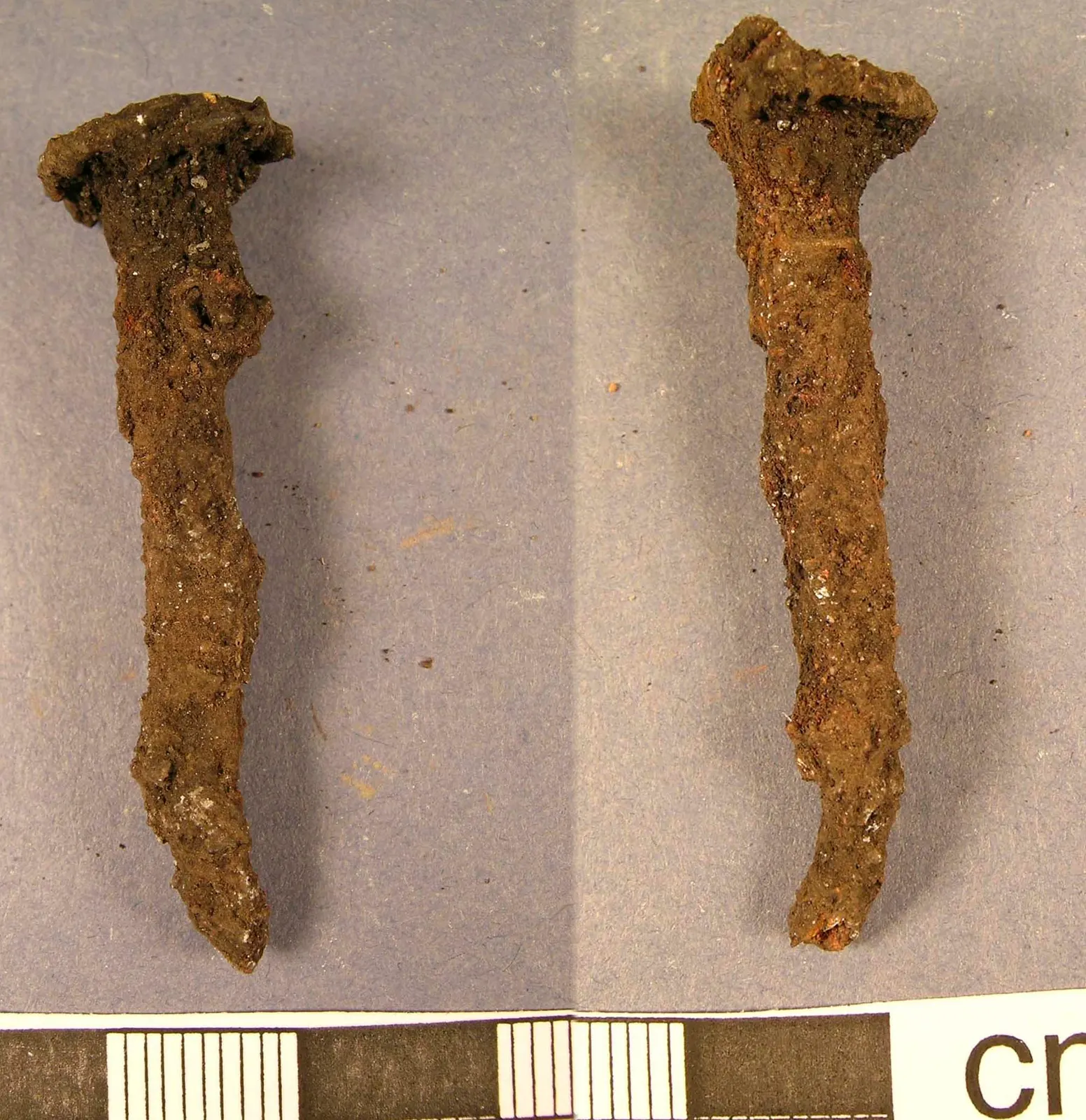
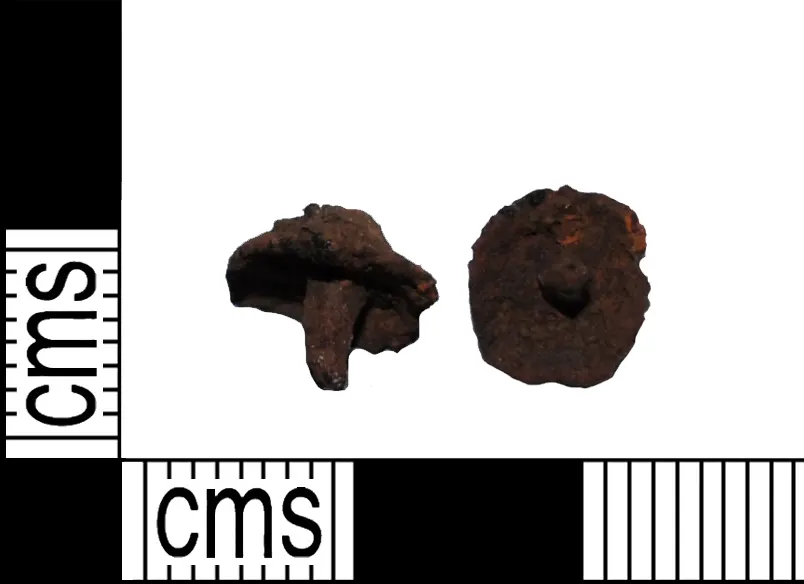
archaeological iron nail, Roman-period find, photographed obverse/reverse; Portable Antiquities Scheme / Trustees of the British Museum; CC BY-SA 2.0; https://commons.wikimedia.org/wiki/File:Roman_iron_nail_(obv.,_rev.)_(FindID_138931).jpg. Attribution: The Portable Antiquities Scheme / Trustees of the British Museum, CC BY-SA 2.0.
Metal nails existed before the Roman period: a museum collection includes a bronze nail from Carthage dated 700–146 BCE. Iron nails were widely used in the Roman period, and they were forged, not cast. This method remained common for centuries: a blacksmith heated an iron rod, hammered it to form a point, cut off a blank, and forged its head. Machines that mechanized nail making from iron bars began to appear in the late eighteenth and early nineteenth centuries.