WattSearch
Your WattLeaderboard
Language
Autoplay narration
Appearance

Feedback

Have a question or an idea? Something not working? Send us a message.

What would you like to share?
Up to 3 files, 5 MB each, 12 MB total.
Or contact us directly

Direct contacts open a separate chat or email. Files attached here are not included.

arohalya@gmail.com
A little wonder, every day

Gutenberg advanced movable-type printing in Europe
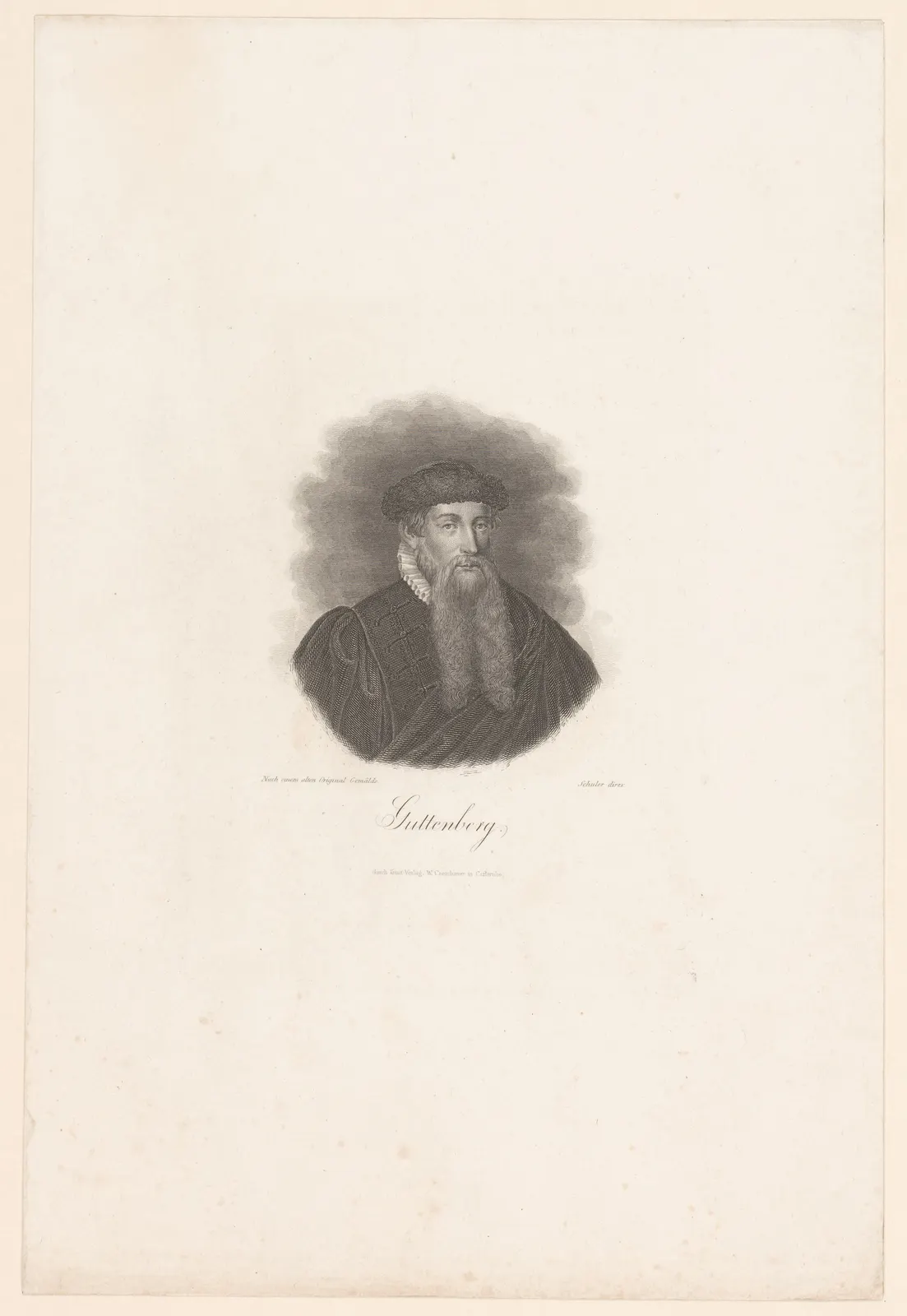
documentary reproduction of a 19th-century steel engraving depicting Johannes Gutenberg, dated 1816–1882 by the Rijksmuseum catalogue. Original page: https://commons.wikimedia.org/wiki/File:Portret_van_Johannes_Gutenberg,_RP-P-1914-4009.jpg. Creator: not named on Commons; Rijksmuseum is the collection/source. License: CC0 1.0 Public Domain Dedication. Attribution is optional; source credit to Rijksmuseum via Wikimedia Commons is retained. This is a later depiction, not a verified contemporary likeness.
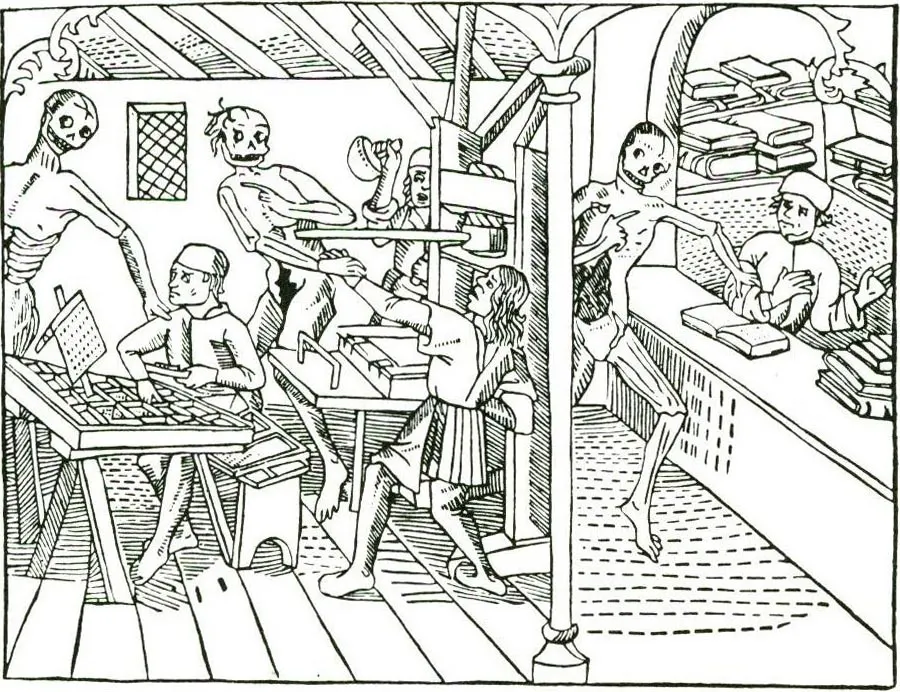
documentary 1499 woodcut from *Danse macabre* depicting book printing and bookselling. Original page: https://commons.wikimedia.org/wiki/File:Bookprinting_and_bookselling_1499.jpg. Creator: unknown. Public domain; faithful reproduction of a public-domain 2D work. Source page lists Harry Järv (ed.), *Den svenska boken 500 år* (1983), for the image source.

documentary reproduction of a 19th-century steel engraving depicting Johannes Gutenberg, dated 1816–1882 by the Rijksmuseum catalogue. Original page: https://commons.wikimedia.org/wiki/File:Portret_van_Johannes_Gutenberg,_RP-P-1914-4009.jpg. Creator: not named on Commons; Rijksmuseum is the collection/source. License: CC0 1.0 Public Domain Dedication. Attribution is optional; source credit to Rijksmuseum via Wikimedia Commons is retained. This is a later depiction, not a verified contemporary likeness.

Listen to fact0:00 / —

In the mid-15th century, Johannes Gutenberg in Mainz developed a printing technology that combined reusable metal letters, typesetting and a press. Printers could assemble the individual letters into new pages and reuse them, making books faster to reproduce and in greater numbers than by hand copying. Printing and movable type existed in Asia before Gutenberg; his innovation was a major step in European book printing. [1–4]