Breathing volume depends on the measurement
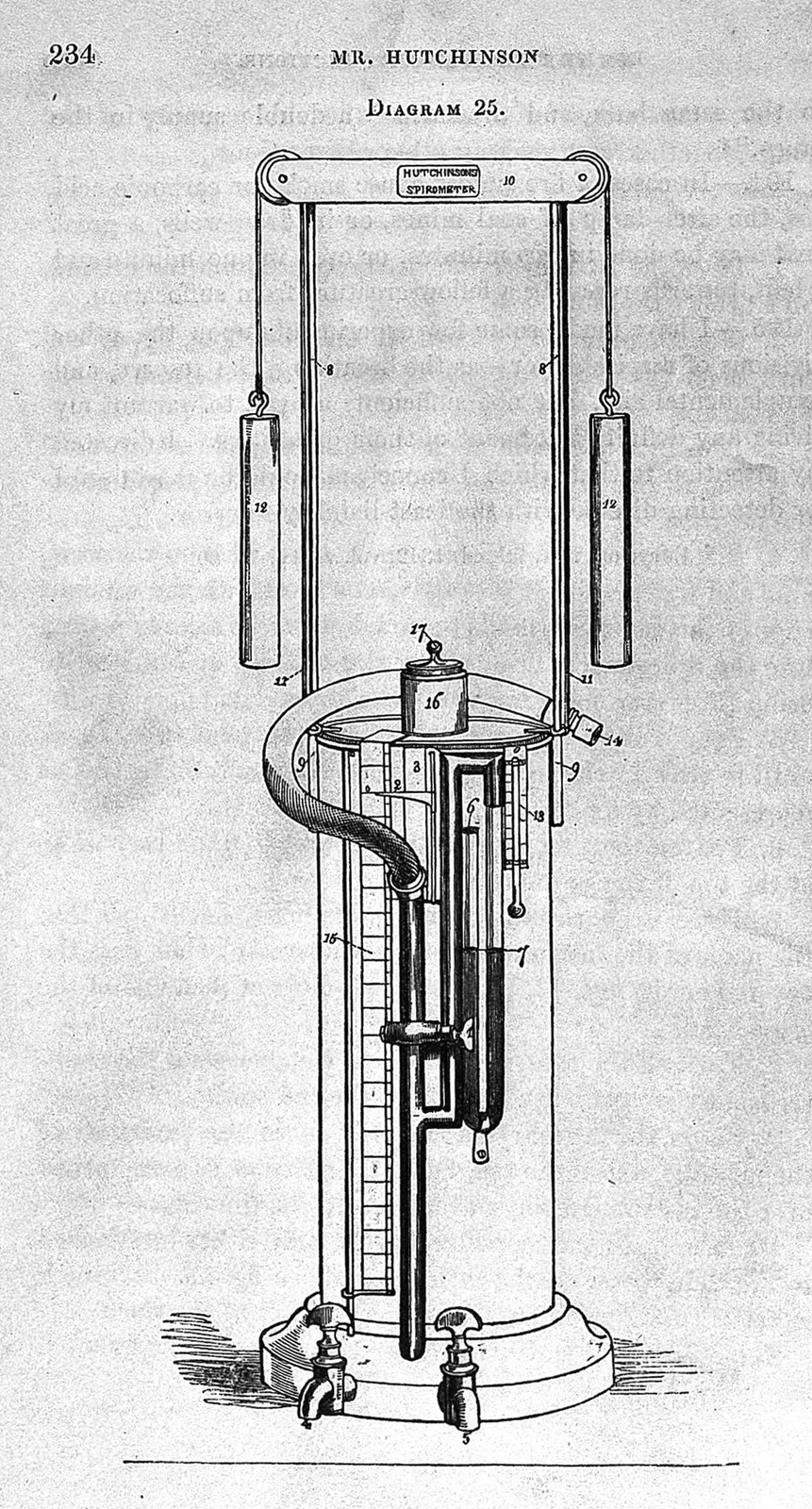
Історична друкована ілюстрація спірометра Гатчінсона 1846 року; не прилад дослідження спортсменів 2017 / Historical printed illustration of Hutchinson’s spirometer, 1846; not the instrument from the 2017 athlete study. Credit: Author unknown; CC BY 4.0. https://creativecommons.org/licenses/by/4.0 Source: https://commons.wikimedia.org/?curid=35870976
The claim that a trained person “inhales 5–7 liters” needs a defined measurement. Vital capacity is the volume between maximal expiration and inspiration; it is not an ordinary resting breath or all the gas remaining in the lungs. In a 2017 study, male endurance athletes had a mean vital capacity of 5.37 L. This is a result for a particular sample, rather than a guaranteed range for every trained adult.