Щодня щось дивовижне
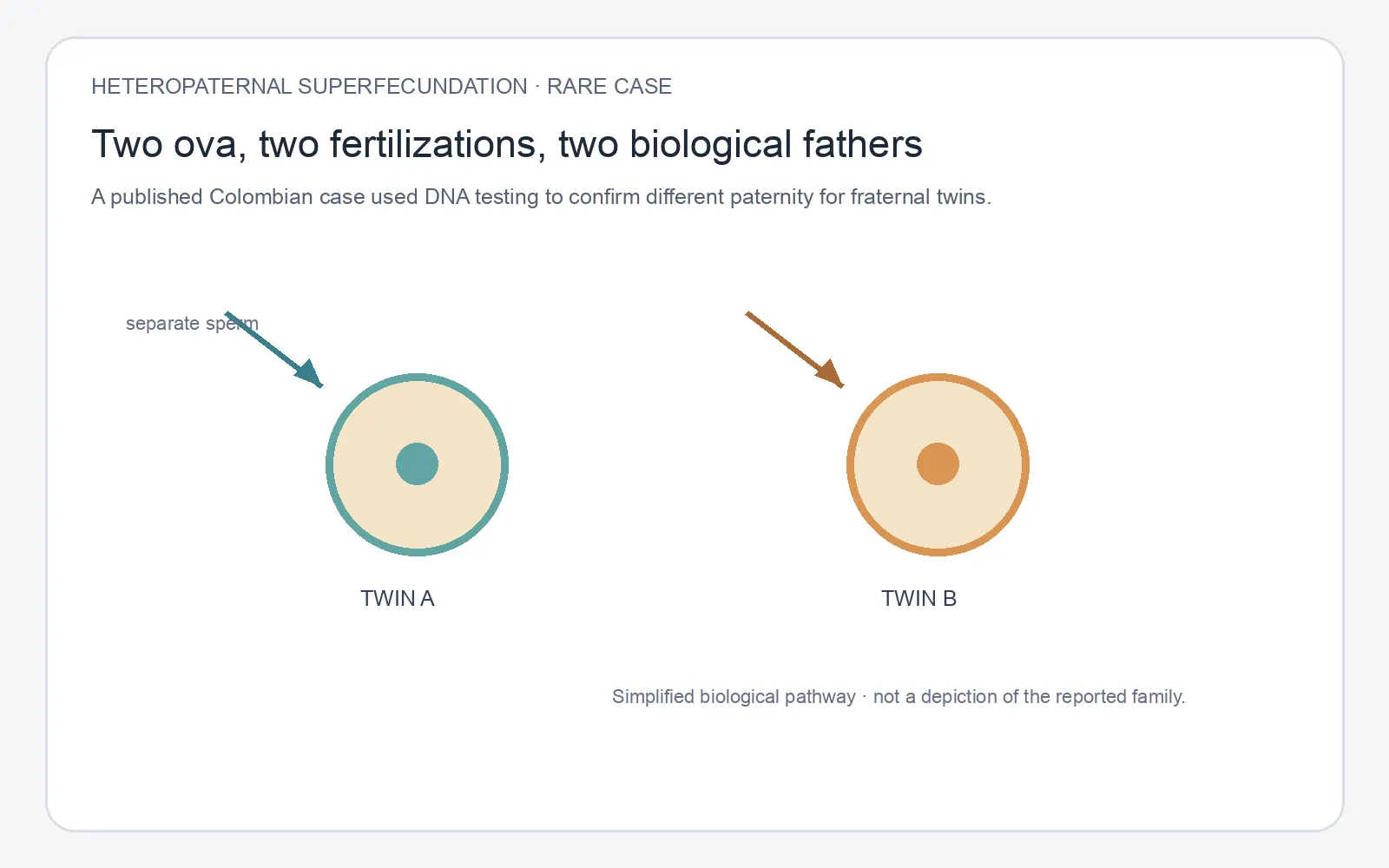
ДНК-підтвердження різного батьківства
; photographer MultipleParent~commonswiki; CC BY-SA 3.0 Unported or GFDL 1.2+; attribution: MultipleParent / Wikimedia Commons; no alteration.](https://xtotam-watt-media-442809139467.s3.eu-central-1.amazonaws.com/facts/31522cd0-483f-4c4e-9b21-d0f6eef5be33/media/2a832c666b30c23e013c4e7b50df224e2326f4d1ae7696ddade3a039e313a937/fraternal-twins.webp)
, Entropy1963, own work, 24 March 2012, CC BY-SA 3.0. Credit the creator, link the license, indicate changes, and share adaptations under the same or compatible license.](https://xtotam-watt-media-442809139467.s3.eu-central-1.amazonaws.com/facts/31522cd0-483f-4c4e-9b21-d0f6eef5be33/media/c3b80efd69adebeff7d7a935a5533b44879fd1ab5824ebeb2854ece6ffa7c14e/dichorionic-twins-ultrasound.webp)
, Sciencia58, own graphic, 10 October 2019, CC0 1.0.](https://xtotam-watt-media-442809139467.s3.eu-central-1.amazonaws.com/facts/31522cd0-483f-4c4e-9b21-d0f6eef5be33/media/506aa8caace95f4e619e3c02a7db264d06e846354d7a6b4218dfa01eebdf5cb0/egg-fertilization-zygote.webp)
1 / 5
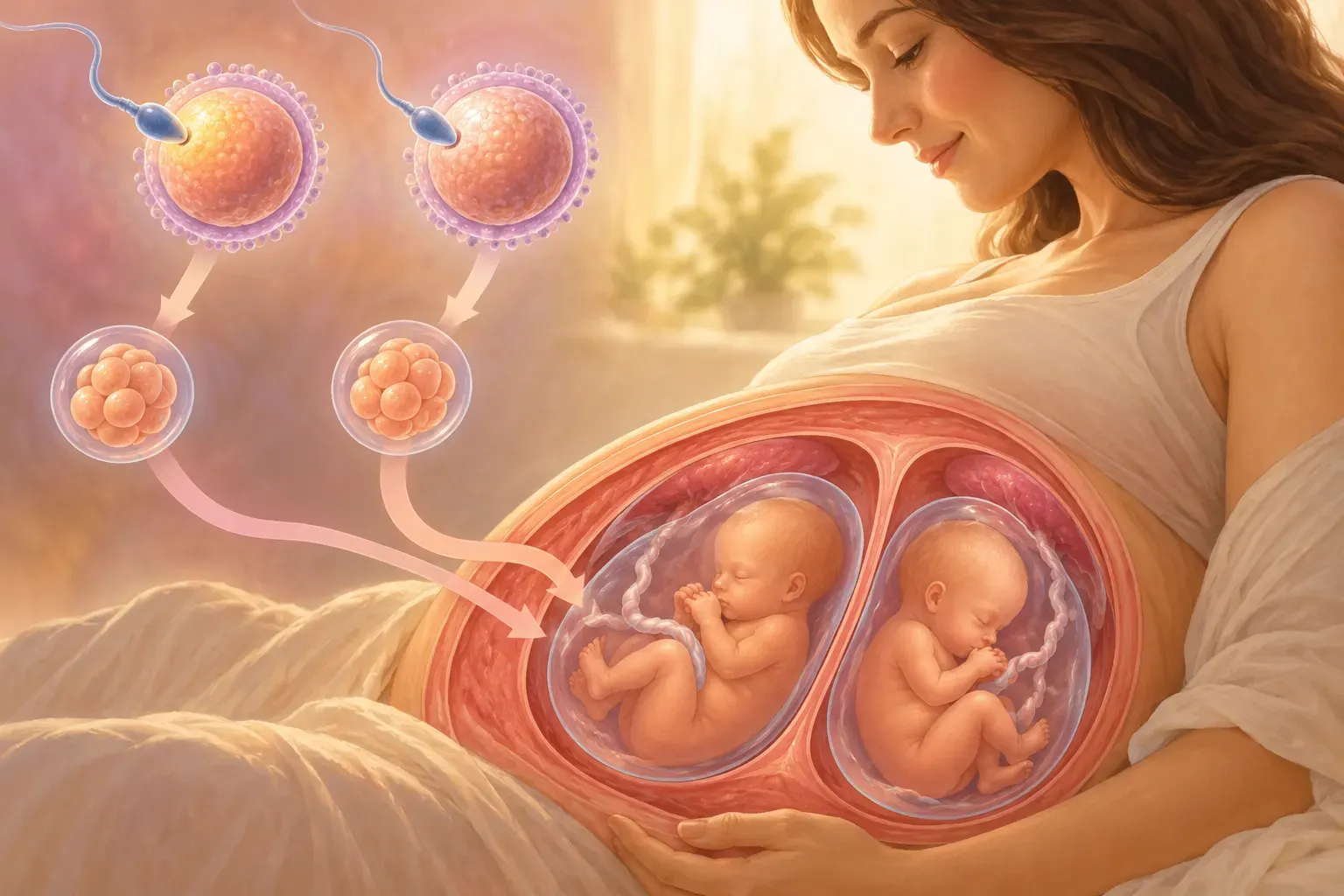
AI-generated conceptual cover showing fraternal twins and separate fertilization events; synthetic art, not a depiction of the people in the reported case. The original generation prompt and date were not preserved in the package.
Слухати факт0:00 / —
У 2020 році дослідники з Колумбії описали випадок різнояйцевих близнюків, у якому один чоловік мав імовірність батьківства 99,9999% щодо одного близнюка, але був виключений як батько другого. Команда дослідила STR-маркери в аутосомах і Y-хромосомі; 14 із 17 Y-маркерів та 14 із 21 аутосомного STR-маркера не збіглися для другого близнюка. Імовірність 99,9999% стосується саме цього результату, а не будь-якого тесту батьківства.