Gutenberg’s printing press
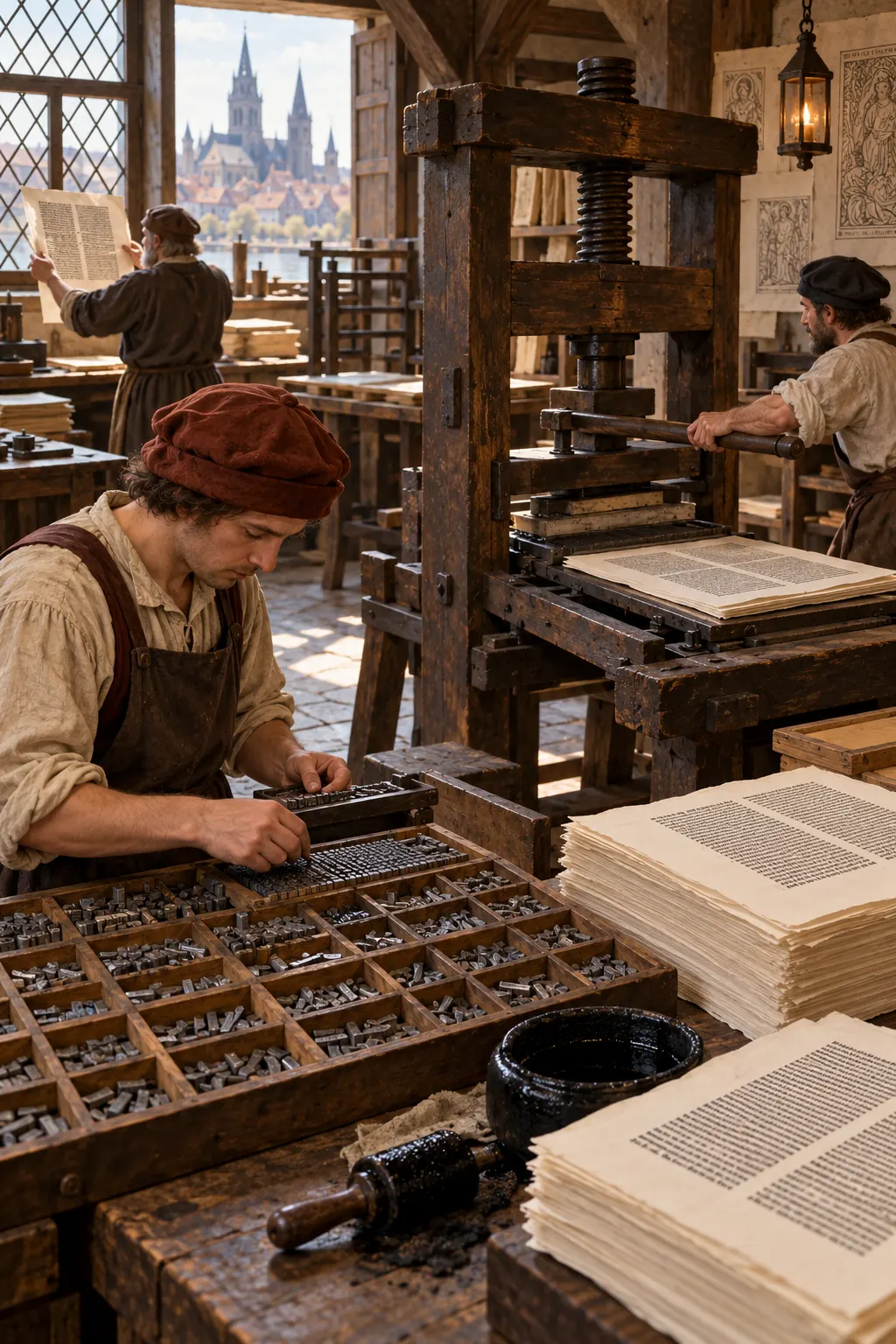
AI-generated conceptual editorial illustration of a fifteenth-century printing workshop. It is not a documentary image, a reconstruction of a specific workshop, or a depiction of an identifiable person. Prompt: “A conceptual educational editorial illustration, not documentary, showing a fifteenth-century Mainz printing workshop around 1455: wooden screw press, a compositor arranging separate reusable metal letters, freshly printed Bible sheets. Historically grounded but not depicting an identifiable real person or exact event. No readable lettering, labels, or watermark. Warm museum illustration, vertical composition.” Generated 2026-10-29; no external source/license or factual evidentiary role.
Around 1455, the Gutenberg Bible was printed in Mainz. It was the first major book in Western Europe made with movable metal type. A printer arranged separate letters into lines, applied ink, and pressed paper against them. The letters could then be taken apart and reused. This let a workshop make many copies faster than a scribe could copy a manuscript by hand. Movable type had been used earlier in Asia, so this was not the world’s first printed book.