WattSearch
Your WattLeaderboard
Language
Autoplay narration
Appearance

Feedback

Have a question or an idea? Something not working? Send us a message.

What would you like to share?
Up to 3 files, 5 MB each, 12 MB total.
Or contact us directly

Direct contacts open a separate chat or email. Files attached here are not included.

arohalya@gmail.com
A little wonder, every day

Fact 1661 — What Star Trek shares with mobile communication
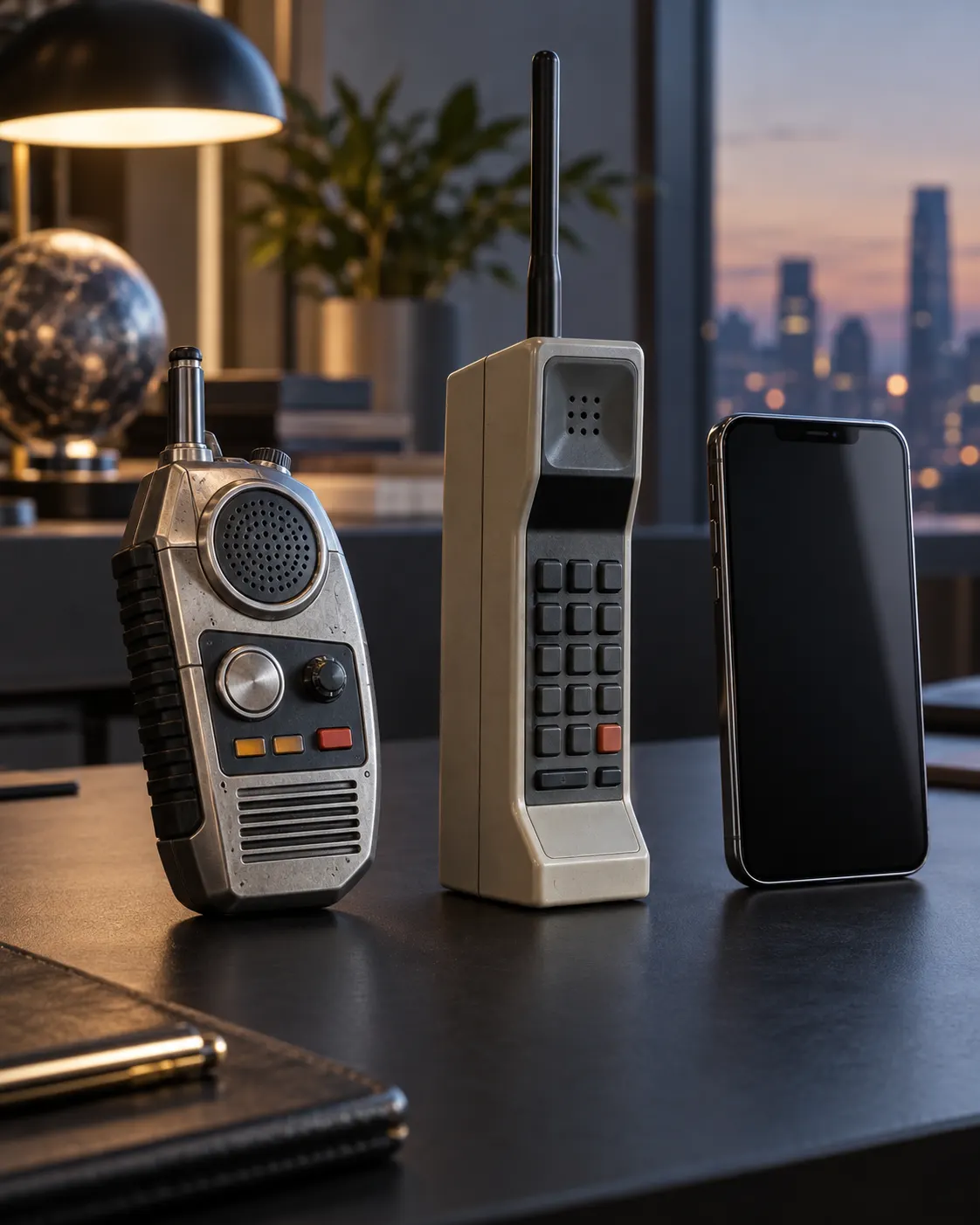

AI-generated cover comparing a generic fictional communicator, an early mobile phone, and a smartphone; no Star Trek prop is depicted. Prompt: “Photorealistic editorial cover about the evolution from science-fiction communicators to mobile phones: a generic retro-futuristic handheld voice communicator beside an early 1980s brick cellphone and a modern smartphone, arranged on a clean dark desk, vertical 4:5. The fictional communicator must not resemble a Star Trek prop; no logos, readable text, or claim fiction directly invented the phone.” Generated 2026-10-19.
AI-generated historical reconstruction of an anonymous person using a generic early 1980s mobile phone; not Martin Cooper or a documentary scene. Prompt: “Photorealistic editorial image of an anonymous person using an early 1980s handheld mobile phone outdoors, large portable handset, city street in the background, vertical 4:5. Historically inspired generic reconstruction, no recognizable real individual, brand labels, legible text, or claim to depict Martin Cooper.” Generated 2026-10-19.
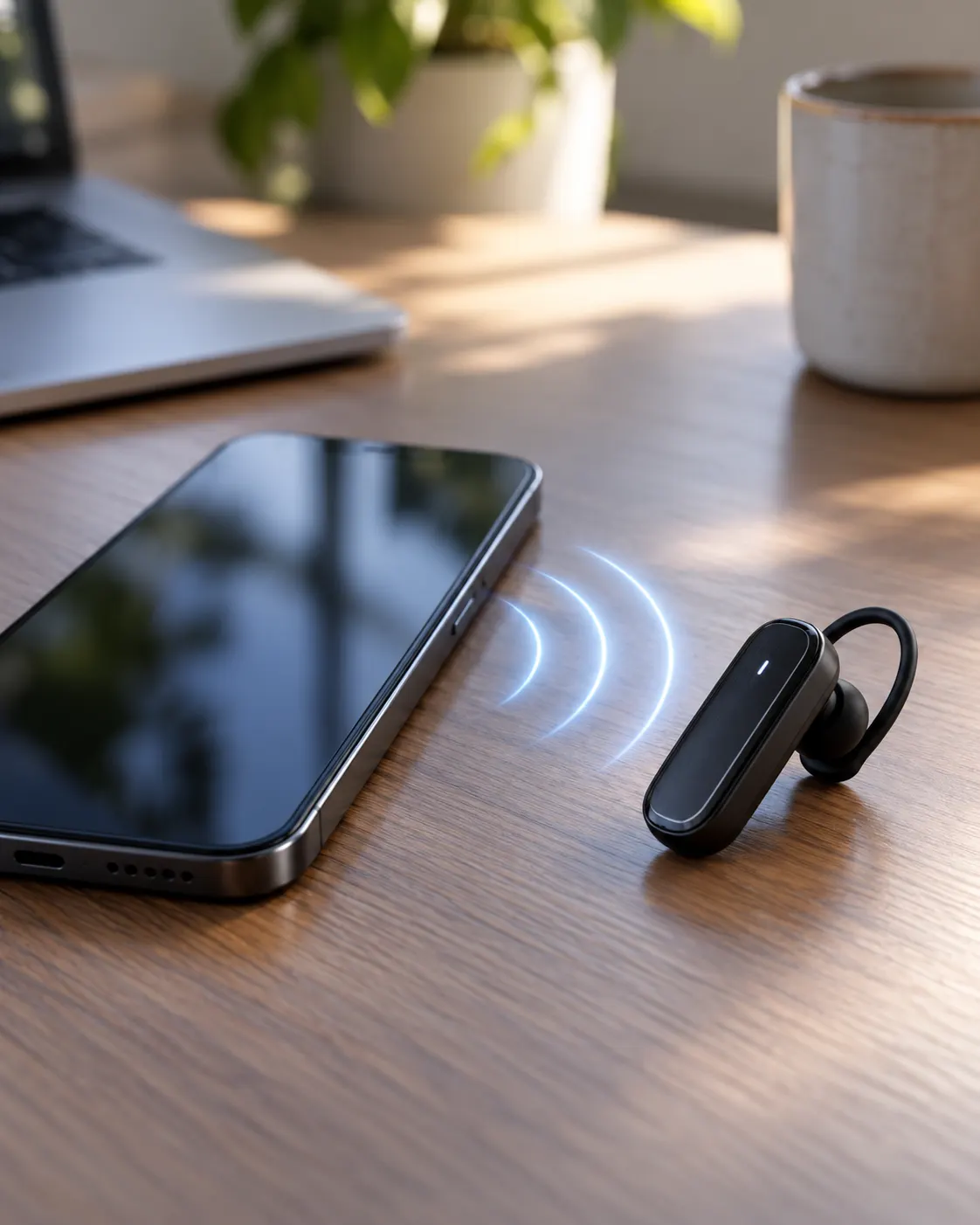
AI-generated generic modern smartphone and Bluetooth earpiece, unbranded. Prompt: “Photorealistic editorial close-up of a modern smartphone connected wirelessly to a small generic Bluetooth earpiece, on a desk with faint abstract signal-wave light, vertical 4:5. No logos, brands, readable screen text, or named fictional communicator design.” Generated 2026-10-19.
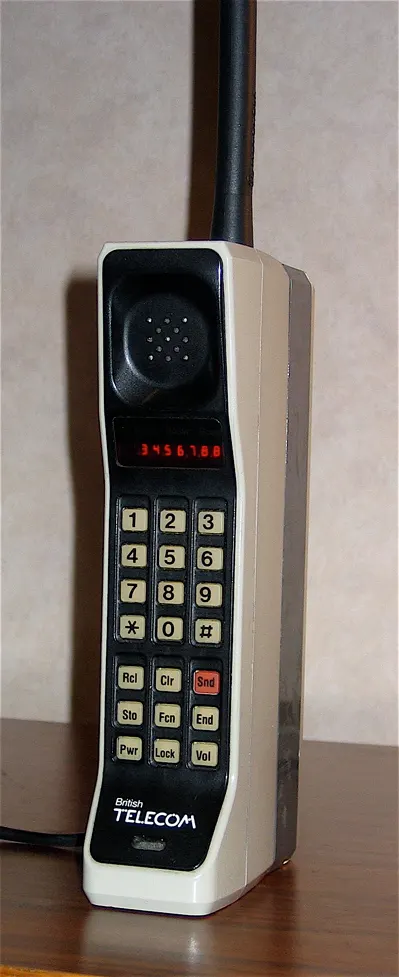
documentary photograph of a Motorola DynaTAC 8000X mobile phone from 1984. Photographer: Redrum0486, 2008. Original page: https://commons.wikimedia.org/wiki/File:DynaTAC8000X.jpg. CC BY-SA 3.0 (or GFDL as offered on the page); attribution: “Redrum0486 / Wikimedia Commons / CC BY-SA 3.0”; no edits.
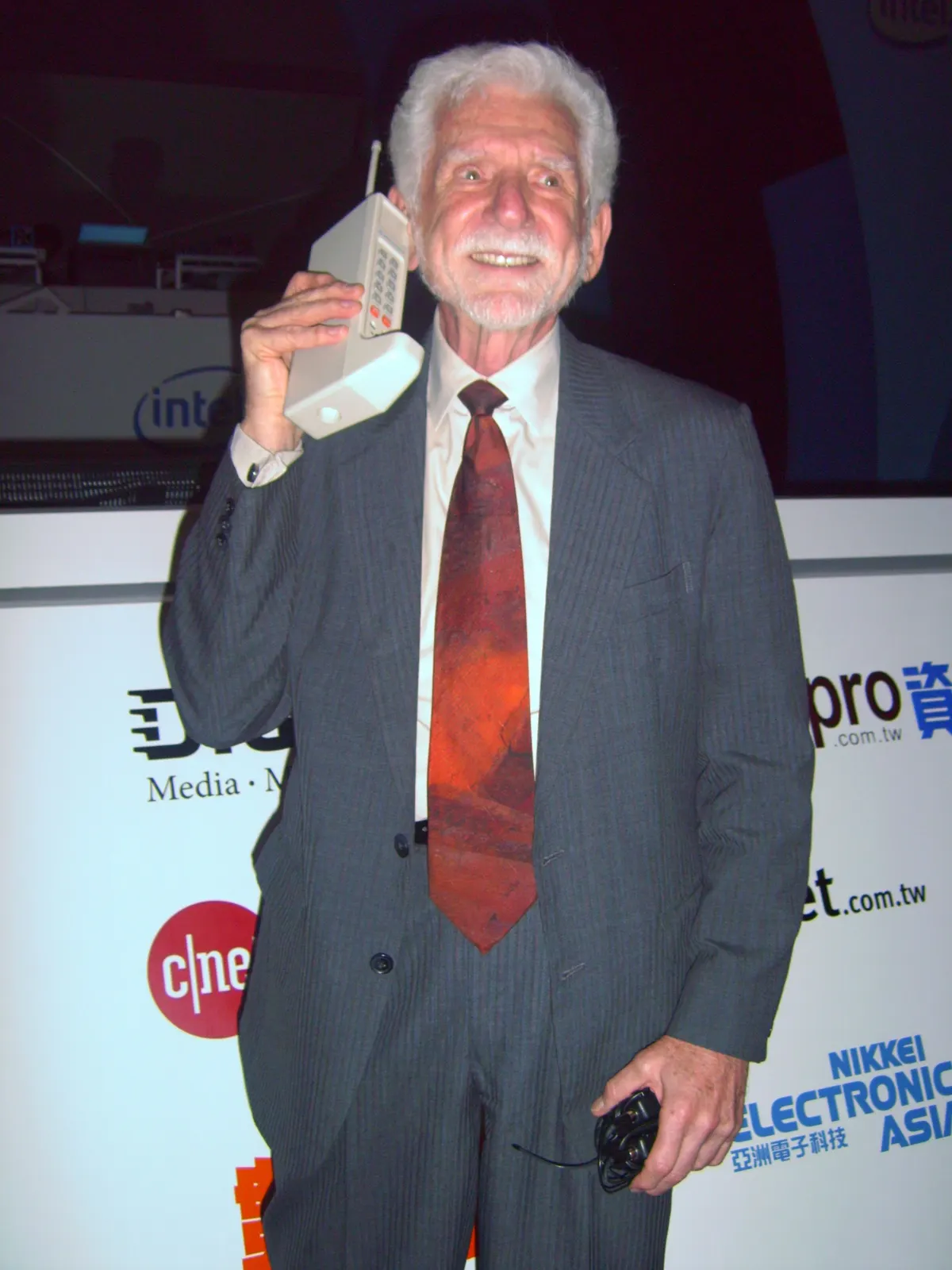
documentary photograph of Martin Cooper with a DynaTAC prototype at e21 Forum in Taipei, 5 June 2007. Photographer: Rico Shen. Original page: https://commons.wikimedia.org/wiki/File:2007Computex_e21Forum-MartinCooper.jpg. CC BY-SA 3.0 (or CC BY-SA 2.5 Taiwan/GFDL as offered on the page); attribution: “Rico Shen / Wikimedia Commons / CC BY-SA 3.0”; no edits.

AI-generated cover comparing a generic fictional communicator, an early mobile phone, and a smartphone; no Star Trek prop is depicted. Prompt: “Photorealistic editorial cover about the evolution from science-fiction communicators to mobile phones: a generic retro-futuristic handheld voice communicator beside an early 1980s brick cellphone and a modern smartphone, arranged on a clean dark desk, vertical 4:5. The fictional communicator must not resemble a Star Trek prop; no logos, readable text, or claim fiction directly invented the phone.” Generated 2026-10-19.

Listen to fact0:00 / —

The handheld communicator in Star Trek resembles the idea of personal voice communication, but it is not a technical prototype of a modern phone or Bluetooth headset. Martin Cooper, who led Motorola’s team developing the first handheld mobile phone, explained that Star Trek did not inspire their work; a real cellular phone connects through a network of base stations. By contrast, a licensed communicator replica released in 2016 really does use Bluetooth to connect to a phone and make calls.