How a chemical signal crosses a synapse
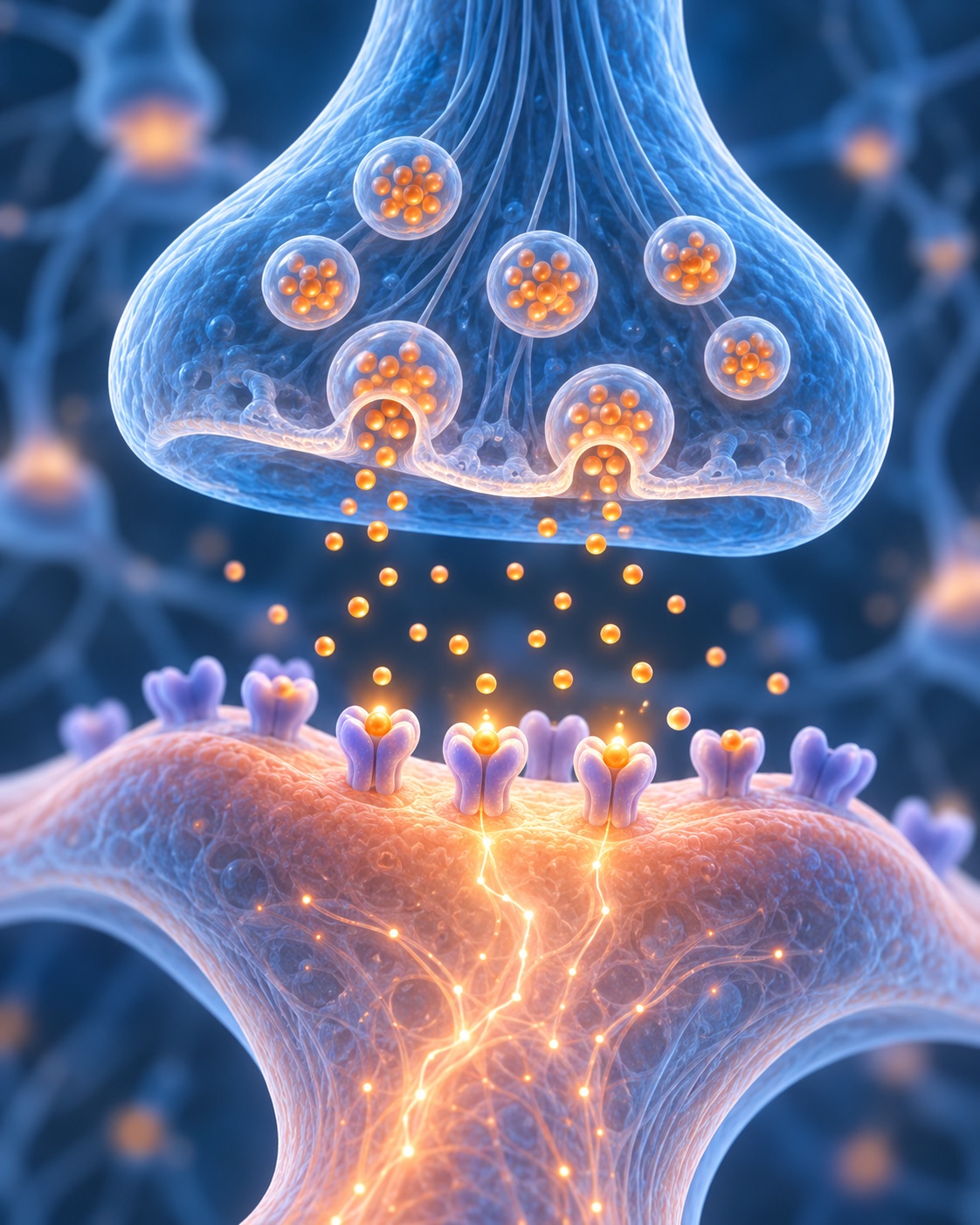
AI-generated conceptual illustration of neurotransmitter vesicles and a receiving cell, not a microscope image or measured anatomical diagram. Prompt: “Educational scientific illustration, vertical 4:5. A clean close-up conceptual cutaway of one chemical synapse: presynaptic nerve ending at top with small clear synaptic vesicles releasing distinct tiny neurotransmitter dots into a narrow gap, postsynaptic membrane below with matching receptor shapes and a subtle signal glow continuing into receiving neuron. Scientifically plausible simplified anatomy, soft blue and warm coral palette, crisp museum textbook style, strong visual hierarchy and generous spacing. No labels, letters, numbers, text, or symbols. Conceptual illustration, not a real micrograph or measured diagram.” Generated 2026-10-29; no external source or documentary role.
At a chemical synapse, a nerve impulse triggers the release of a neurotransmitter from a nerve cell. The molecules cross the narrow synaptic cleft and bind to matching receptors on the receiving cell. This can change its electrical activity and pass the signal along.