WattSearch
Your WattLeaderboard
Language
Autoplay narration
Appearance

Feedback

Have a question or an idea? Something not working? Send us a message.

What would you like to share?
Up to 3 files, 5 MB each, 12 MB total.
Or contact us directly

Direct contacts open a separate chat or email. Files attached here are not included.

arohalya@gmail.com
A little wonder, every day

Fact 1645 — A Nobel gold medal was dissolved in acid during Denmark’s occupation
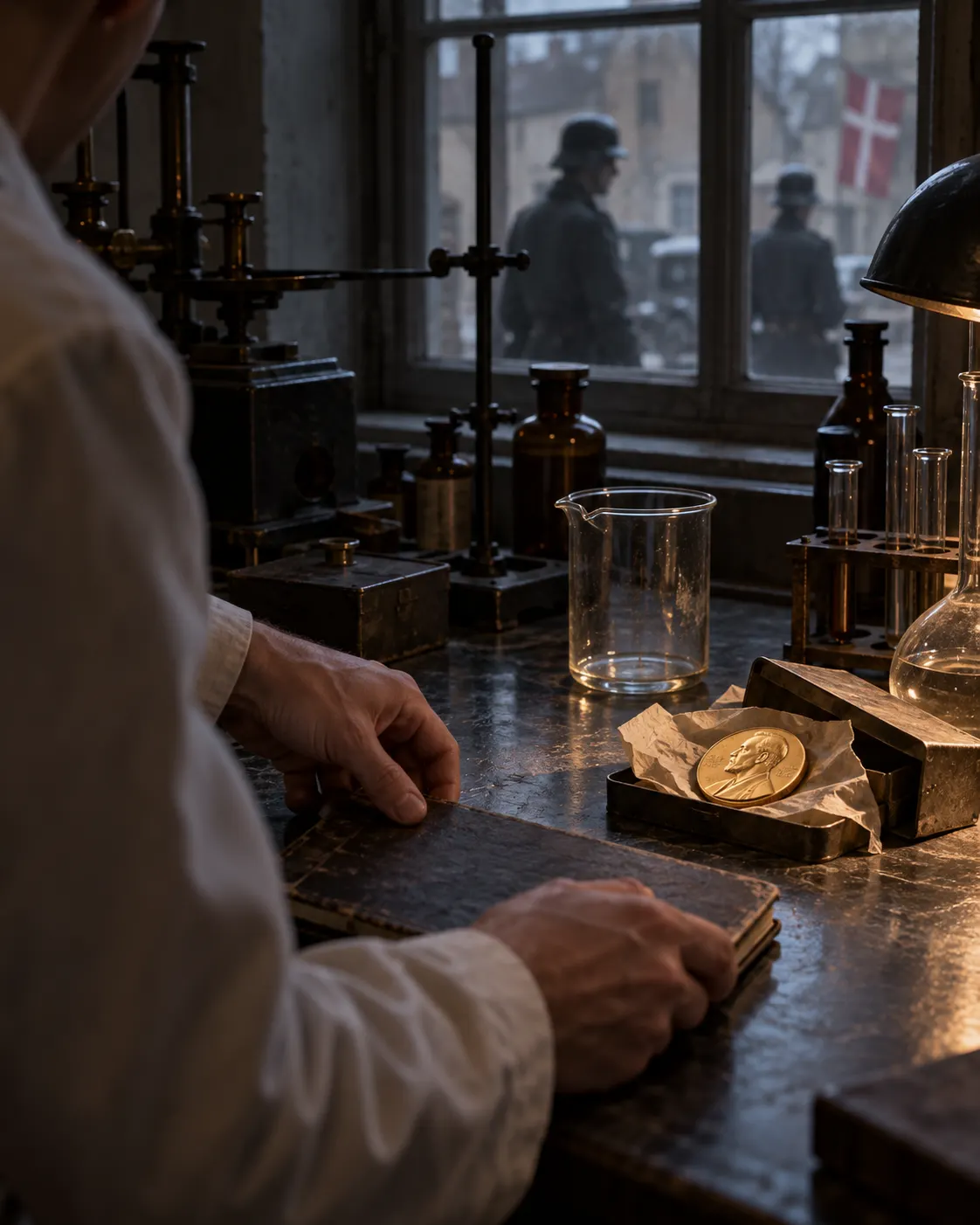
AI-generated cover image depicting a generic gold medal discreetly kept in a 1940s laboratory. It is not one of the actual medals in the account. Exact prompt: “Photorealistic editorial cover about Nobel gold medals hidden from Nazi forces during the occupation of Denmark: a small generic gold medal beside an unlabeled glass beaker in a shadowed 1940s Copenhagen laboratory, a scientist's hands seen from behind setting a notebook nearby, vertical 4:5. Symbolic reconstruction, not the actual historical medals or a photograph of George de Hevesy; no readable text, logos, or procedural chemistry details.”
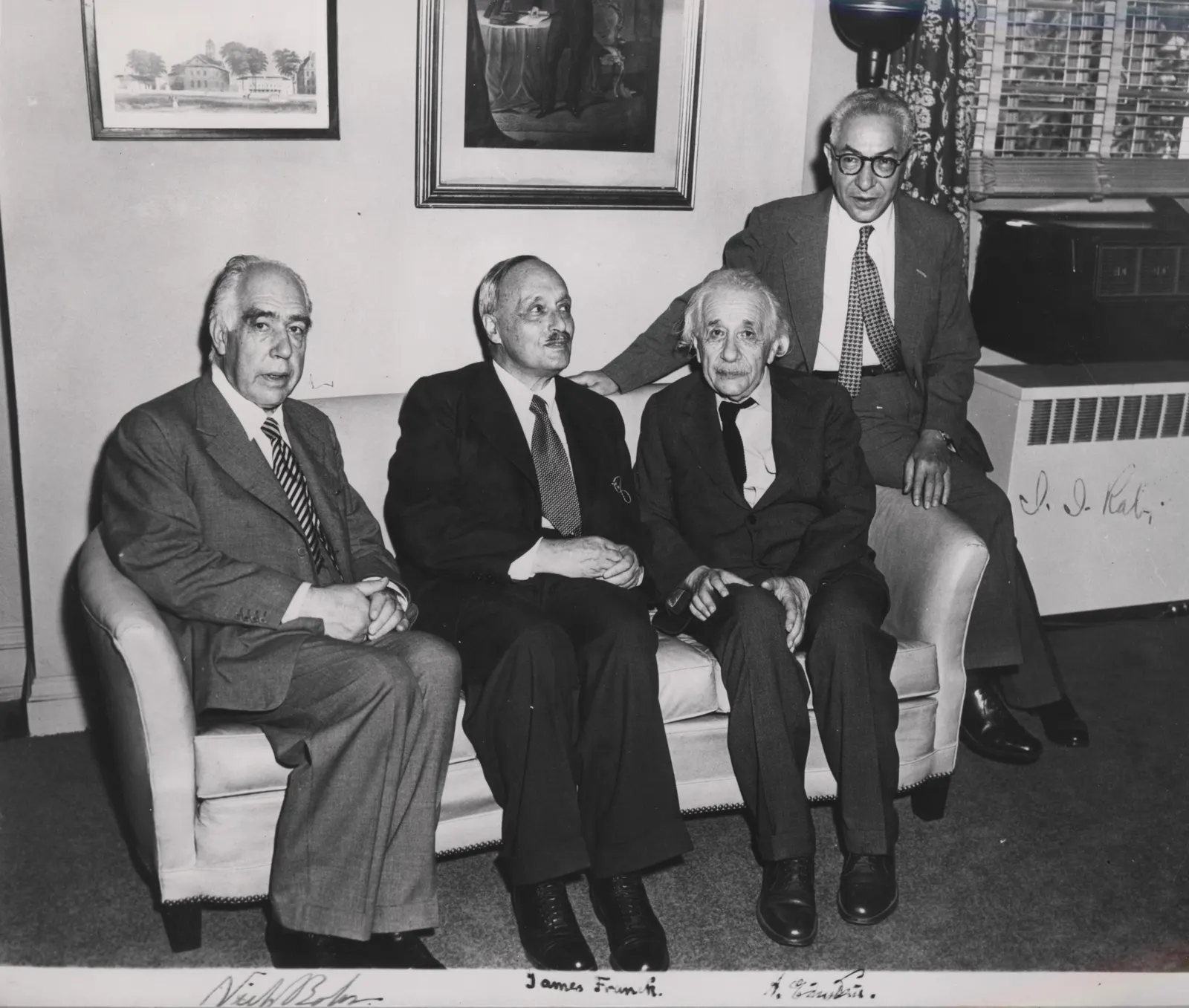
Smithsonian photograph of Niels Bohr, James Franck, Albert Einstein and Isidor Isaac Rabi together in 1954. Wikimedia Commons: https://commons.wikimedia.org/wiki/File:Portrait_of_Albert_Einstein,_Niels_Bohr,_James_Franck_and_Rabi.jpg; Smithsonian Institution marked “No restrictions.” Attribution: Smithsonian Institution, via Wikimedia Commons. Original file, unchanged.
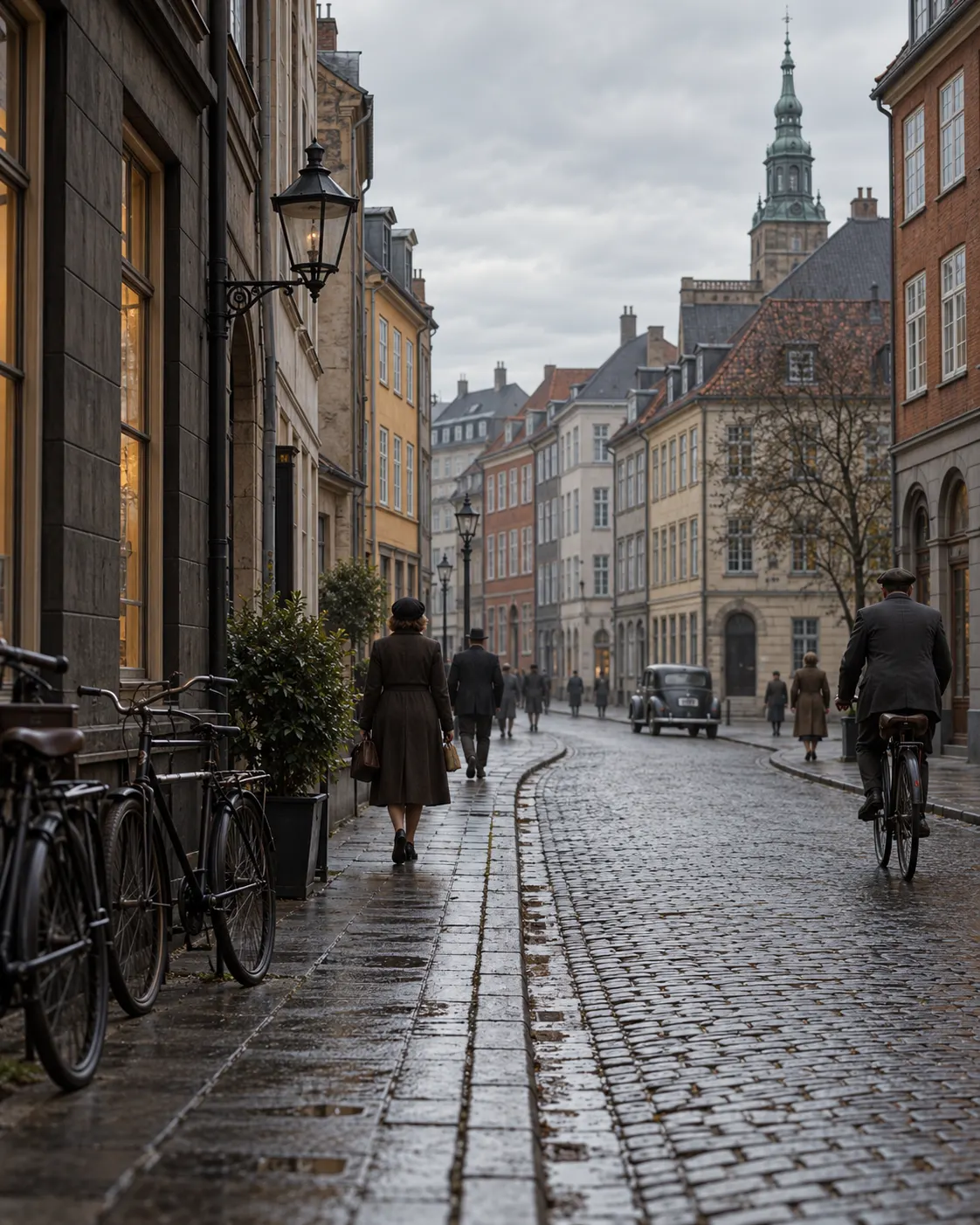
AI-generated editorial reconstruction (created 2026-10-19) of an unspecified quiet Copenhagen street in 1940; not a documentary photograph of a particular location. Exact prompt: “Photorealistic editorial reconstruction of a quiet Copenhagen street during the German occupation in 1940, bicycles and historic European architecture under overcast light, no soldiers or flags, vertical 4:5. Generic atmospheric illustration, not a documentary photograph of a specific location, no signs or readable text.”
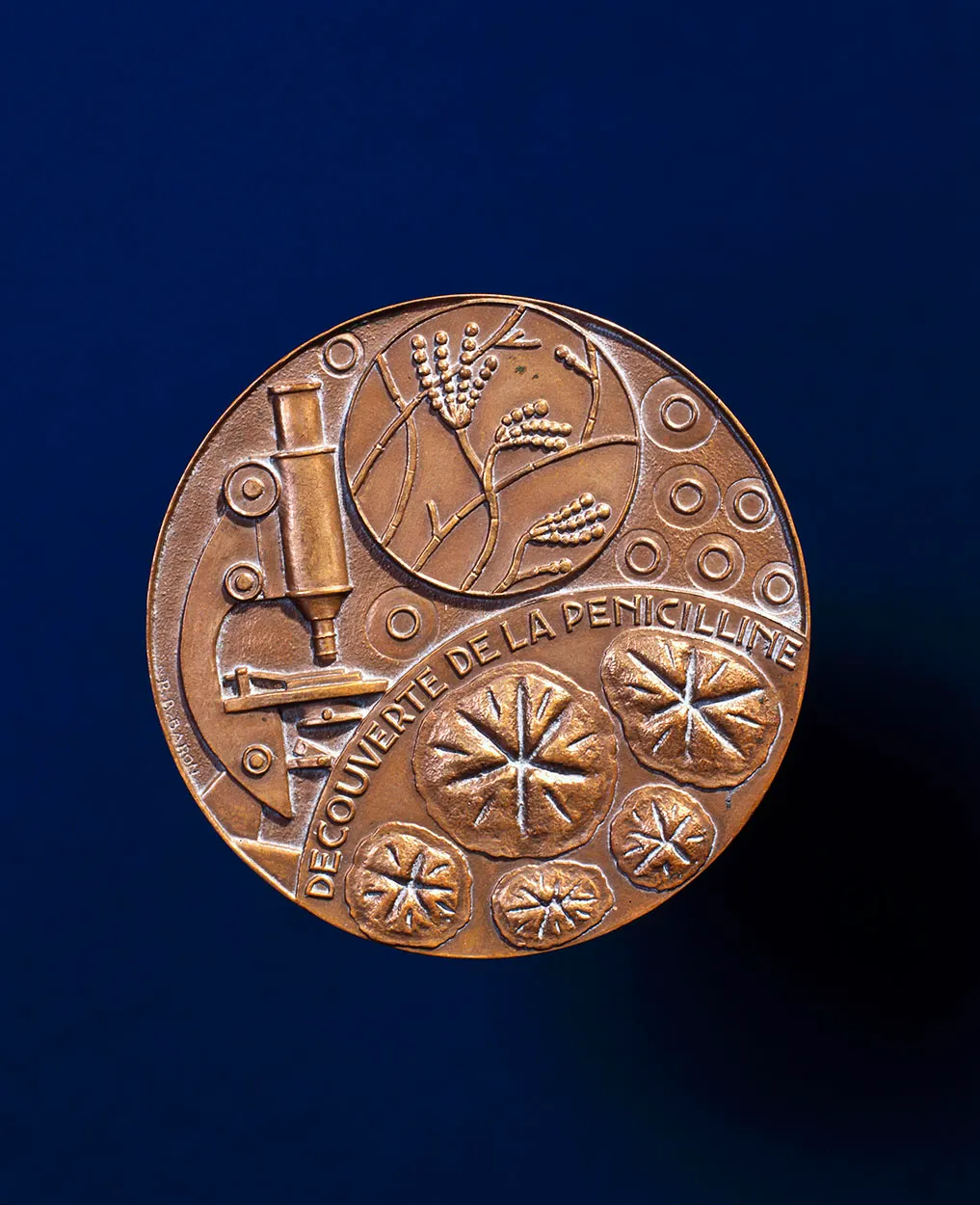
Photograph of the 1945 Nobel Prize in Medicine medal awarded to Alexander Fleming, on display at the National Museum of Scotland. Photographer Osama Shukir Muhammed Amin FRCP(Glasg). Wikimedia Commons: https://commons.wikimedia.org/wiki/File:Nobel_prize_medal_for_medicine,_Sweden,_1945,_to_Sir_Alexander_Fleming_(1881-1955)_who_discovered_Penicillin._On_display_at_the_National_Museum_of_Scotland.jpg; CC BY-SA 4.0: https://creativecommons.org/licenses/by-sa/4.0/. Attribution: Osama Shukir Muhammed Amin FRCP(Glasg), via Wikimedia Commons, CC BY-SA 4.0. This is Fleming’s medal, not one of the medals in the story. Copied unchanged from fact 1609.
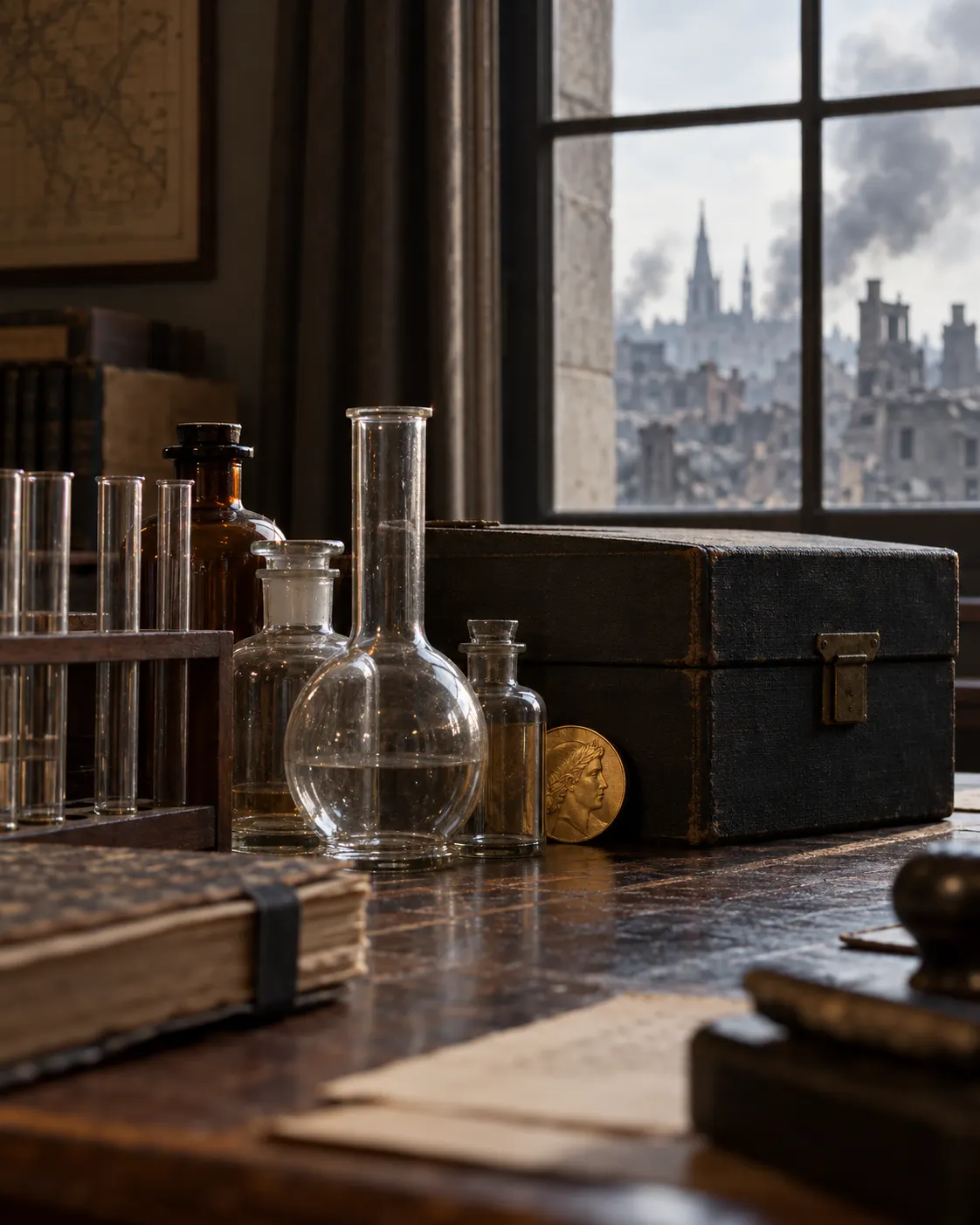
AI-generated symbolic still life (created 2026-10-19) of a generic medal kept near glassware and an archival box; no specific Nobel medal is depicted. Exact prompt: “Photorealistic editorial still life about preserving cultural treasures during wartime: a generic small gold medal tucked behind a row of laboratory glassware and a closed archival box in a 1940s European university office, soft window light, vertical 4:5. Symbolic, no actual Nobel medal design, no people, no chemistry procedure, no readable text or logos.”

AI-generated cover image depicting a generic gold medal discreetly kept in a 1940s laboratory. It is not one of the actual medals in the account. Exact prompt: “Photorealistic editorial cover about Nobel gold medals hidden from Nazi forces during the occupation of Denmark: a small generic gold medal beside an unlabeled glass beaker in a shadowed 1940s Copenhagen laboratory, a scientist's hands seen from behind setting a notebook nearby, vertical 4:5. Symbolic reconstruction, not the actual historical medals or a photograph of George de Hevesy; no readable text, logos, or procedural chemistry details.”

Listen to fact0:00 / —

After Germany invaded Denmark in April 1940, chemist George de Hevesy recalled dissolving Nobel gold medals in aqua regia so they would not fall into German hands. His account names the medals of Max von Laue and James Franck; the archival guide to Franck’s papers names Franck’s and Niels Bohr’s medals. Franck’s medal appears in both accounts, but they identify the second medal as either Max von Laue’s or Niels Bohr’s. The gold was later returned to the Nobel Foundation, which made replacement medals.