WattПошук
Твій WattРейтинг
Мова
Автоозвучення
Оформлення

Зворотний зв’язок

Є питання чи ідея? Щось не працює? Надішли нам повідомлення.

Про що хочеш написати?
До 3 файлів, 5 МБ кожен, 12 МБ разом.
Або зв’яжися напряму

Прямі контакти відкривають окремий чат або лист. Прикріплені тут файли через них не передаються.

arohalya@gmail.com
Щодня щось дивовижне

Під час окупації Данії золоту Нобелівську медаль розчинили в кислоті
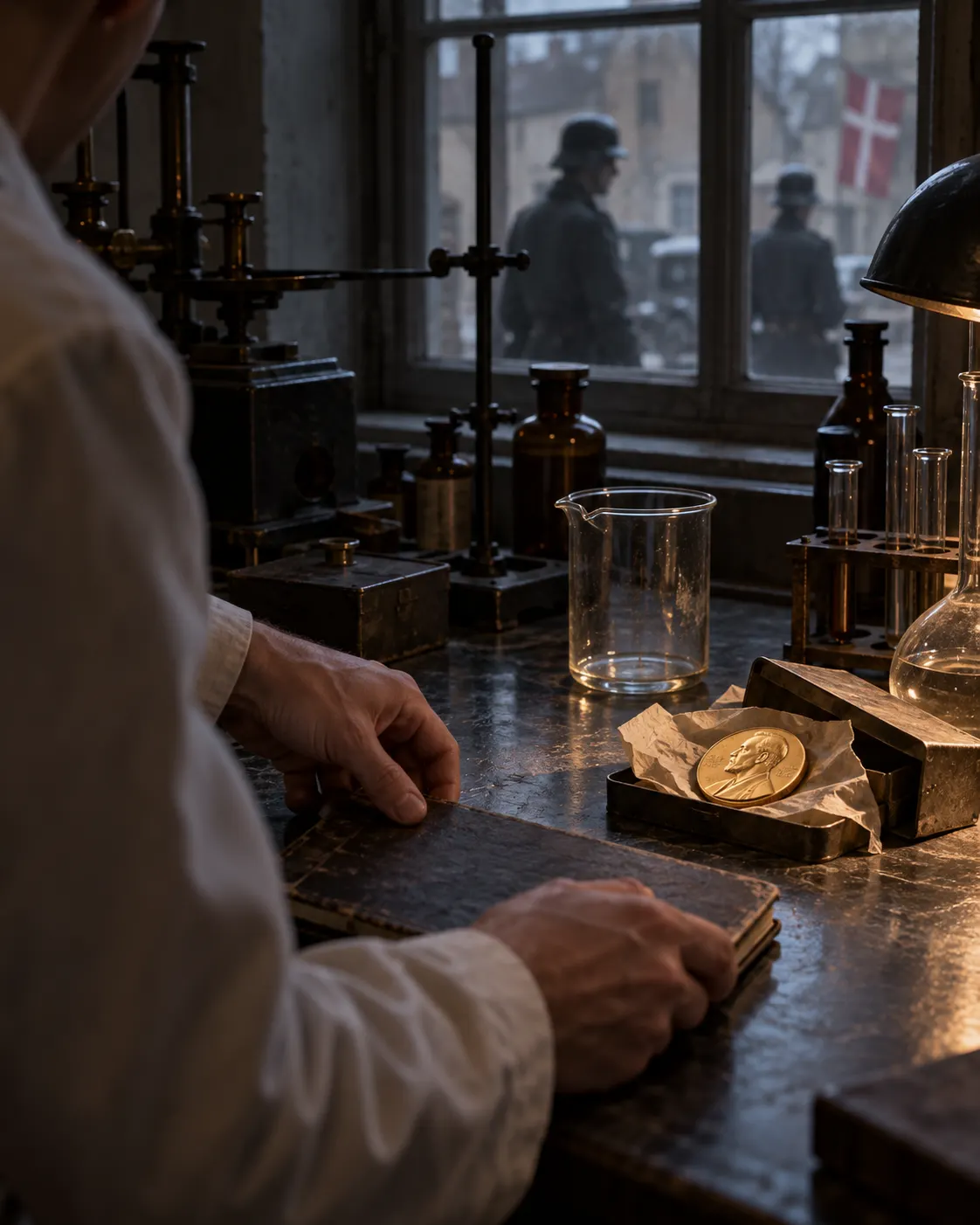
AI-generated cover image depicting a generic gold medal discreetly kept in a 1940s laboratory. It is not one of the actual medals in the account. Exact prompt: “Photorealistic editorial cover about Nobel gold medals hidden from Nazi forces during the occupation of Denmark: a small generic gold medal beside an unlabeled glass beaker in a shadowed 1940s Copenhagen laboratory, a scientist's hands seen from behind setting a notebook nearby, vertical 4:5. Symbolic reconstruction, not the actual historical medals or a photograph of George de Hevesy; no readable text, logos, or procedural chemistry details.”
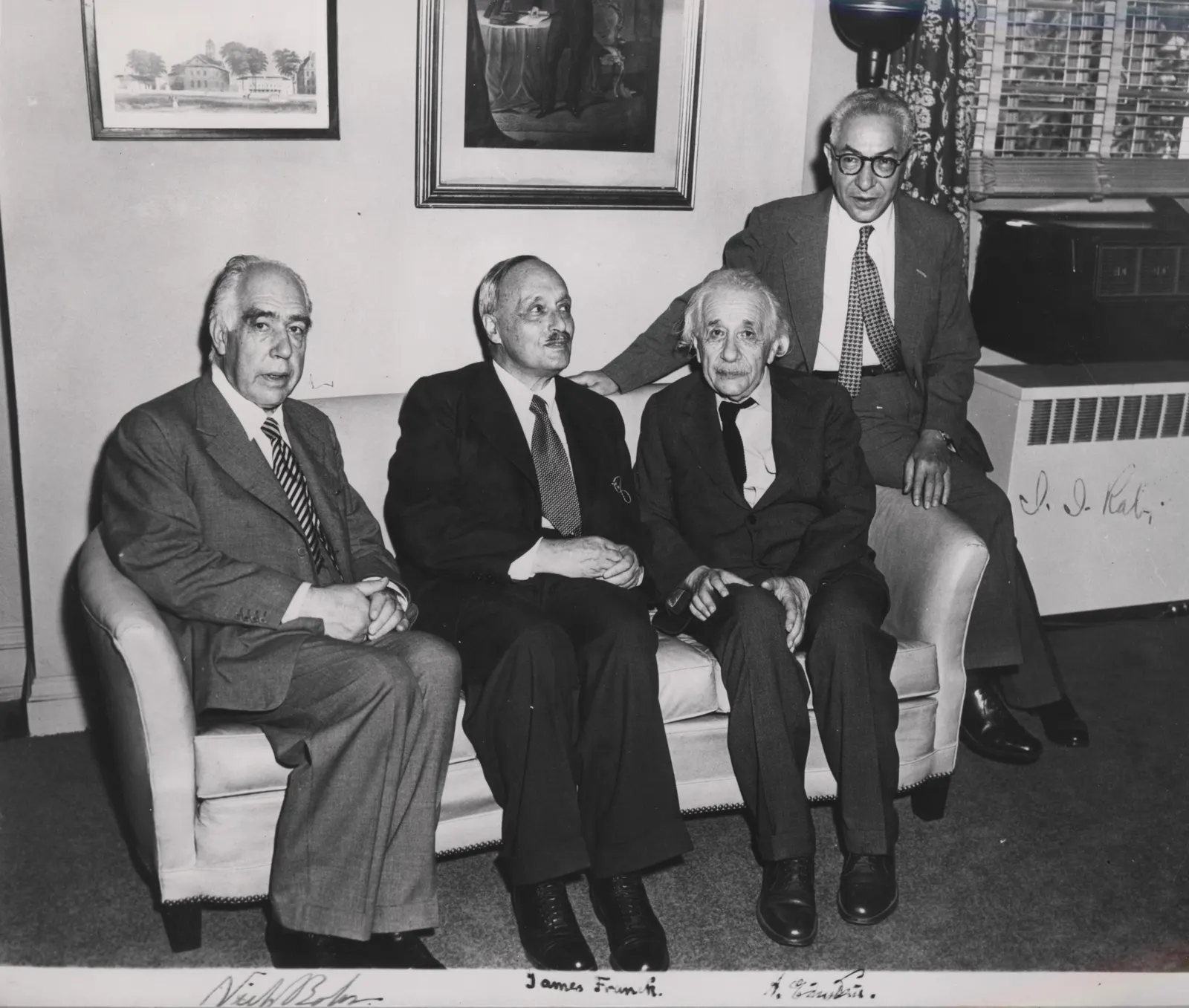
Smithsonian photograph of Niels Bohr, James Franck, Albert Einstein and Isidor Isaac Rabi together in 1954. Wikimedia Commons: https://commons.wikimedia.org/wiki/File:Portrait_of_Albert_Einstein,_Niels_Bohr,_James_Franck_and_Rabi.jpg; Smithsonian Institution marked “No restrictions.” Attribution: Smithsonian Institution, via Wikimedia Commons. Original file, unchanged.
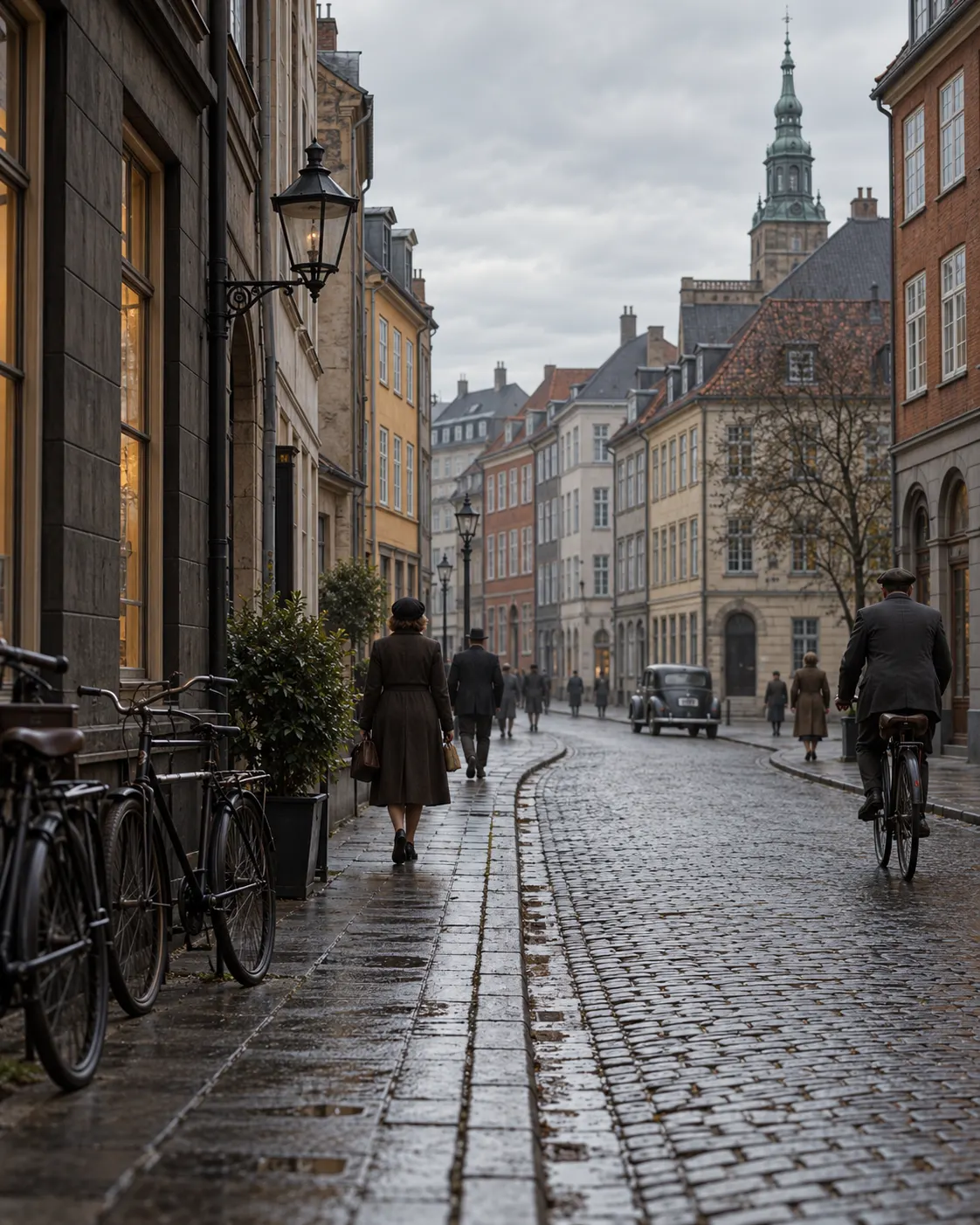
AI-generated editorial reconstruction (created 2026-10-19) of an unspecified quiet Copenhagen street in 1940; not a documentary photograph of a particular location. Exact prompt: “Photorealistic editorial reconstruction of a quiet Copenhagen street during the German occupation in 1940, bicycles and historic European architecture under overcast light, no soldiers or flags, vertical 4:5. Generic atmospheric illustration, not a documentary photograph of a specific location, no signs or readable text.”
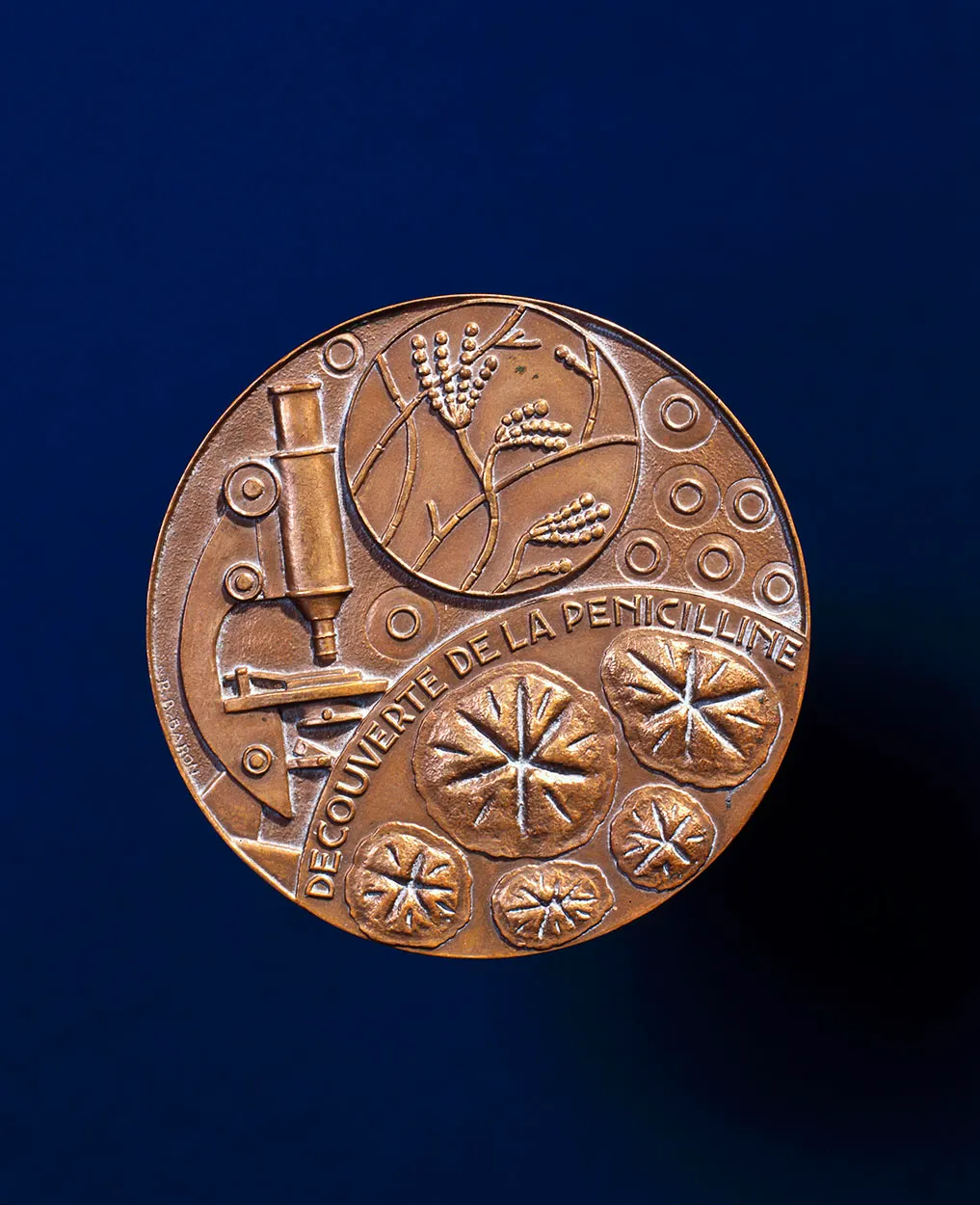
Photograph of the 1945 Nobel Prize in Medicine medal awarded to Alexander Fleming, on display at the National Museum of Scotland. Photographer Osama Shukir Muhammed Amin FRCP(Glasg). Wikimedia Commons: https://commons.wikimedia.org/wiki/File:Nobel_prize_medal_for_medicine,_Sweden,_1945,_to_Sir_Alexander_Fleming_(1881-1955)_who_discovered_Penicillin._On_display_at_the_National_Museum_of_Scotland.jpg; CC BY-SA 4.0: https://creativecommons.org/licenses/by-sa/4.0/. Attribution: Osama Shukir Muhammed Amin FRCP(Glasg), via Wikimedia Commons, CC BY-SA 4.0. This is Fleming’s medal, not one of the medals in the story. Copied unchanged from fact 1609.
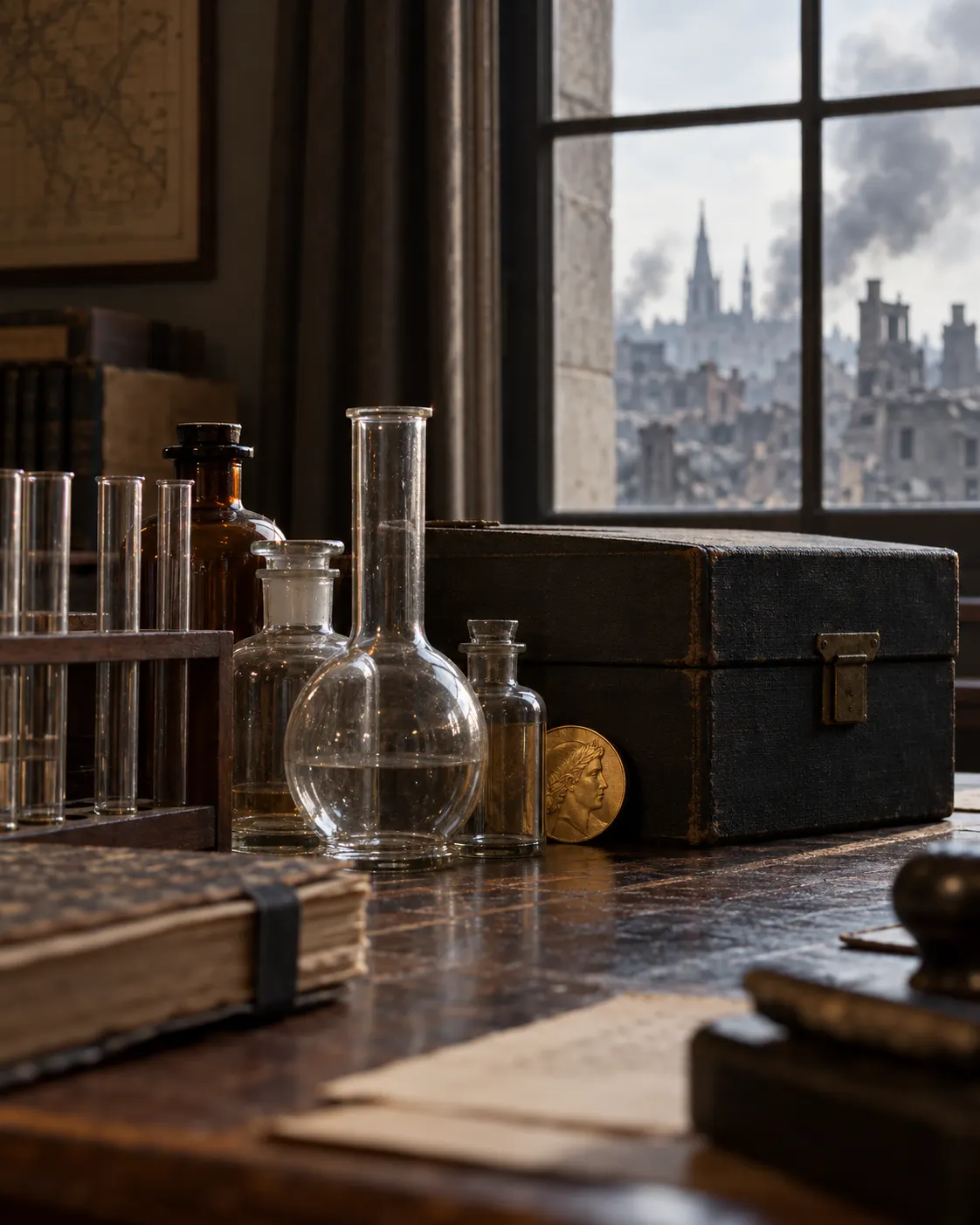
AI-generated symbolic still life (created 2026-10-19) of a generic medal kept near glassware and an archival box; no specific Nobel medal is depicted. Exact prompt: “Photorealistic editorial still life about preserving cultural treasures during wartime: a generic small gold medal tucked behind a row of laboratory glassware and a closed archival box in a 1940s European university office, soft window light, vertical 4:5. Symbolic, no actual Nobel medal design, no people, no chemistry procedure, no readable text or logos.”

AI-generated cover image depicting a generic gold medal discreetly kept in a 1940s laboratory. It is not one of the actual medals in the account. Exact prompt: “Photorealistic editorial cover about Nobel gold medals hidden from Nazi forces during the occupation of Denmark: a small generic gold medal beside an unlabeled glass beaker in a shadowed 1940s Copenhagen laboratory, a scientist's hands seen from behind setting a notebook nearby, vertical 4:5. Symbolic reconstruction, not the actual historical medals or a photograph of George de Hevesy; no readable text, logos, or procedural chemistry details.”

Слухати факт0:00 / —

Після вторгнення Німеччини до Данії у квітні 1940 року хімік Дьордь де Гевеші згадував, що розчинив у царській горілці золоті Нобелівські медалі, аби вони не потрапили до німецьких військ. У його спогаді йдеться про медалі Макса фон Лауе та Джеймса Франка; опис архіву Франка називає медаль Франка й медаль Нільса Бора. Медаль Франка згадується в обох описах, але другу медаль приписують або Максу фон Лауе, або Нільсу Бору. Золото згодом повернули Нобелівському фонду, який виготовив нові медалі.