WattSearch
Your WattLeaderboard
Language
Autoplay narration
Appearance

Feedback

Have a question or an idea? Something not working? Send us a message.

What would you like to share?
Up to 3 files, 5 MB each, 12 MB total.
Or contact us directly

Direct contacts open a separate chat or email. Files attached here are not included.

arohalya@gmail.com
A little wonder, every day

Fact 2251 — was inlay wire heated to 550°C
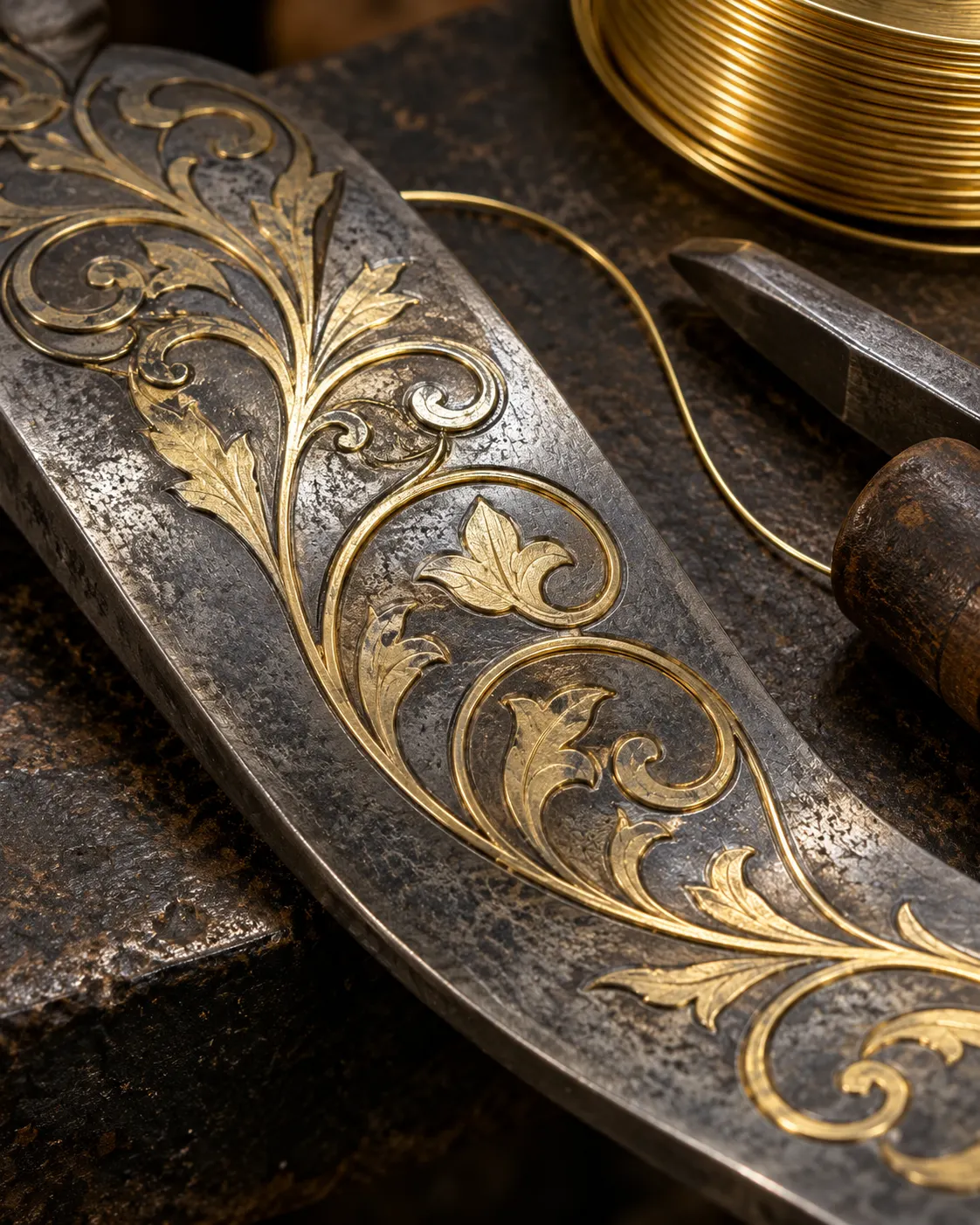
AI-generated with OpenAI image generation. Prompt: “Photorealistic editorial cover for a museum article on precious-metal wire inlay techniques. Macro view of a decorative steel sample with thin gold wire set into shallow ornamental grooves on a dark work surface, no readable text, no weapons, no people, no logos. Museum-quality light reveals fine craft detail, portrait 4:5.”
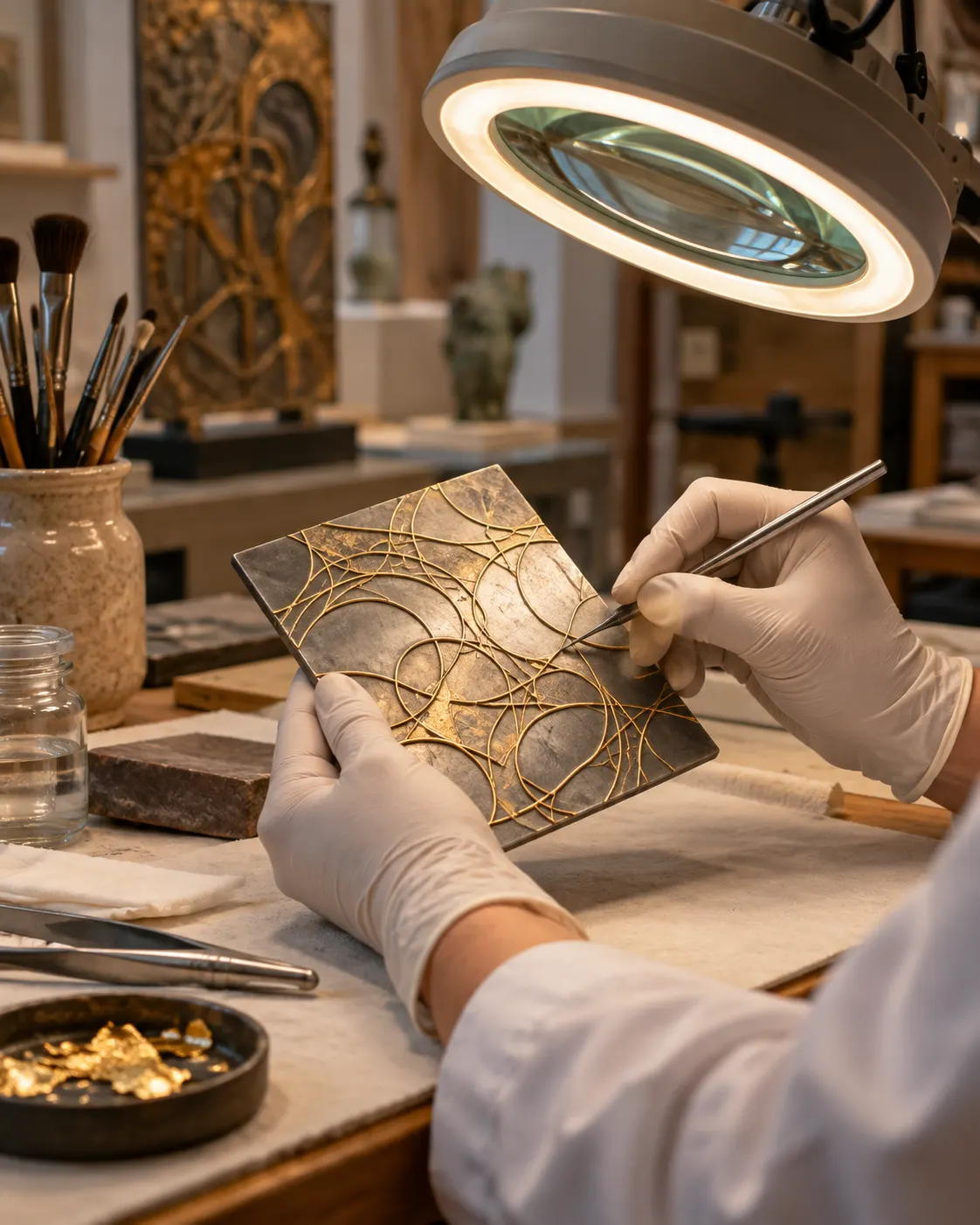
AI-generated with OpenAI image generation. Prompt: “Distinct photorealistic editorial image in a museum conservation studio: a conservator examines an abstract decorative metalwork sample beneath a magnifying lamp, thin gold wire pattern visible on a steel tile, no weapon, no blade, no readable text, no logos, no faces. Warm, careful documentary lighting, portrait 4:5.”

AI-generated with OpenAI image generation. Prompt: “Photorealistic editorial cover for a museum article on precious-metal wire inlay techniques. Macro view of a decorative steel sample with thin gold wire set into shallow ornamental grooves on a dark work surface, no readable text, no weapons, no people, no logos. Museum-quality light reveals fine craft detail, portrait 4:5.”

Listen to fact0:00 / —

Descriptions of inlay sometimes give an exact wire-heating temperature, such as 550°C, but the museum source does not verify that figure. The Metropolitan Museum’s technical note describes true inlay this way: grooves are cut into steel, and soft precious-metal wire is hammered into them. That provides a supported account of the basic mechanism, not a recipe with one fixed temperature; the relevant temperature would depend on the metal and process.