Meniscus and the capillary effect
Water wets clean glass, so its surface rises slightly at the cup wall and forms a concave meniscus. In narrow gaps or tubes, wetting together with surface tension can raise liquid against gravity—capillary action. But the visible curve in a cup is primarily a meniscus, while tea leaves moving toward the edge or center are influenced by separate flows, not simply molecules “sticking” to the wall. [1–3]
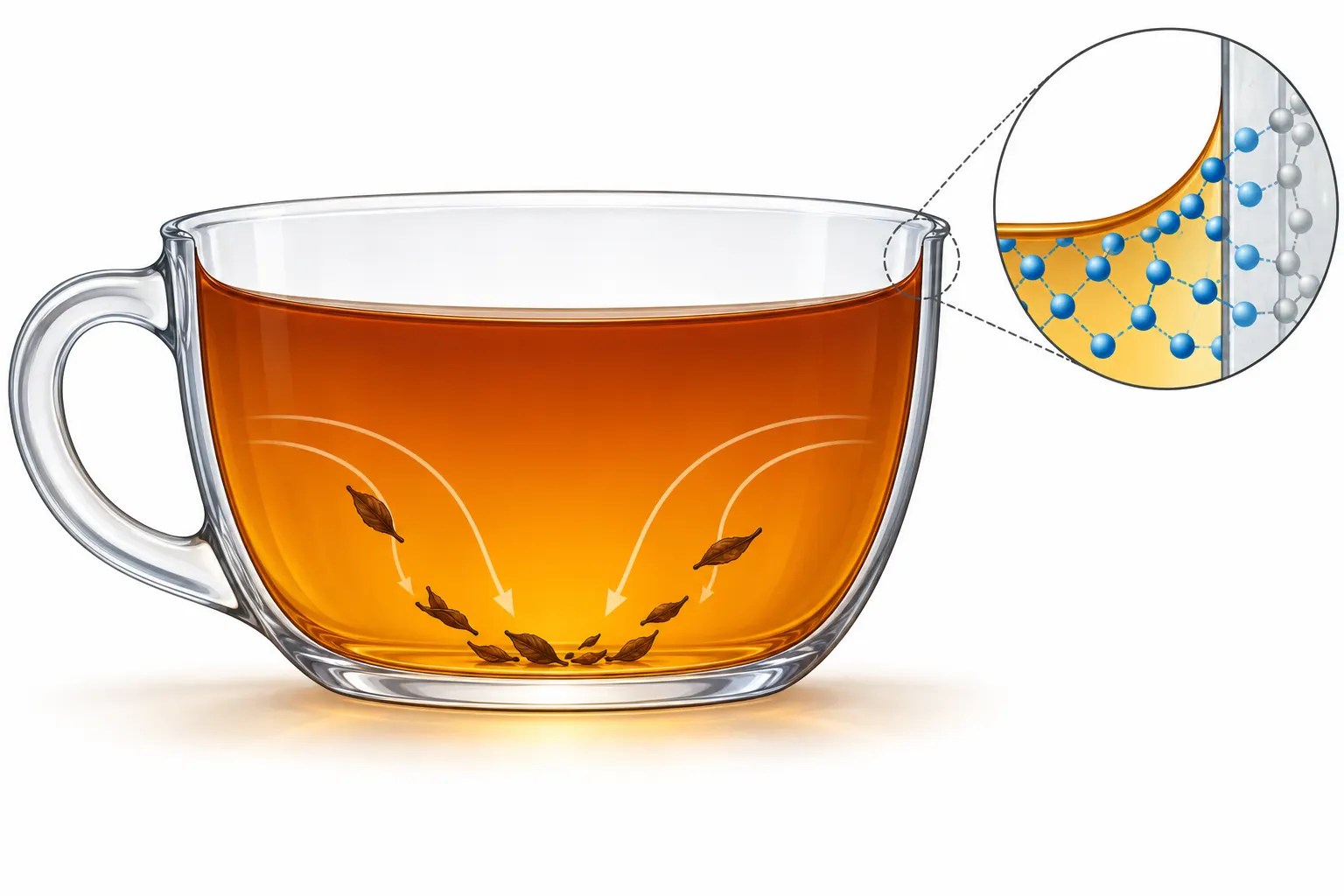
The wall curve is a meniscus; capillary rise is clearer in a narrow channel.