How the brain adapts sensory processing
After vision loss, the brain can recruit some occipital regions, usually associated with vision, to process information from touch and hearing. Neuroimaging studies find these regions engaged during Braille reading and in some auditory perception and sound-localization tasks. This is an example of neuroplasticity: the nervous system’s capacity to change its functional connections.
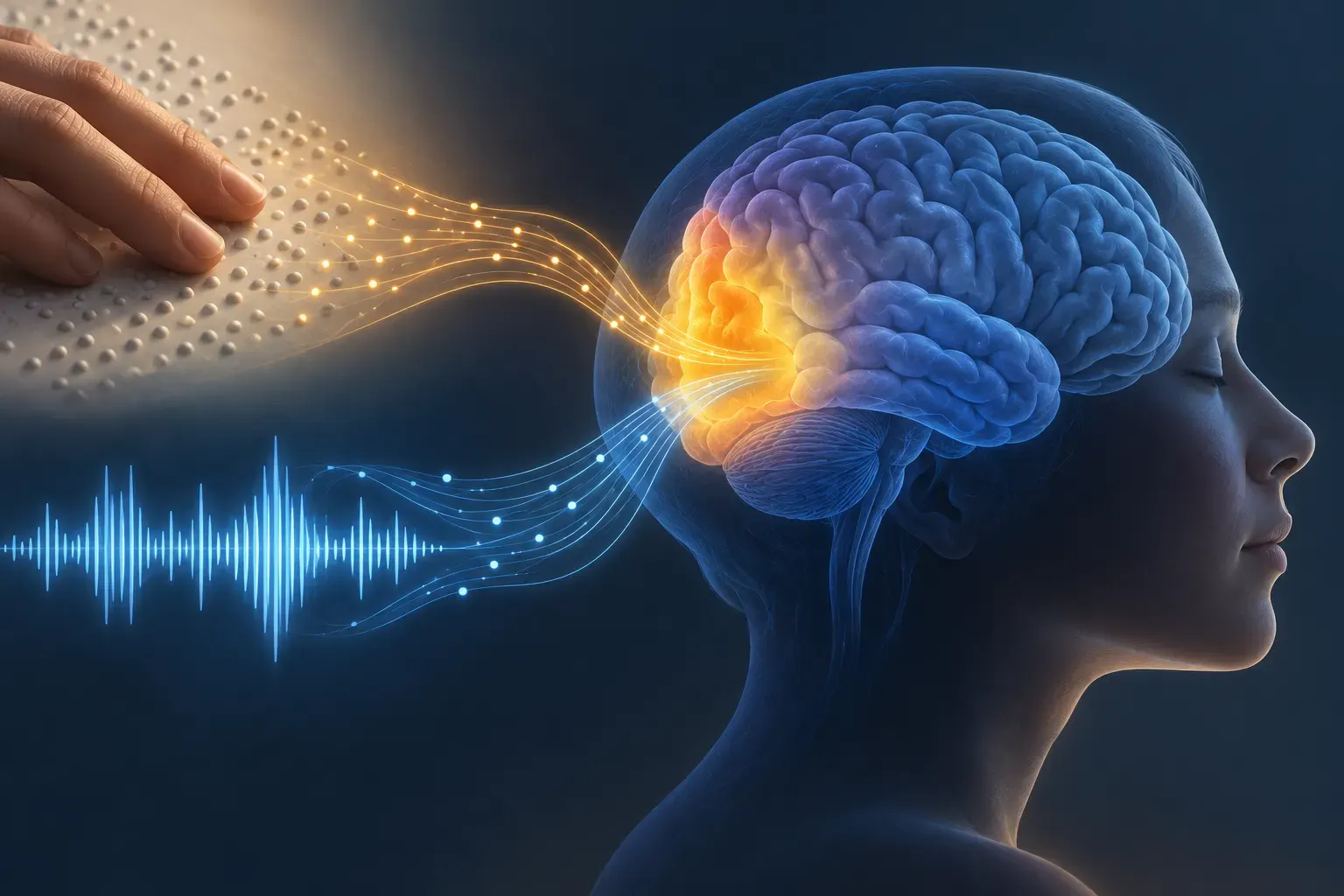
Illustration is an AI-generated conceptual schematic, not a medical image.
These changes vary across people and depend, among other factors, on age at vision loss, experience, and task. They do not mean that all blind people have the same auditory or tactile abilities, or that visual cortex is completely transformed into another sensory system.