WattSearch
Your WattLeaderboard
Language
Autoplay narration
Appearance

Feedback

Have a question or an idea? Something not working? Send us a message.

What would you like to share?
Up to 3 files, 5 MB each, 12 MB total.
Or contact us directly

Direct contacts open a separate chat or email. Files attached here are not included.

arohalya@gmail.com
A little wonder, every day

Thomas Hicks’s marathon
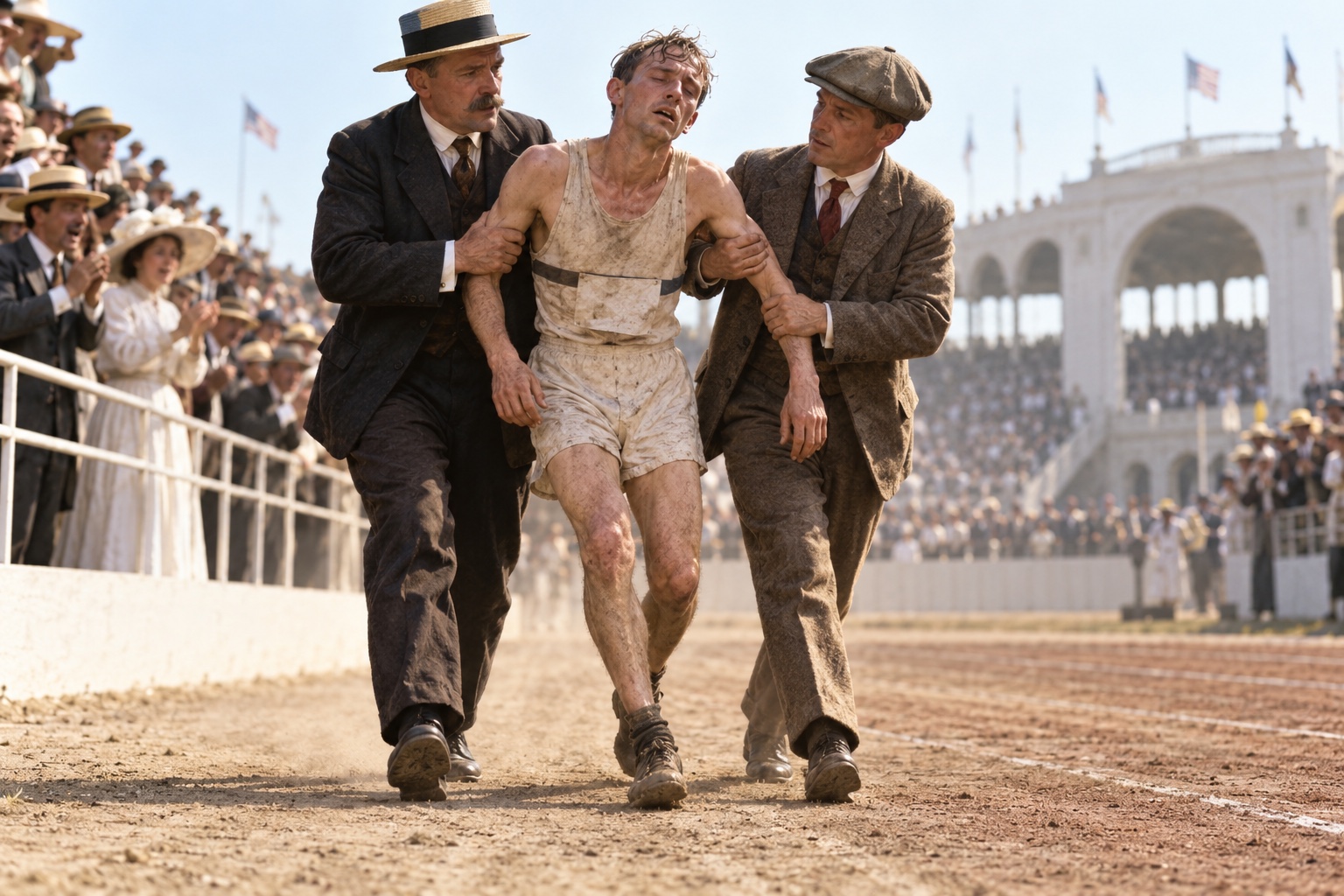
Титульна AI-згенерована ілюстрація / AI-generated cover illustration. A historically styled reconstruction of exhausted Thomas Hicks being supported by attendants near the 1904 marathon finish; it is not a documentary photograph.
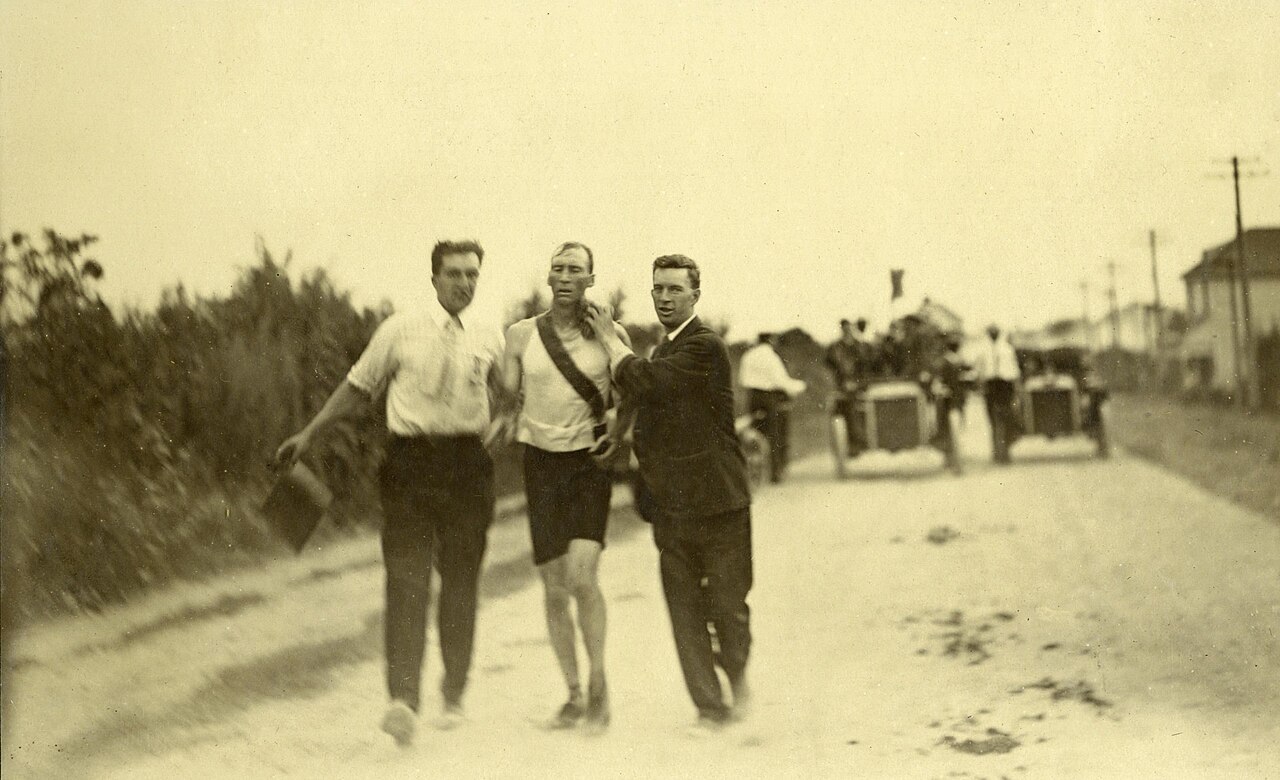
Documentary photo of Hicks being supported during the race, attributed to unknown photographer; Missouri History Museum collection via Wikimedia Commons, public domain in the United States. https://commons.wikimedia.org/wiki/File:Marathon_Hicks1904.jpg
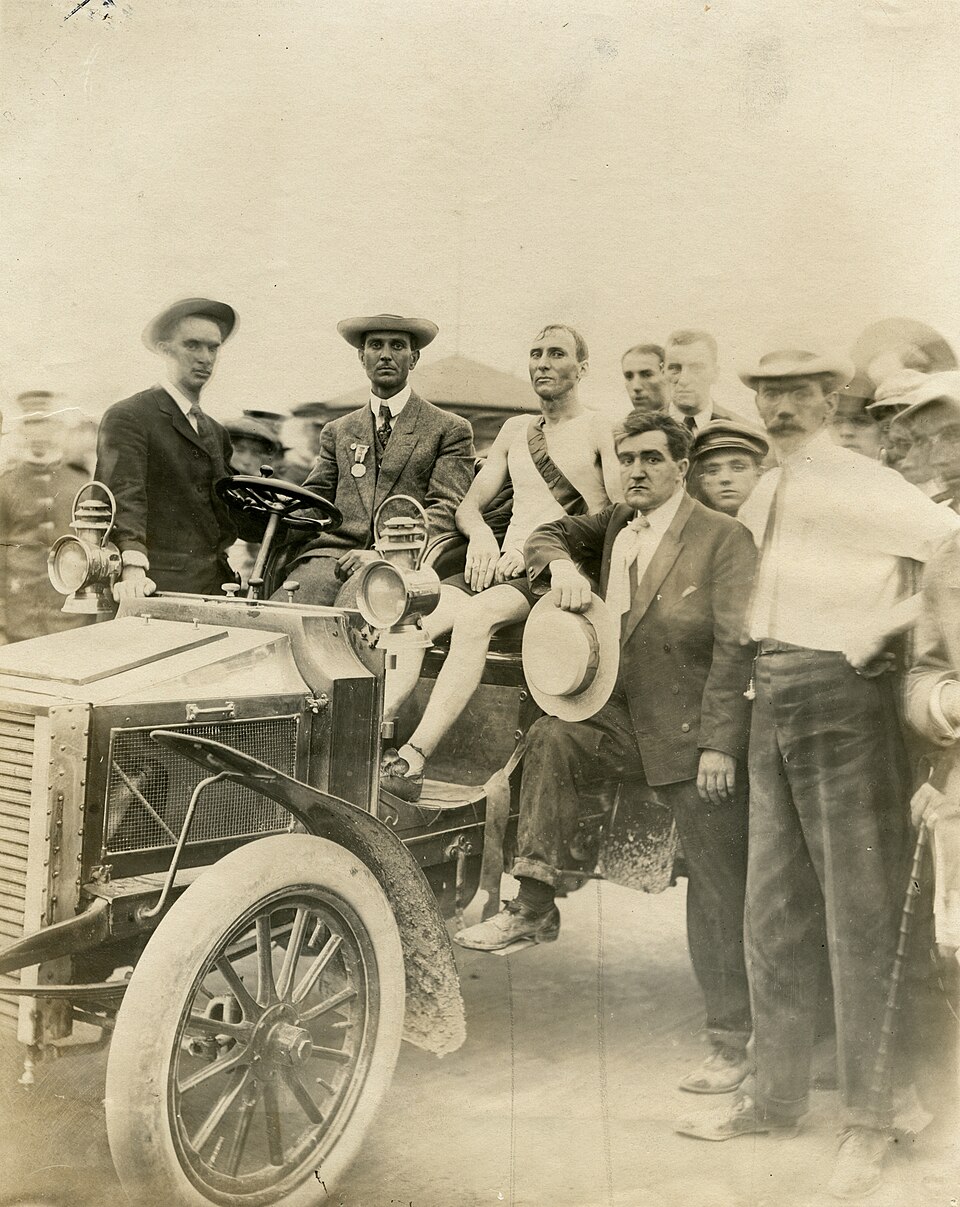
Documentary photo of Hicks resting in a car after the race, photographed by Jessie Tarbox Beals; Missouri History Museum collection via Wikimedia Commons, Public Domain Mark 1.0. https://commons.wikimedia.org/wiki/File:1904_Olympics-_Thomas_J._Hicks,_Boston,_winner_of_the_Marathon_Race_resting_in_a_car_after_the_finish.jpg

Титульна AI-згенерована ілюстрація / AI-generated cover illustration. A historically styled reconstruction of exhausted Thomas Hicks being supported by attendants near the 1904 marathon finish; it is not a documentary photograph.

Listen to fact0:00 / —

On August 30, 1904, American Thomas Hicks won the Olympic marathon in St. Louis despite exhausting heat and a dusty course. During the race, his attendants gave him strychnine—then mistakenly used as a stimulant—as well as egg whites and brandy. Near the finish, Hicks could barely run and, according to a contemporary account, was delirious and thought the finish was still far away; attendants supported him, and four doctors helped him after the race. Strychnine is now known as a strong poison.