Fact 1639 — Which Nobel Prize category has the most laureates?
, source identified as NobelPrize.org; rights holder Nobel Foundation, photographer not identified. Commons documents public-domain status in Sweden and the United States under stated photograph/publication rules; jurisdiction caveats apply. Attribution: “Nobel Foundation, via Wikimedia Commons.” Copied unchanged from fact 1638.](https://xtotam-watt-media-442809139467.s3.eu-central-1.amazonaws.com/facts/5ee6cac4-3143-4741-baff-eef6ecc4dd85/media/bd17ddf9095285a35cf0b25dbbe7743d67ffe7f293494b3d36660af968fb2fec/linus-pauling-1962.webp)

; original [U.S. National Library of Medicine collection](https://www.nlm.nih.gov/visibleproofs/galleries/technologies/dna_image_8.html). Creator not identified; Commons records a U.S. federal-government-work basis and Public Domain Mark 1.0, with rights caveat recorded in fact 1638. Attribution: “U.S. National Library of Medicine, Visible Proofs, via Wikimedia Commons.” Copied unchanged from fact 1638.](https://xtotam-watt-media-442809139467.s3.eu-central-1.amazonaws.com/facts/5ee6cac4-3143-4741-baff-eef6ecc4dd85/media/bb368c97df5e37458cb07fb136dc632744878c5c769651dfda80c7cf9f4c39c2/frederick-sanger-portrait.webp)
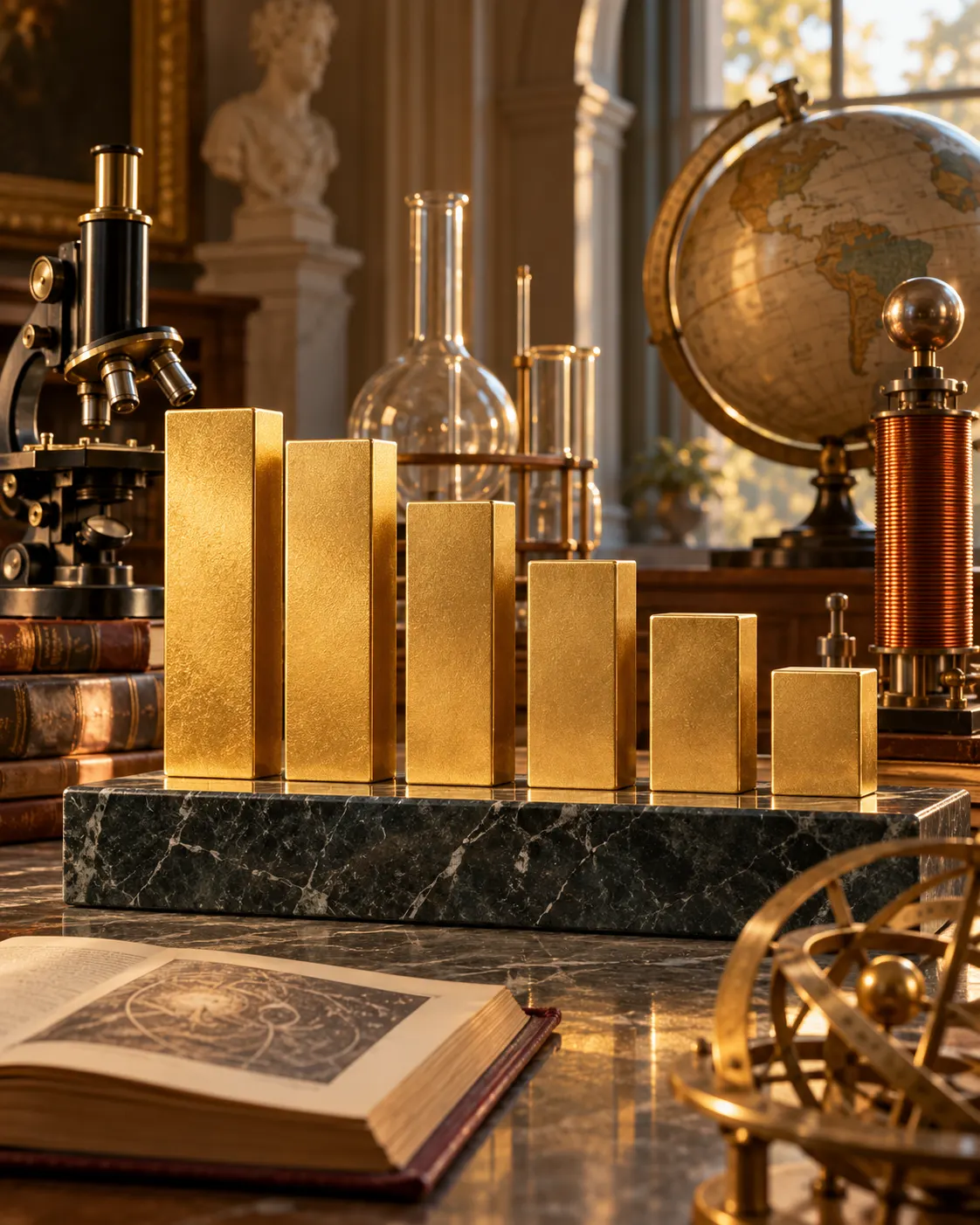
AI-generated cover: six unlabeled bars, with the first slightly taller than the second, among scientific objects. Generated 19 October 2026. Prompt: “Photorealistic vertical 4:5 editorial cover for a fact about which Nobel Prize category has the most laureate entries. Show a clean, elegant museum-like display with six unlabeled gold bars of different heights, the first bar just slightly taller than the second, plus subtle scientific objects such as a microscope, glassware, a physics coil, a book and a globe. Sophisticated warm lighting, visually clear comparison, no letters, numbers, logos, or recognizable Nobel medal.”
In the 1901–2025 totals, the Nobel Prize in Physiology or Medicine has the most laureate entries, at 232. It is followed by physics with 230, chemistry with 200, peace with 143, literature with 122, and economic sciences with 99. The Peace Prize total includes people and organisations; the prize in economic sciences has been awarded since 1969.