WattSearch
Your WattLeaderboard
Language
Autoplay narration
Appearance

Feedback

Have a question or an idea? Something not working? Send us a message.

What would you like to share?
Up to 3 files, 5 MB each, 12 MB total.
Or contact us directly

Direct contacts open a separate chat or email. Files attached here are not included.

arohalya@gmail.com
A little wonder, every day

Fact 1621 — from nominations to Nobel Prizes
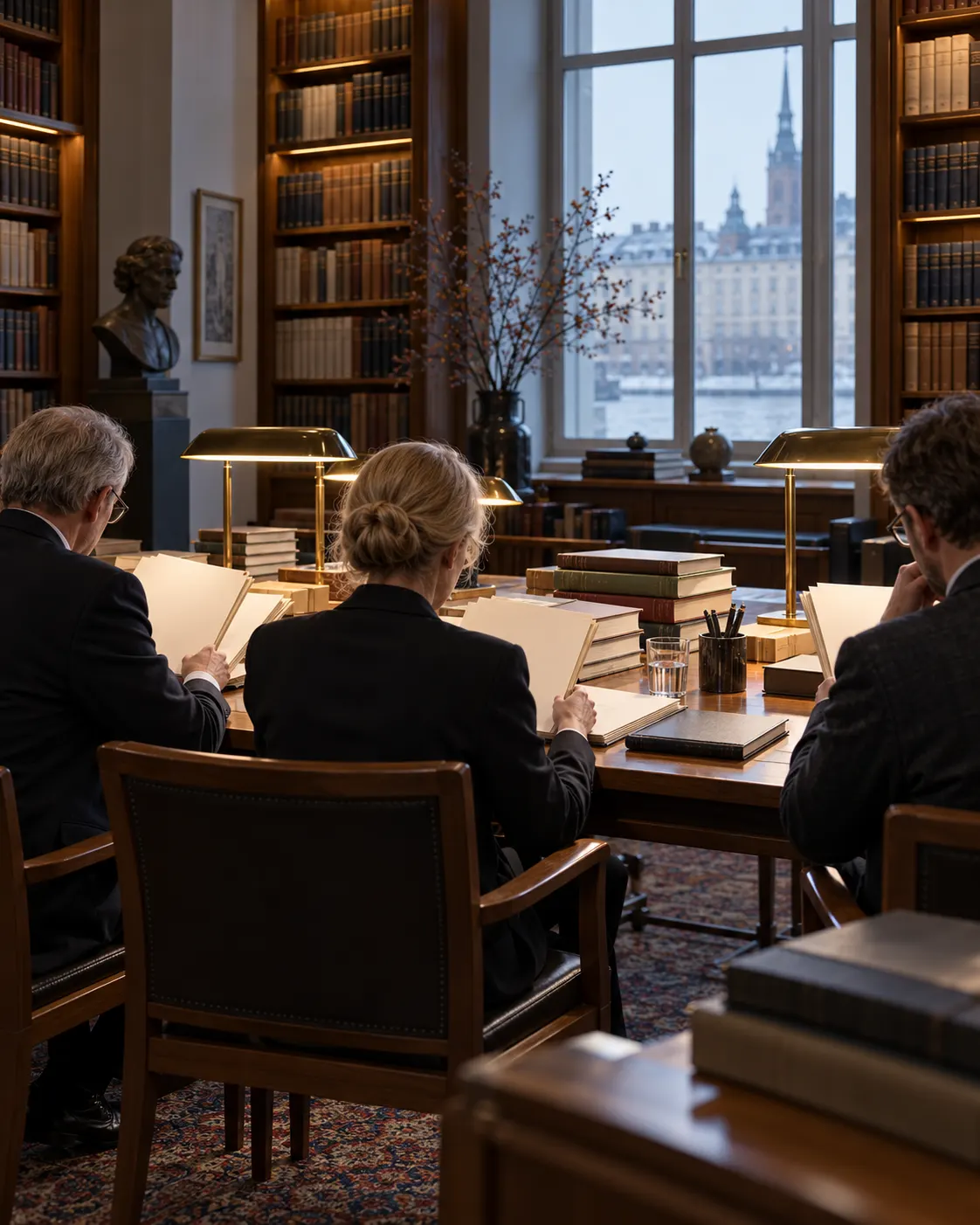
AI-generated cover: a fictional committee reviewing blank folders in a scholarly library; illustrative, not a depiction of Nobel committee members or real records. Prompt: “Photorealistic vertical 4:5 editorial cover about how Nobel Committees review eligible nominations and evaluate candidates. Show a quiet committee worktable in a Swedish institution library, three anonymous committee members seen from behind examining blank folders, scholarly books, balanced thoughtful atmosphere. Entirely generic fictional scene, not actual committee members or records; no real people, no seals, no Nobel logos, no readable text, no flags, no medals.” Generated 19 October 2026.
contemporary newspaper illustration of the 10 December 1901 ceremony, showing Crown Prince Gustaf presenting the diploma to physics laureate J. H. van ’t Hoff. Artist C. A. Olausson; originally published in the Swedish National Library newspaper archive. Source: [Wikimedia Commons file page](https://commons.wikimedia.org/wiki/File:Olausson_1901_Nobel_Prize_ceremony.jpg), which links to the [original newspaper page](https://tidningar.kb.se/ctbxmn4590d58bsp/part/1/page/11). Public domain in the United States (published 1901); Commons records the Swedish source provenance. No edits; checked 18 October 2026.
AI-generated editorial still life of blank archival files and review tools, symbolizing confidential nominations; no real nomination material is shown. Prompt: “Photorealistic vertical 4:5 editorial still life for a story about confidential award nominations: a closed plain archival folder, blank paper sheets, pencil, reading glasses and magnifying glass on a committee desk, with stacks of anonymous files softly out of focus. No readable writing, no names, no seals, no logos, no real nomination records. Calm neutral institutional light.” Generated 19 October 2026.
Nobel diploma awarded to Wilhelm Conrad Röntgen in 1901, the first Physics laureate. Source: [Wikimedia Commons file page](https://commons.wikimedia.org/wiki/File:Nobel_Prize_diplom_Wilhelm_Conrad_R%C3%B6ntgen.jpg), sourced there to the University of Würzburg. The two-dimensional public-domain diploma reproduction is marked public domain; original file, no edits; checked 18 October 2026.
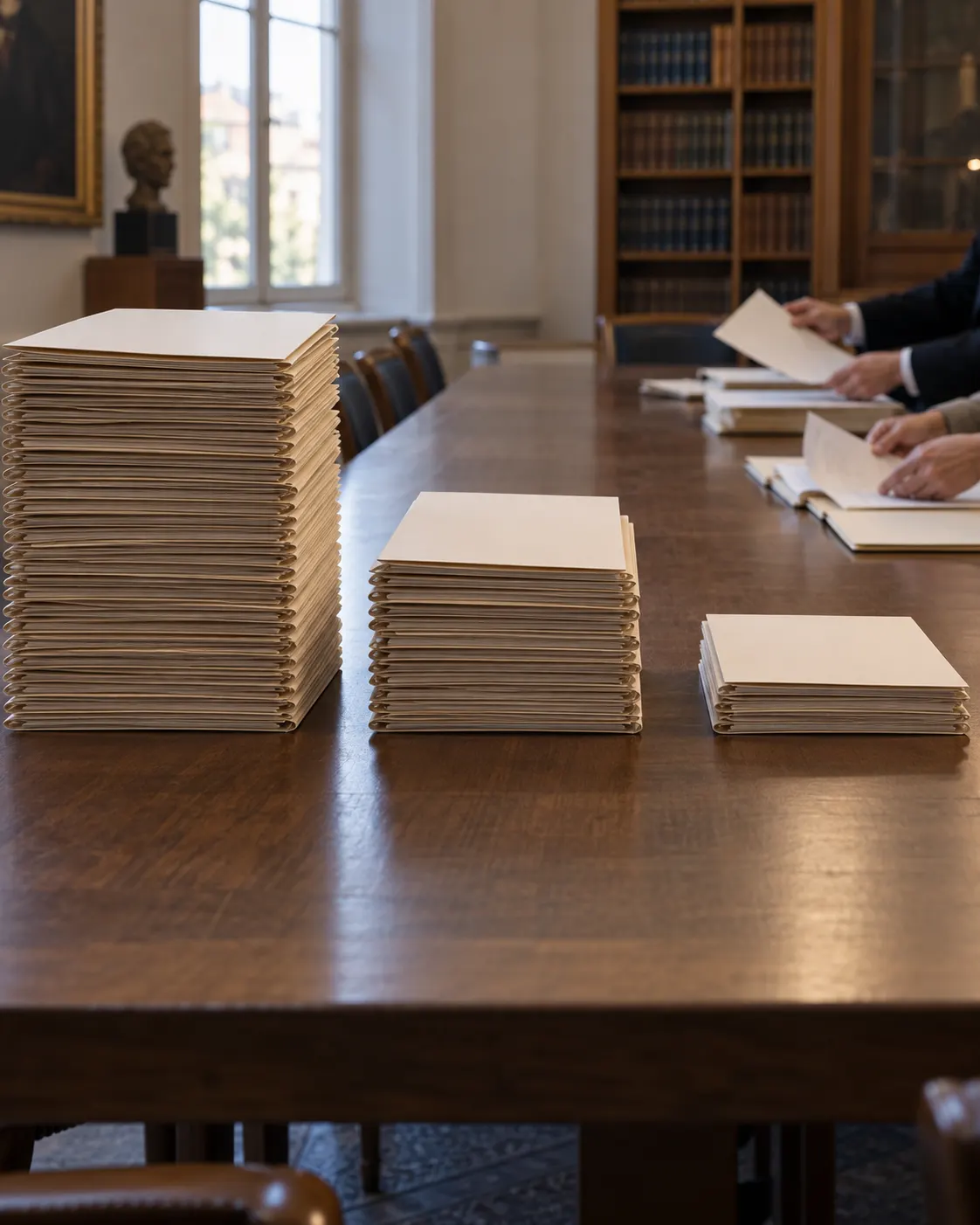
AI-generated editorial scene of blank folders arranged in diminishing stacks to illustrate candidate-list review and narrowing; no actual Nobel records are shown. Prompt: “Photorealistic vertical 4:5 editorial still life showing a review process narrowing down: three neat groups of blank folders arranged from a large stack to a small selected stack across a long table, with a few anonymous hands reviewing papers at the far end. Symbolic visual only, no actual Nobel records, no readable text, names, seals, logos or medals. Neutral academic room, documentary editorial photography style.” Generated 19 October 2026.

AI-generated cover: a fictional committee reviewing blank folders in a scholarly library; illustrative, not a depiction of Nobel committee members or real records. Prompt: “Photorealistic vertical 4:5 editorial cover about how Nobel Committees review eligible nominations and evaluate candidates. Show a quiet committee worktable in a Swedish institution library, three anonymous committee members seen from behind examining blank folders, scholarly books, balanced thoughtful atmosphere. Entirely generic fictional scene, not actual committee members or records; no real people, no seals, no Nobel logos, no readable text, no flags, no medals.” Generated 19 October 2026.

Listen to fact0:00 / —

Each year, Nobel Committees review nominations, check that nominators are eligible, and assess candidates. The list is then narrowed, and experts may help the committees evaluate candidates. Procedures and candidate counts differ by prize category, so figures such as “3,000 nominators and 300 candidates” do not apply uniformly to every prize.