A sloth and its fur ecosystem
; CC BY 2.0; downloaded 1920-pixel derivative without edits; checked 21 October 2026.](https://xtotam-watt-media-442809139467.s3.eu-central-1.amazonaws.com/facts/6d2eb0a4-5917-4a4d-ab7e-acec8423fa89/media/f383530a0a81fc0e55b84d1b23e334b6f98b4914e0d2ea20d0b1e038955314b7/sloth-fur-moths.webp)
; CC BY 2.0; unaltered; checked 21 October 2026.](https://xtotam-watt-media-442809139467.s3.eu-central-1.amazonaws.com/facts/6d2eb0a4-5917-4a4d-ab7e-acec8423fa89/media/b3657a59dbc9f8c31c809c39ba98edab7c38e1c53dea53d0ea7de3ca114d3704/sloth-hair-algae-micrograph.webp)
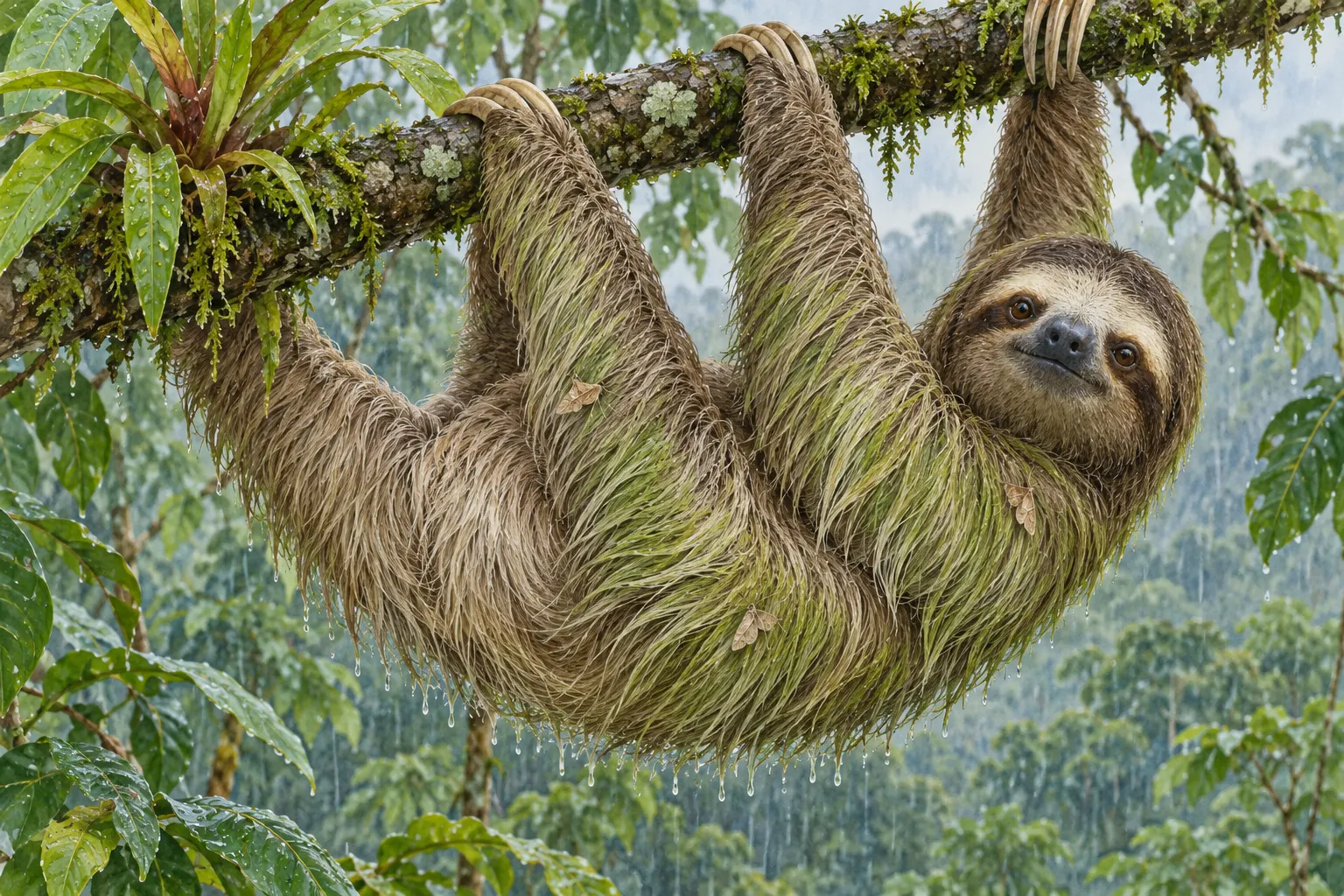
Концептуальна ілюстрація лінивця догори ногами з зеленкуватим хутром; не документальне фото. / Conceptual illustration of an upside-down sloth with greenish fur; not a documentary photograph.
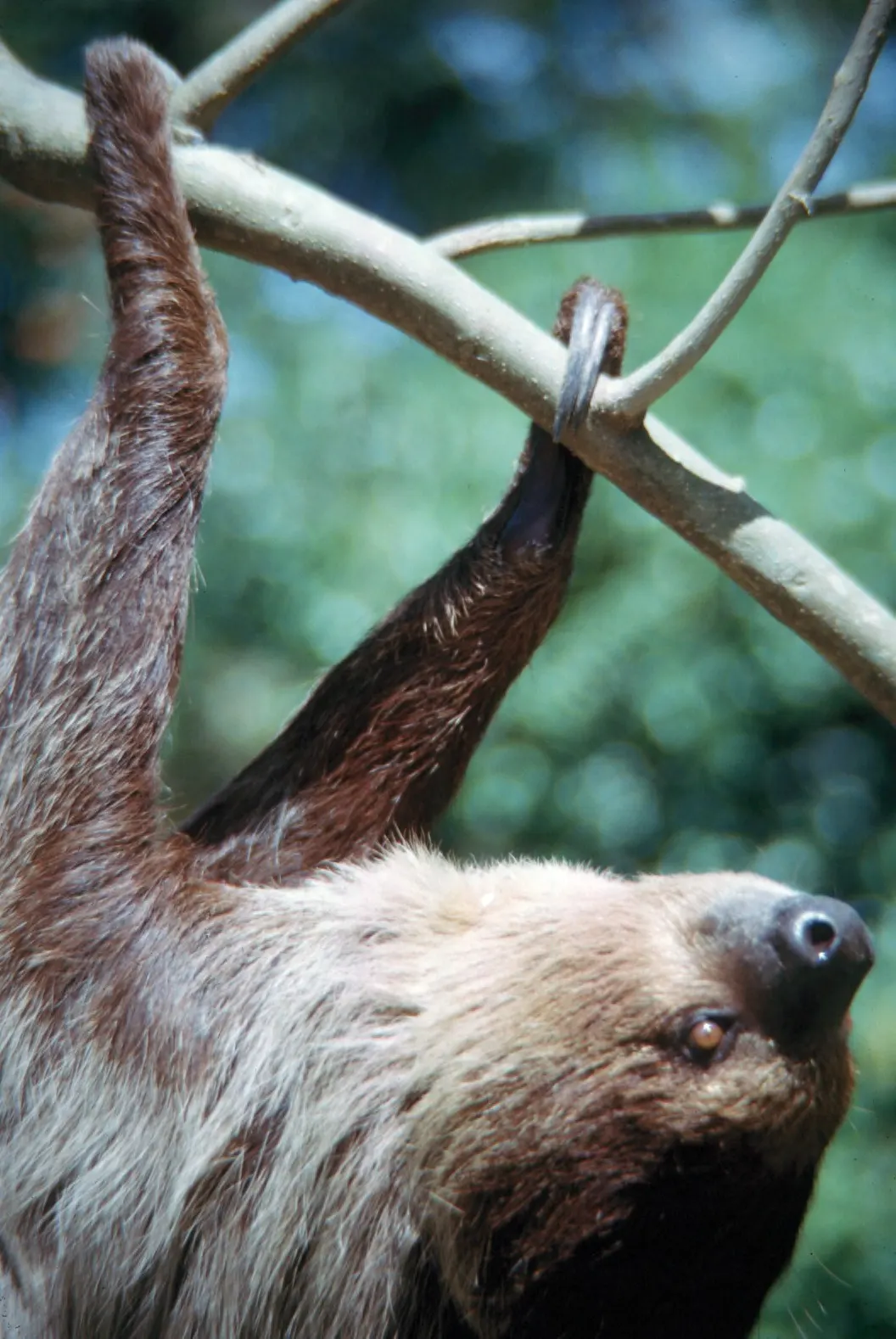
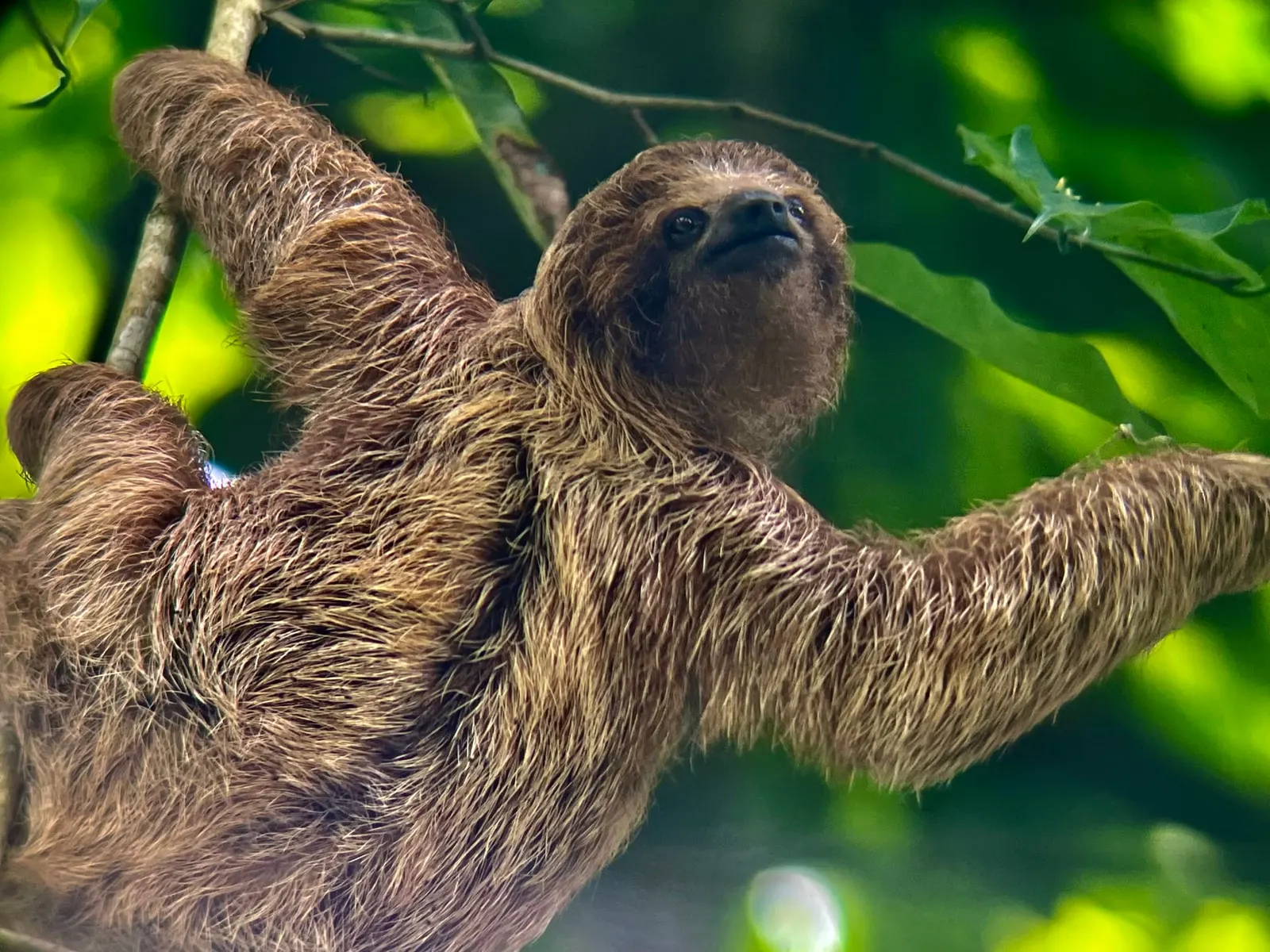
In many sloths, hair grows from a part along the belly toward the back—opposite the usual direction in most mammals and suited to an upside-down lifestyle; this arrangement also helps rain run off. Algae can live in grooves along the hairs, while fungi, bacteria, and small arthropods also inhabit the fur. Algae give the coat a greenish tint that may aid camouflage. The interactions in this “ecosystem” are complex and not all are well understood.
In a 2023 study, researchers sequenced short fungal DNA markers from the fur of ten two-toed and ten three-toed sloths living at the same site. The fungal communities differed between the species; in this sample, host species explained the differences better than sex, age, or body weight. This is a comparison from one site and a small sample, not proof that fungal species or their interactions with algae are the same everywhere.