How cephalopods switch skin patterns
Squid, cuttlefish, and octopuses can rapidly change their skin color and pattern. Chromatophores play a key role: these are pigment sacs surrounded by radial muscles. Neural signals control muscle contraction, expanding or contracting the sacs and changing the visible color.
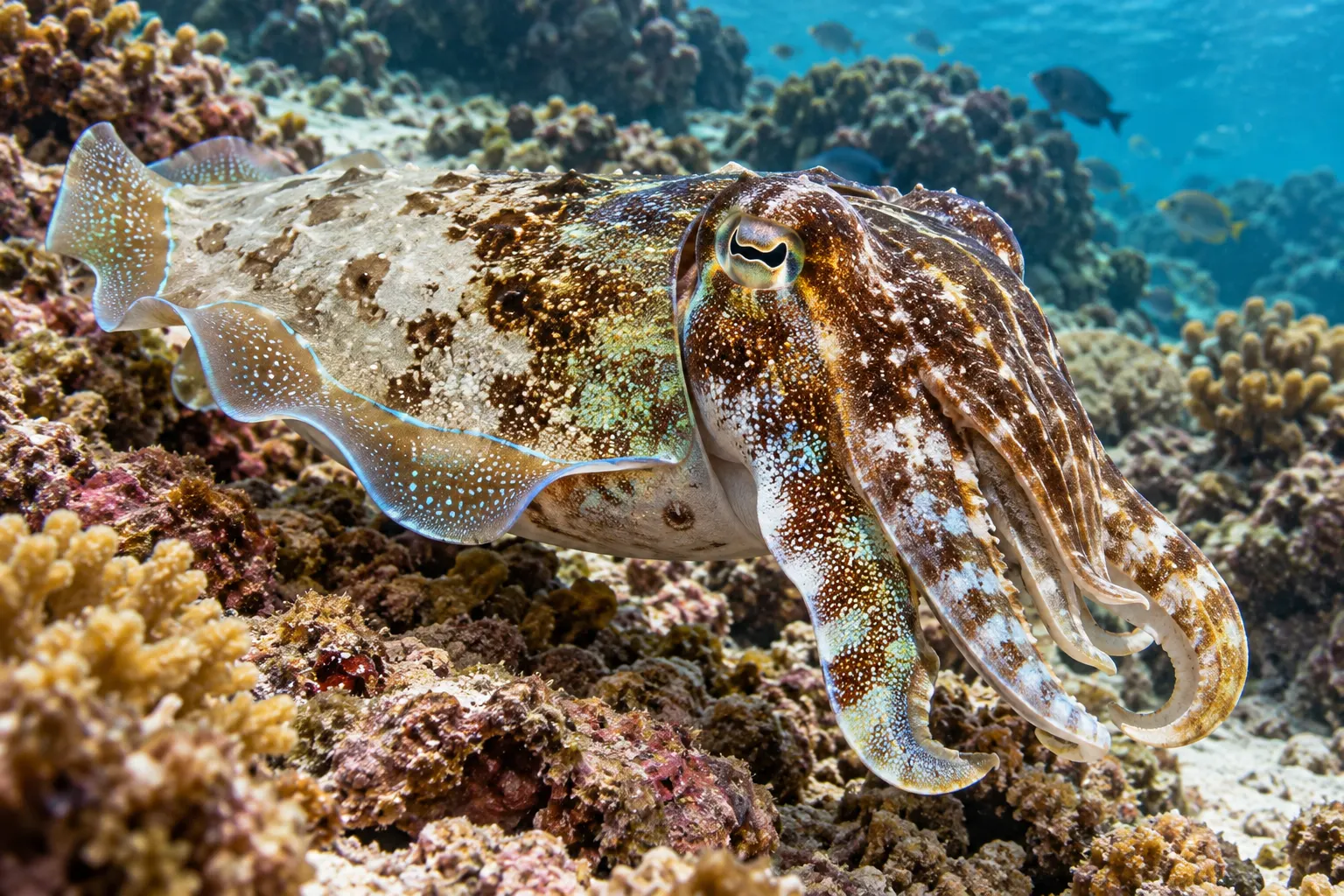
Illustration is AI-generated and conceptual, not documentary photography.
These changes help with camouflage and signaling, including interactions with rivals or mates. Some cephalopods also produce wave-like patterns that appear to travel across the body. Skin appearance is not produced by chromatophores alone; many species also use light-reflecting structures and changes in skin texture.