Rebuilding unity in Rwanda
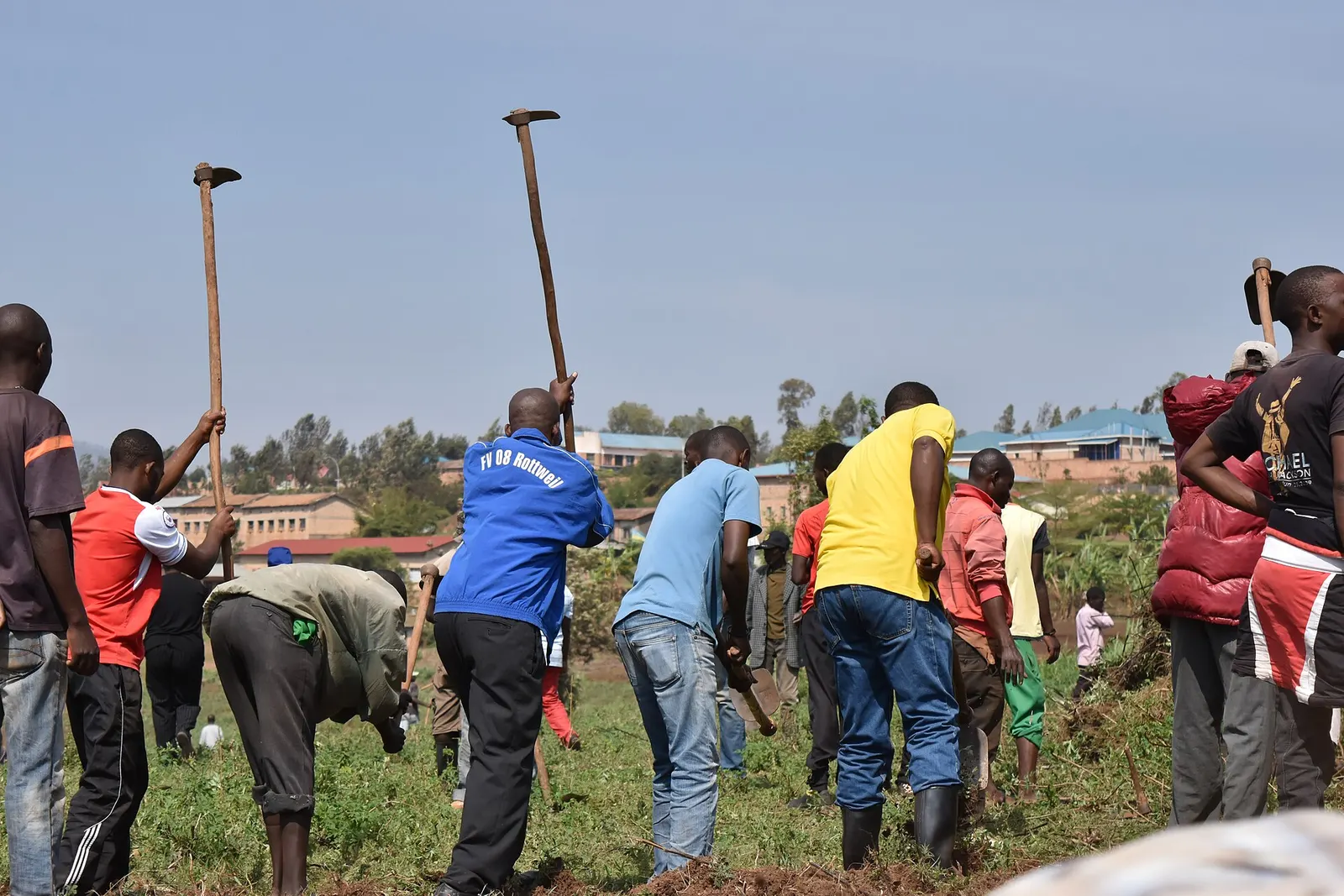
photo captioned as Umuganda community work, depicting residents working together; 30 July 2011, Kicukiro District. Creator Masako Kato, photographed 30 September 2017; CC BY-SA 4.0. Original file page: https://commons.wikimedia.org/wiki/File:Umuganda.jpg. Attribution: Masako Kato, “Umuganda,” CC BY-SA 4.0. No edits.
After the 1994 genocide against the Tutsi in Rwanda, in which the United Nations estimates that more than 800,000 people—mostly Tutsi—were killed in about 100 days, the country created institutions and programs aimed at rebuilding society. A 1999 law established the National Unity and Reconciliation Commission; later legislation formalized monthly community work, Umuganda, for able-bodied Rwandan citizens aged 18 to 65. The Commission’s 2015 report gave reconciliation an average status score of 92.5%; this was a composite research result, not a response to one survey question or proof that all respondents considered reconciliation complete.