Римляни знали вогнетривку тканину з азбесту
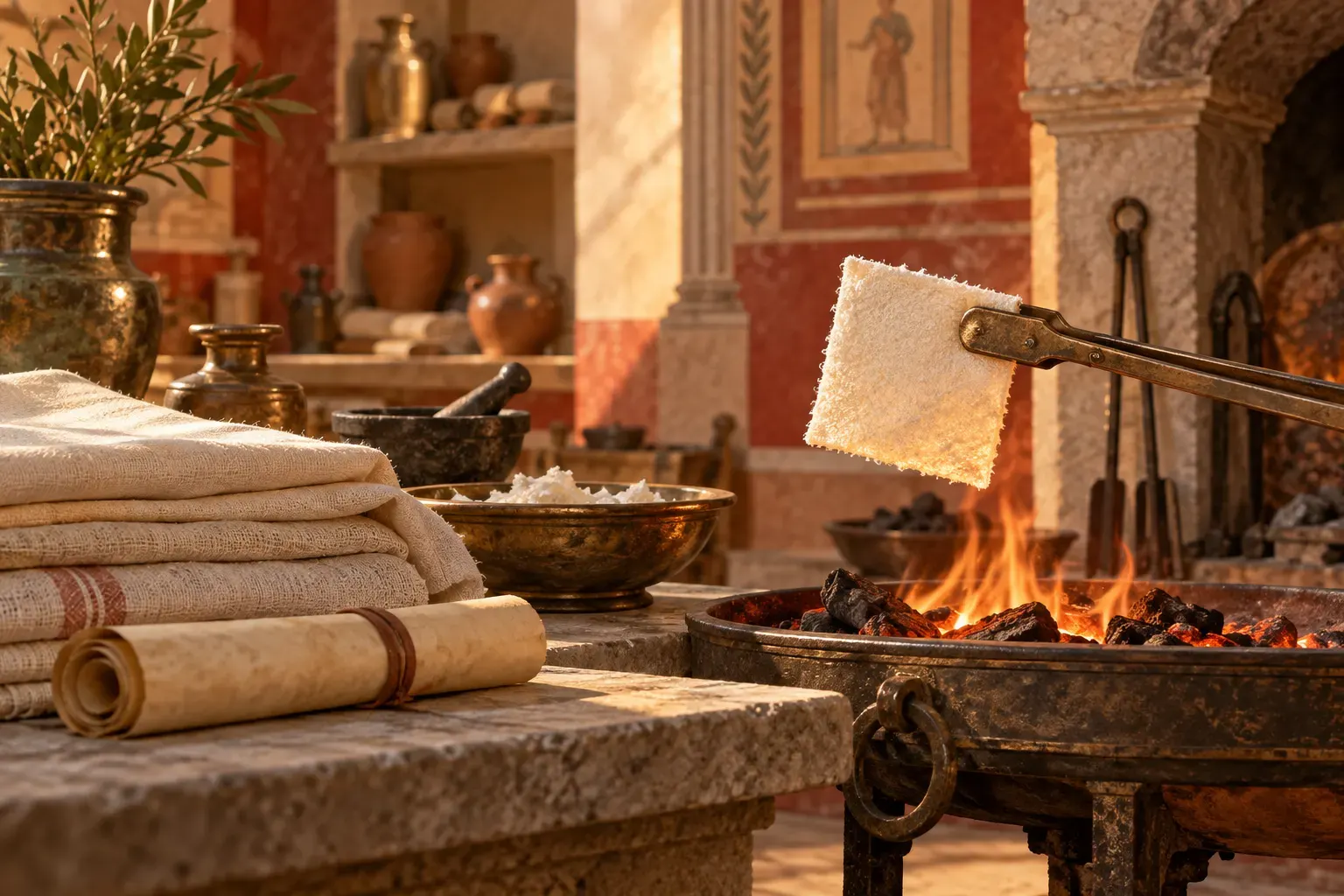
Pliny the Elder described in *Natural History* a cloth made from what he called “living flax,” which could be cleaned of stains in fire. He also mentioned funeral cloths for the elite that kept a body’s ashes separate from those of the pyre. Later retellings often add napkins and tablecloths thrown into the fire after feasts; such objects were more likely curiosities than ordinary everyday clothing.
The other part of the claim—that enslaved people wearing asbestos clothing often developed lung disease—is unsupported by Pliny’s texts. A modern historical review notes that classical sources do not support the claim that Pliny understood asbestos’s health effects. Asbestos hazards are well established today, but should not be attributed to ancient writers without evidence.