Carbon monoxide in smoke interferes with oxygen delivery
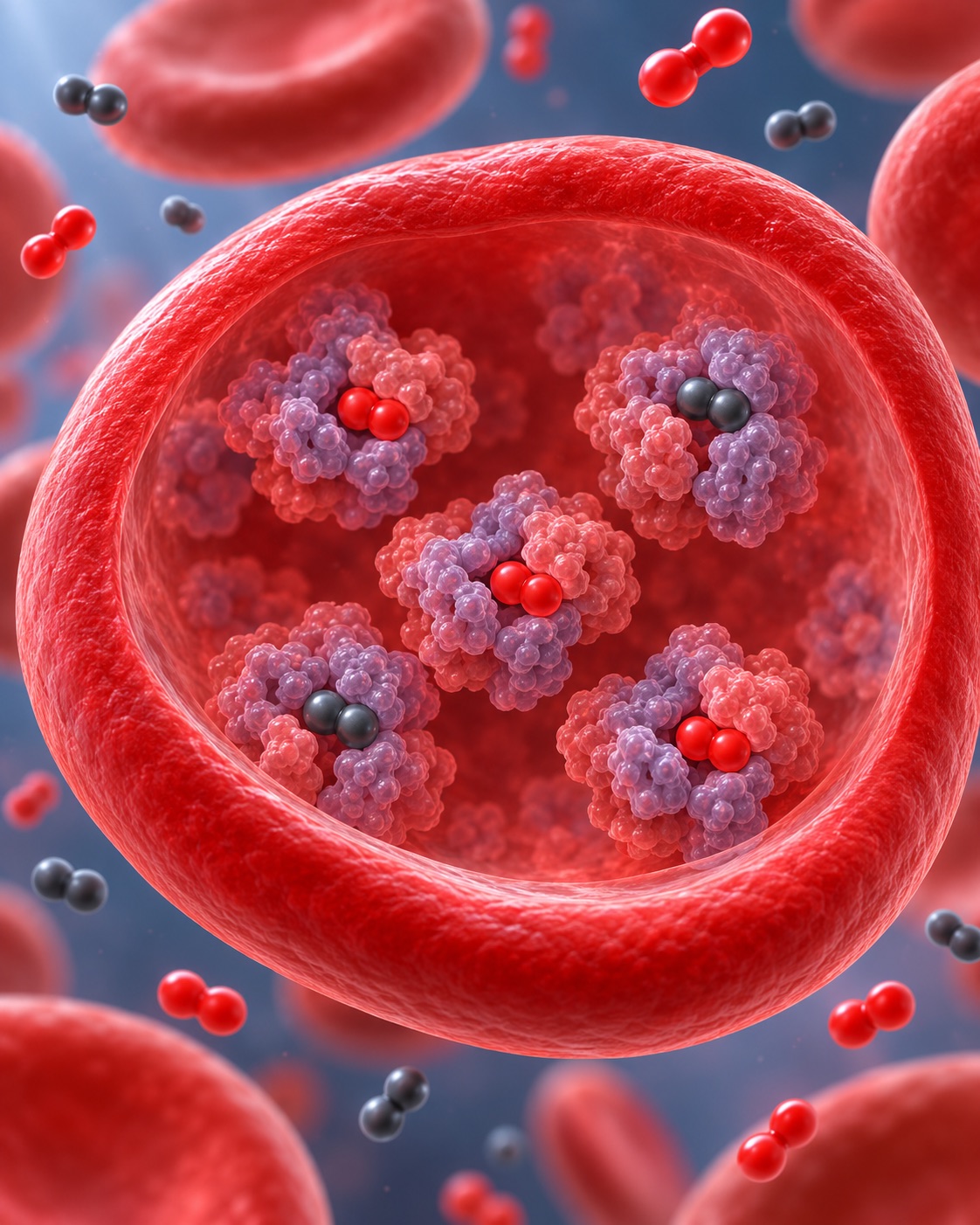
AI-generated conceptual science illustration of a red blood cell and haemoglobin binding, with carbon monoxide and oxygen represented schematically. It is not a blood sample, medical scan, or quantitative diagram. Prompt: “Vertical 4:5 conceptual scientific illustration: close-up view of a red blood cell with haemoglobin molecules inside and small carbon monoxide molecules binding to some haemoglobin sites while oxygen molecules are nearby. Clean educational textbook art, realistic cell shape and calm red/blue palette. Schematic only, no text, labels, arrows, numbers, percentages, chemical symbols, or claims about exact quantities. Not a blood sample or medical scan.” Generated 2026-10-29; no external source or documentary role.
Tobacco smoke contains carbon monoxide. After it is inhaled, the gas enters the blood and binds to haemoglobin, the protein that carries oxygen. As a result, blood delivers oxygen to tissues less effectively. This is a specific effect of carbon monoxide; it should not be described as a universal drop in oxygen saturation to the level at a particular altitude.