WattSearch
Your WattLeaderboard
Language
Autoplay narration
Appearance

Feedback

Have a question or an idea? Something not working? Send us a message.

What would you like to share?
Up to 3 files, 5 MB each, 12 MB total.
Or contact us directly

Direct contacts open a separate chat or email. Files attached here are not included.

arohalya@gmail.com
A little wonder, every day

The Chinese setting of Aladdin
Титульна AI-згенерована ілюстрація / AI-generated cover illustration. A fictional traveler and brass lamp at a cave overlook an imagined Chinese city, evoking the tale’s early printed setting.
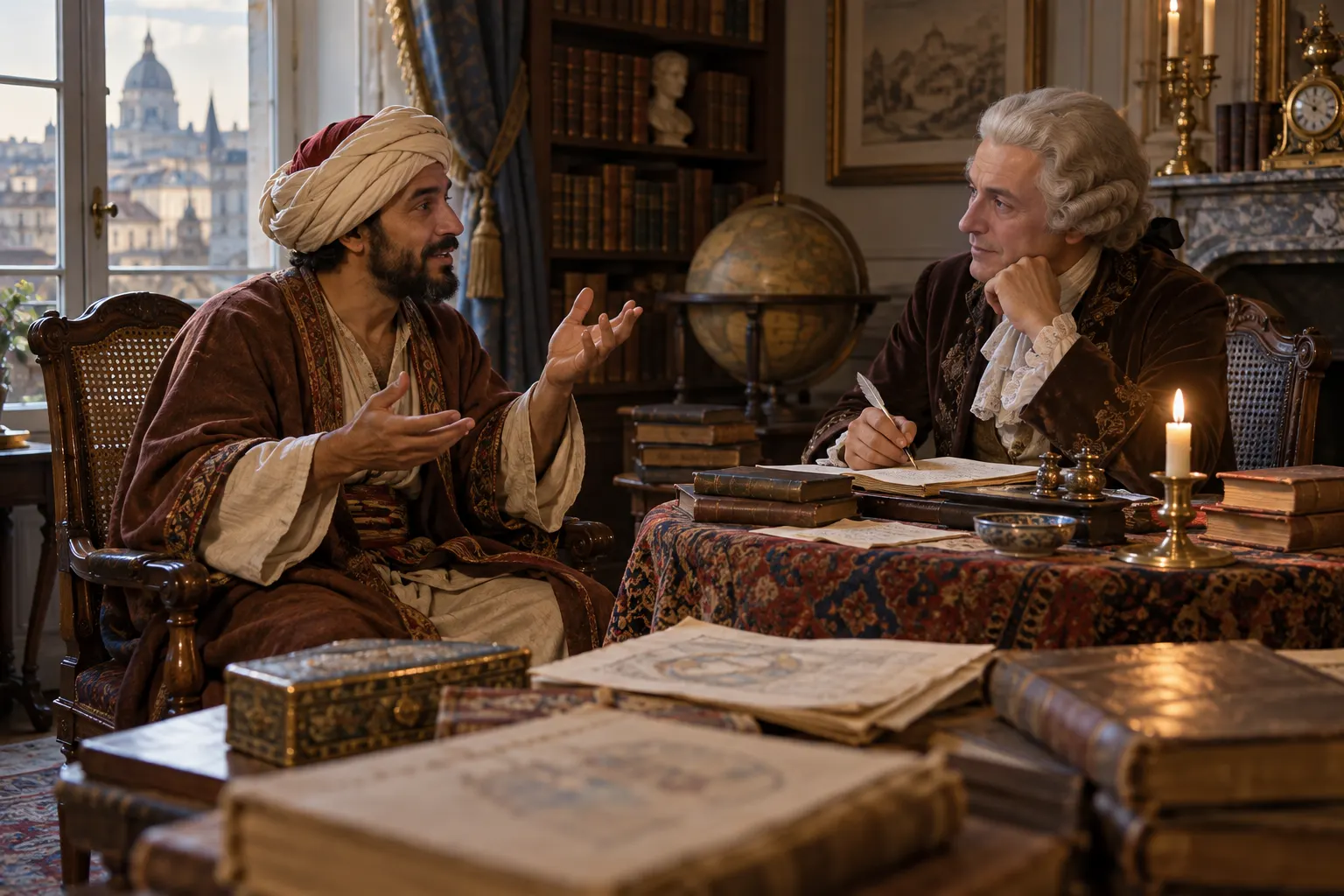
AI-generated symbolic reconstruction of Hanna Diyab recounting a story to Antoine Galland, who takes notes in an imagined eighteenth-century study.
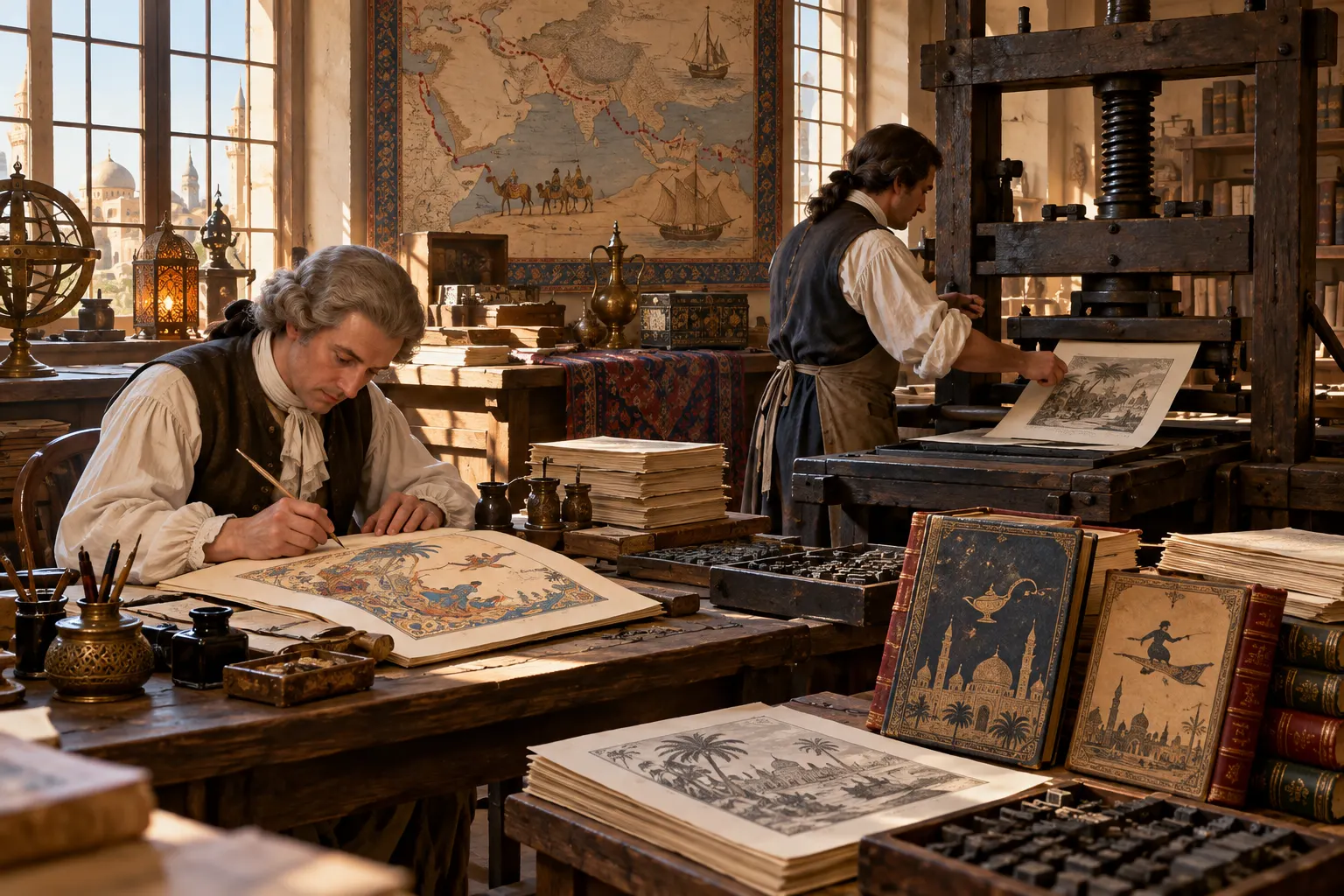
AI-generated illustration of an eighteenth-century scribe and printer preparing translated folktale pages, representing the movement from oral storytelling into print.
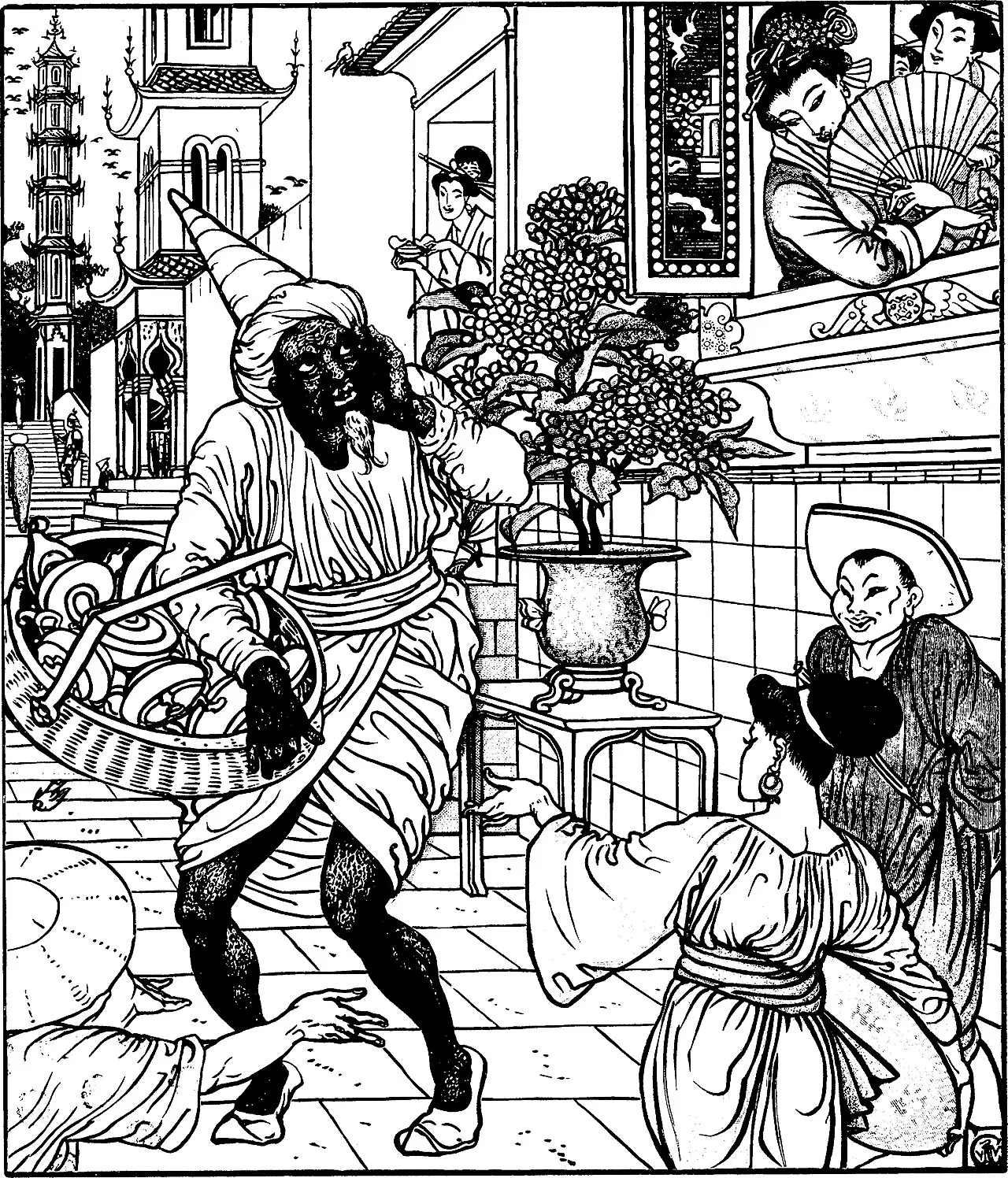
Historical 1875 book illustration from *Aladdin and the Wonderful Lamp*, artist Walter Crane. Public domain. Original: https://commons.wikimedia.org/wiki/File:Aladdin-Crane-18-cb.jpg. No attribution legally required; credit retained as Walter Crane (1875).
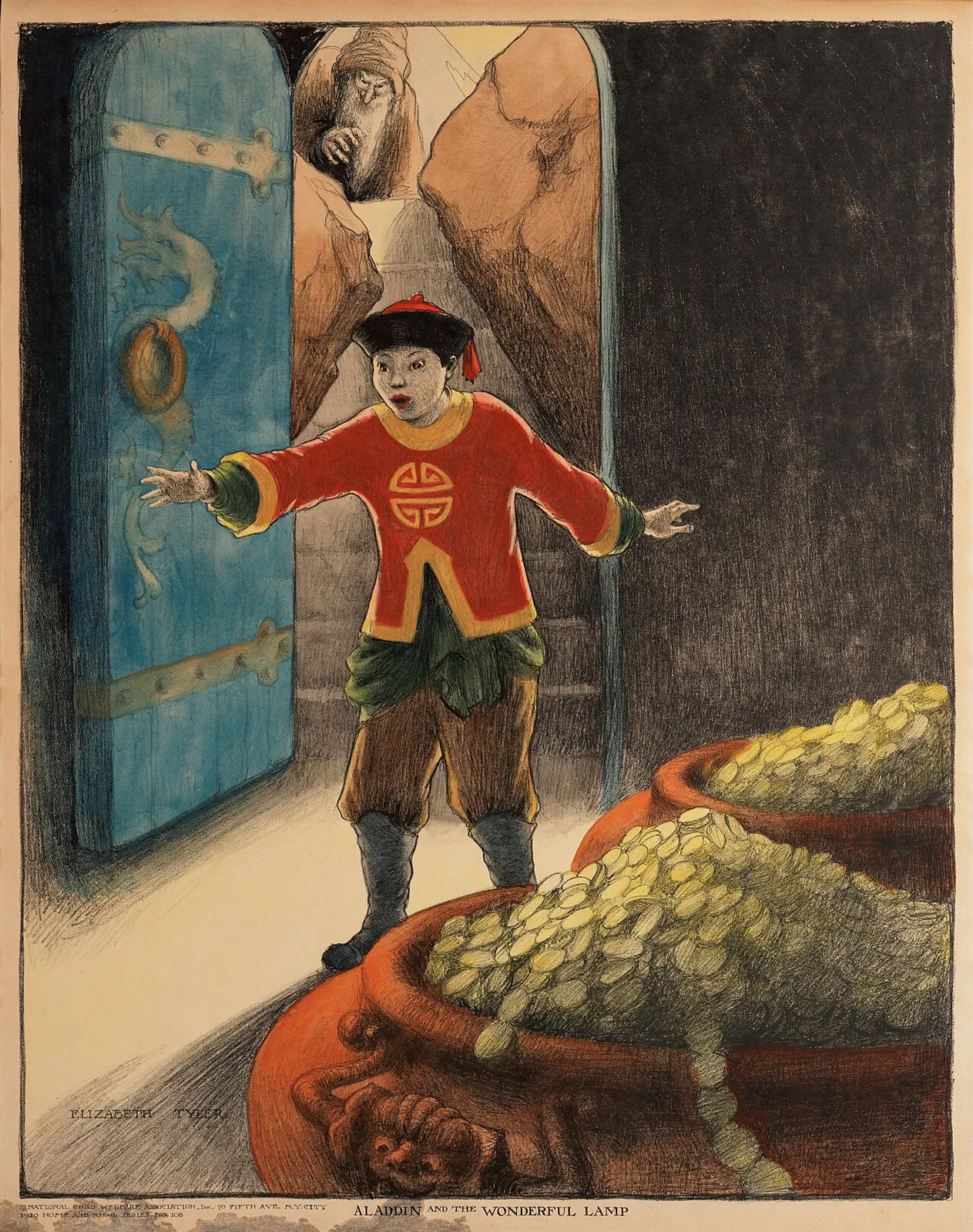
Historical illustration for *Aladdin and the Wonderful Lamp*, by Elizabeth Tyler Wolcott, published by the National Child Welfare Association c. 1918–1920. Public domain in the United States and marked public domain. Original: https://commons.wikimedia.org/wiki/File:Aladdin_and_the_wonderful_lamp,_by_Elizabeth_Tyler,_published_by_the_National_Child_Welfare_Association,_c._1918-1920,_from_the_Digital_Commonwealth_-_commonwealth_xd07mb91b.jpg. Credit: Elizabeth Tyler Wolcott / National Child Welfare Association / Digital Commonwealth.

Титульна AI-згенерована ілюстрація / AI-generated cover illustration. A fictional traveler and brass lamp at a cave overlook an imagined Chinese city, evoking the tale’s early printed setting.

Listen to fact0:00 / —

In the early printed version of the Aladdin tale that Antoine Galland included in his French *Thousand and One Nights* collection in the early eighteenth century, the story is set in China. At the same time, the tale has not been found in known earlier manuscripts of the collection: Galland recorded it after hearing it from the Syrian storyteller Hanna Diyab, but the story’s precise origins are unknown. It is therefore more accurate to call it a tale associated with *The Thousand and One Nights* than to say without qualification that it belongs to the original collection. [1–3]