A little wonder, every day
When banknotes became wallpaper
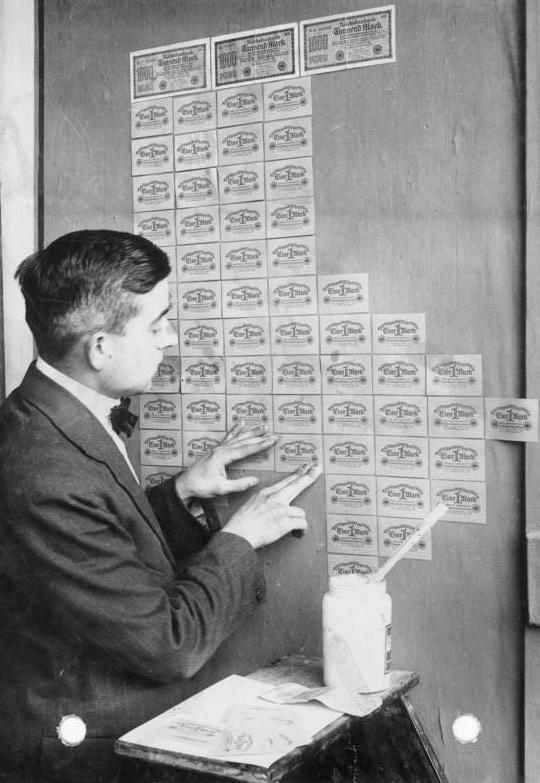
Archival photograph of people wallpapering with banknotes during German inflation; a single documented scene, not a claim about prevalence.
During Germany’s hyperinflation in 1923, money lost value so quickly that banknotes could become a cheaper material than ordinary goods. A surviving photograph by Georg Pahl shows notes being used to cover a wall. It documents an unusual use of paper currency, without implying that every household did this. [1, 2]
The distinction is between the number on a note and its purchasing power. A large face value does not itself buy many goods: when prices rise rapidly, the same money buys less and less. A wall covered in banknotes became a vivid image of that loss of value. [1, 2]