WattSearch
Your WattLeaderboard
Language
Autoplay narration
Appearance

Feedback

Have a question or an idea? Something not working? Send us a message.

What would you like to share?
Up to 3 files, 5 MB each, 12 MB total.
Or contact us directly

Direct contacts open a separate chat or email. Files attached here are not included.

arohalya@gmail.com
A little wonder, every day

Sixteen sunrises on the ISS
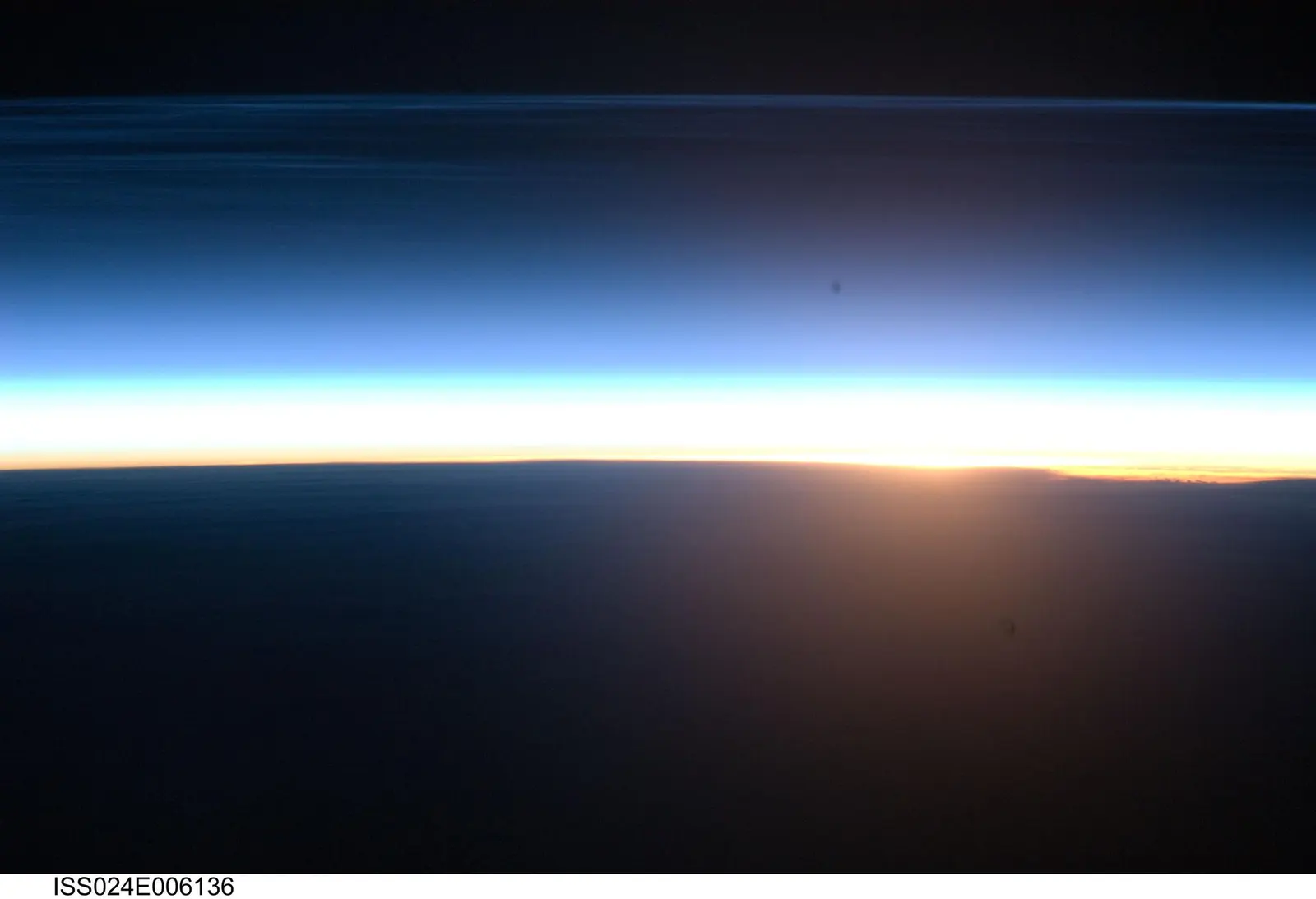
NASA image ISS024E006136, polar mesospheric clouds illuminated by an orbital sunrise, photographed by an Expedition 24 crew member on 16 June 2010. NASA credit; U.S. federal public-domain work. Source: https://images-assets.nasa.gov/image/iss024e006136/iss024e006136~large.jpg. Documentary example of orbital sunrise.
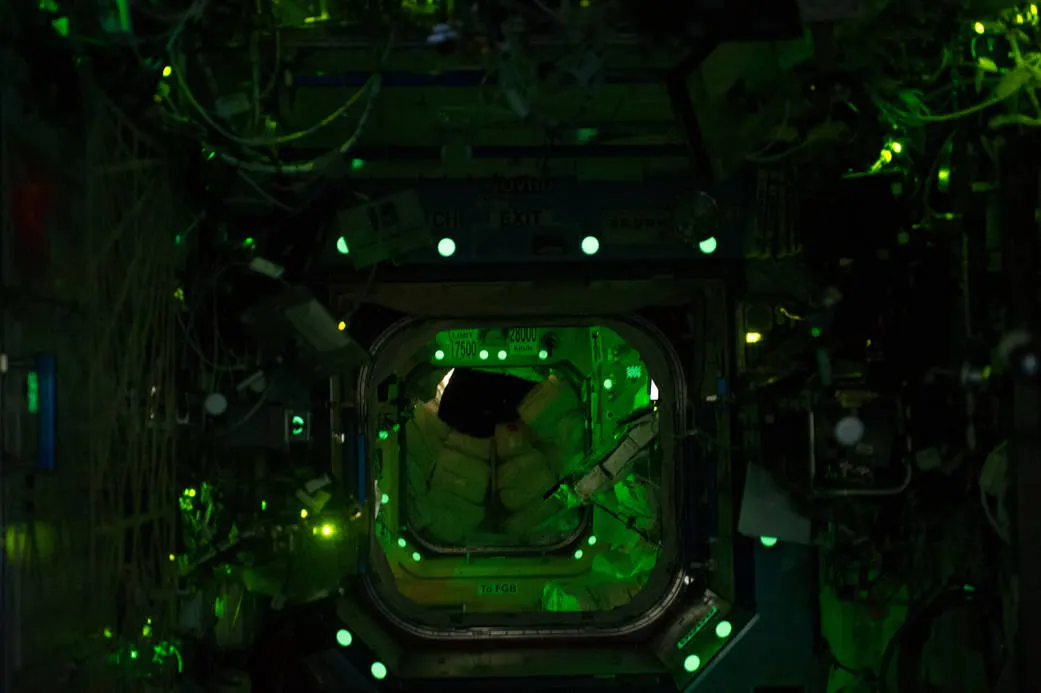
NASA image ISS038-E-006151, station interior while the crew is asleep, photographed by an Expedition 38 crew member on 20 November 2013. NASA credit; U.S. federal public-domain work. Source: https://www.nasa.gov/image-article/space-station-while-crew-asleep/. Documentary depiction of the crew’s sleep lighting.

NASA image ISS024E006136, polar mesospheric clouds illuminated by an orbital sunrise, photographed by an Expedition 24 crew member on 16 June 2010. NASA credit; U.S. federal public-domain work. Source: https://images-assets.nasa.gov/image/iss024e006136/iss024e006136~large.jpg. Documentary example of orbital sunrise.

Listen to fact0:00 / —

The International Space Station circles Earth in about 90 minutes. As a result, the crew sees about 16 sunrises and 16 sunsets in a day—far more often than on Earth. To keep this rapid cycle of light and darkness from disrupting sleep and the body’s daily rhythm, the station’s interior lighting can be adjusted in brightness and color for work and rest.