A little wonder, every day
The transition to sound changed work in cinema
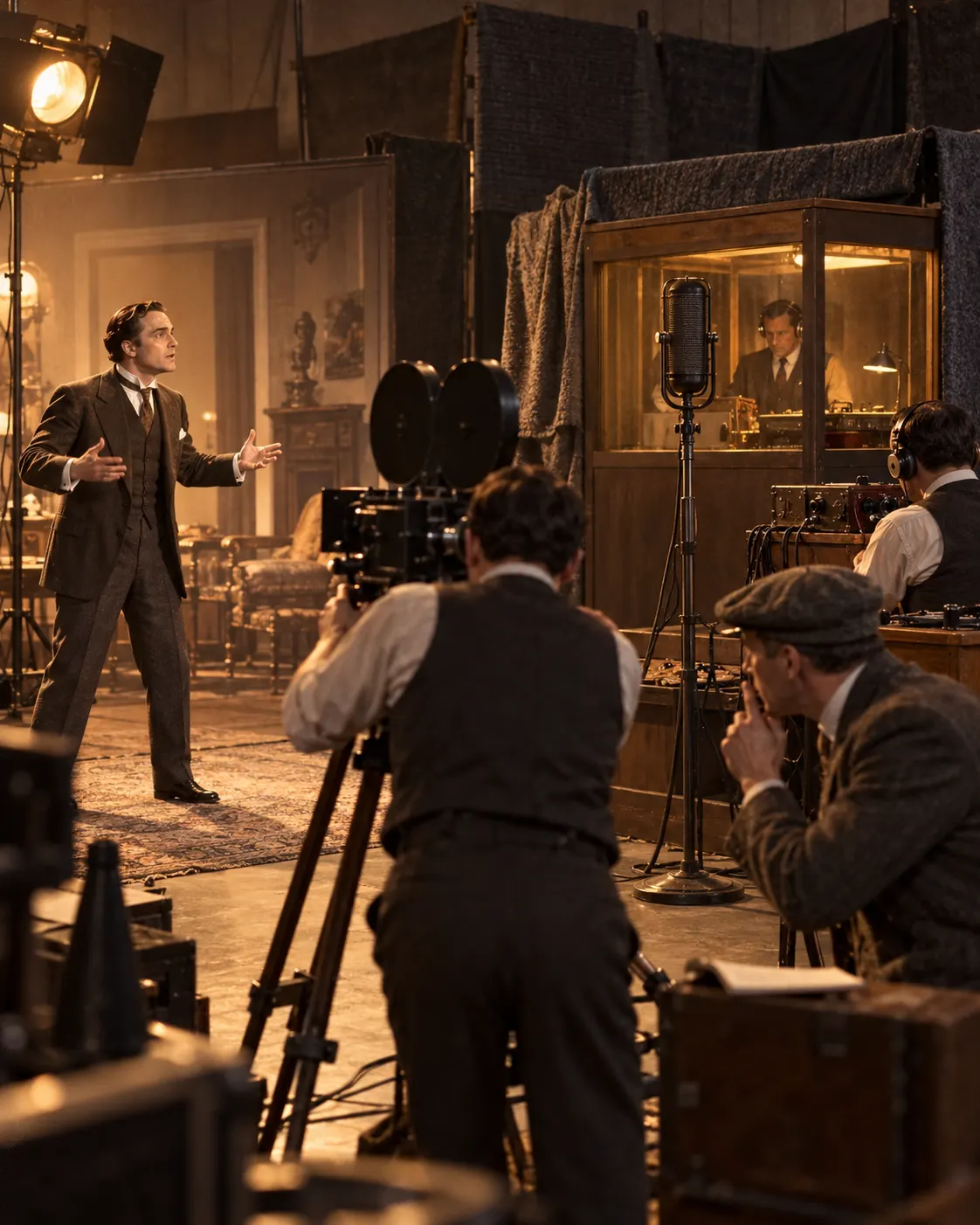
AI-generated symbolic depiction of a 1920s film studio adapting to synchronized sound; the people and setup are illustrative, not a specific documented production.
Listen to fact0:00 / —
The arrival of synchronized dialogue in the late 1920s changed filmmaking and acting. Studios had to record clear sound, while films needed spoken dialogue and new technical solutions. Some silent-era performers did not adapt to the new demands, but the story that dozens of careers ended solely because of voices or accents is oversimplified.