How the avant-garde entered Verbivka embroidery
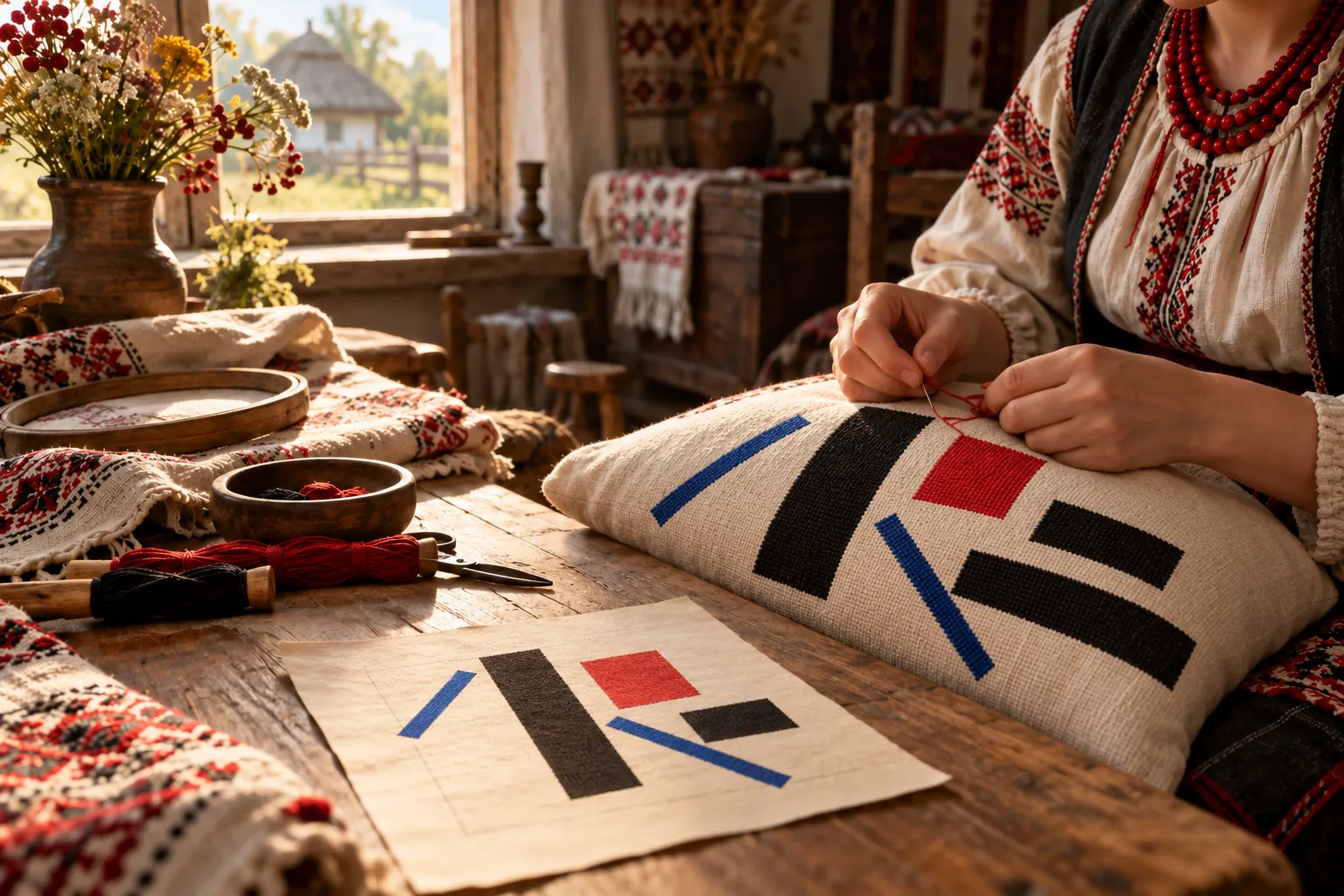
Титульна AI-згенерована ілюстрація / AI-generated cover illustration: symbolic reconstruction of an artisan stitching an abstract geometric cushion, with a matching sketch.
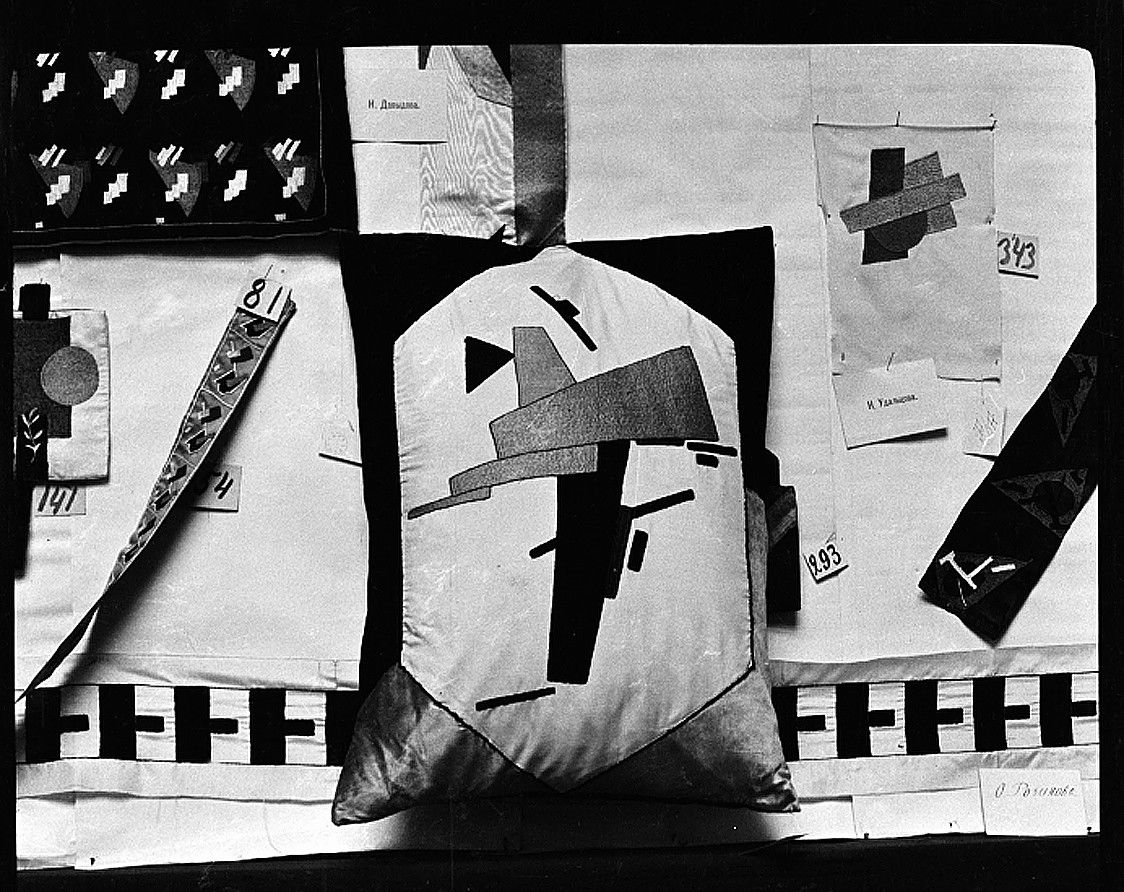
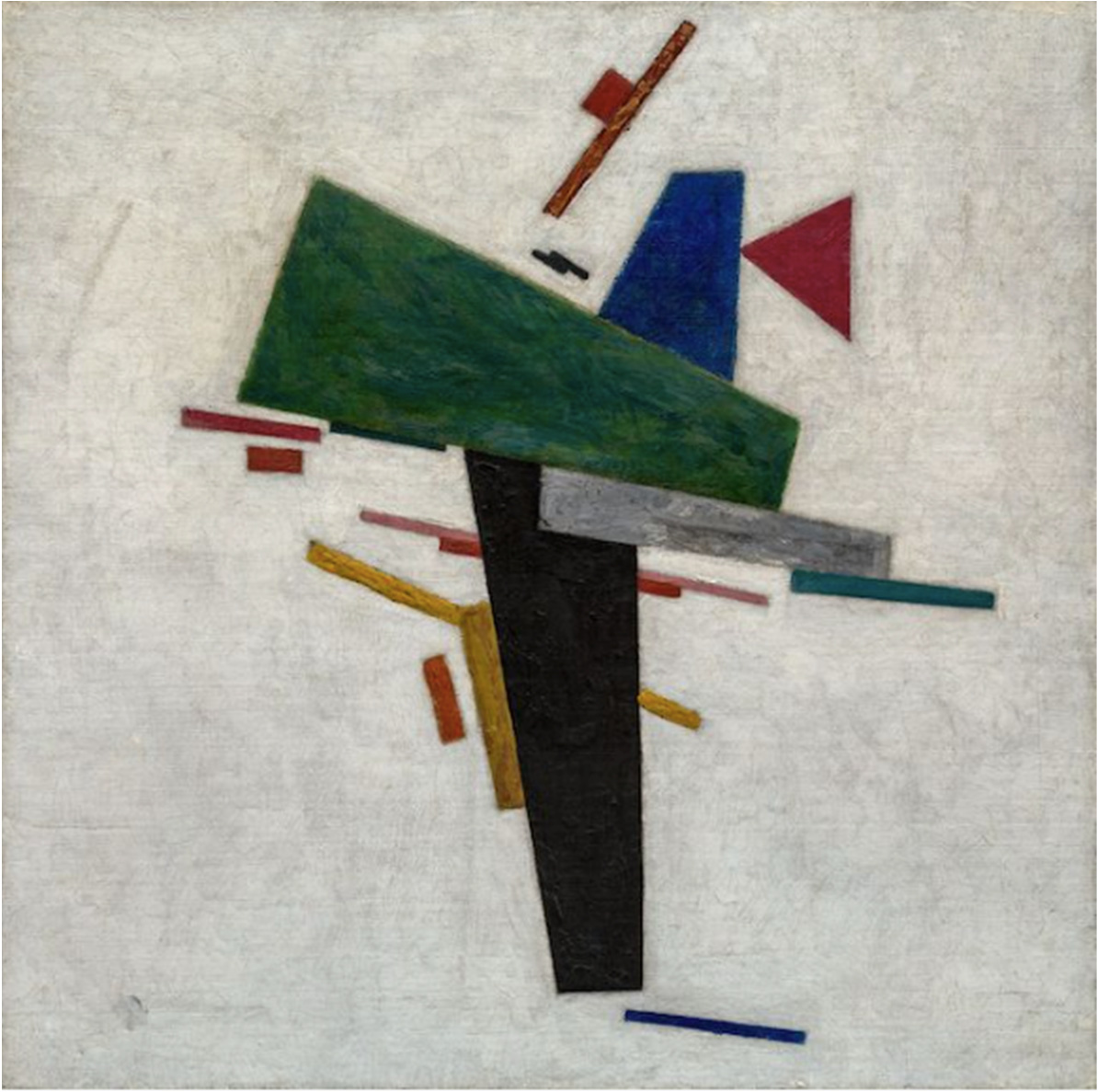
In the 1910s, a workshop in Verbivka, in what is now Ukraine’s Cherkasy region, brought folk embroidery together with avant-garde art. Natalia Davydova organized the workshop, while Alexandra Exter involved artists in creating new designs. Among them was Kazimir Malevich: local craftswomen translated his geometric compositions into everyday objects.
In November 1915, work from this collaboration appeared at a decorative art exhibition in Moscow, a month before the Petrograd exhibition 0.10, where Malevich presented Suprematist canvases. This demonstrates Ukrainian embroidery’s important role in early Suprematism, but does not establish that the craftswomen were the first to see a design specifically for Black Square.