Why a Roman statue could have a separate head
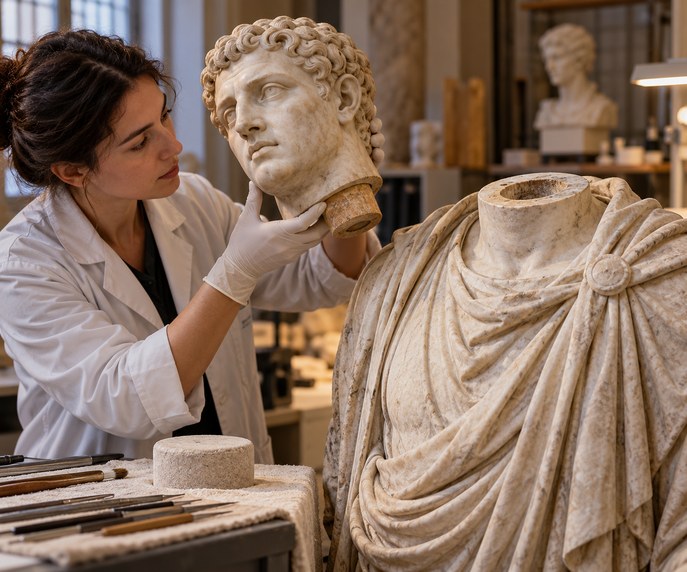
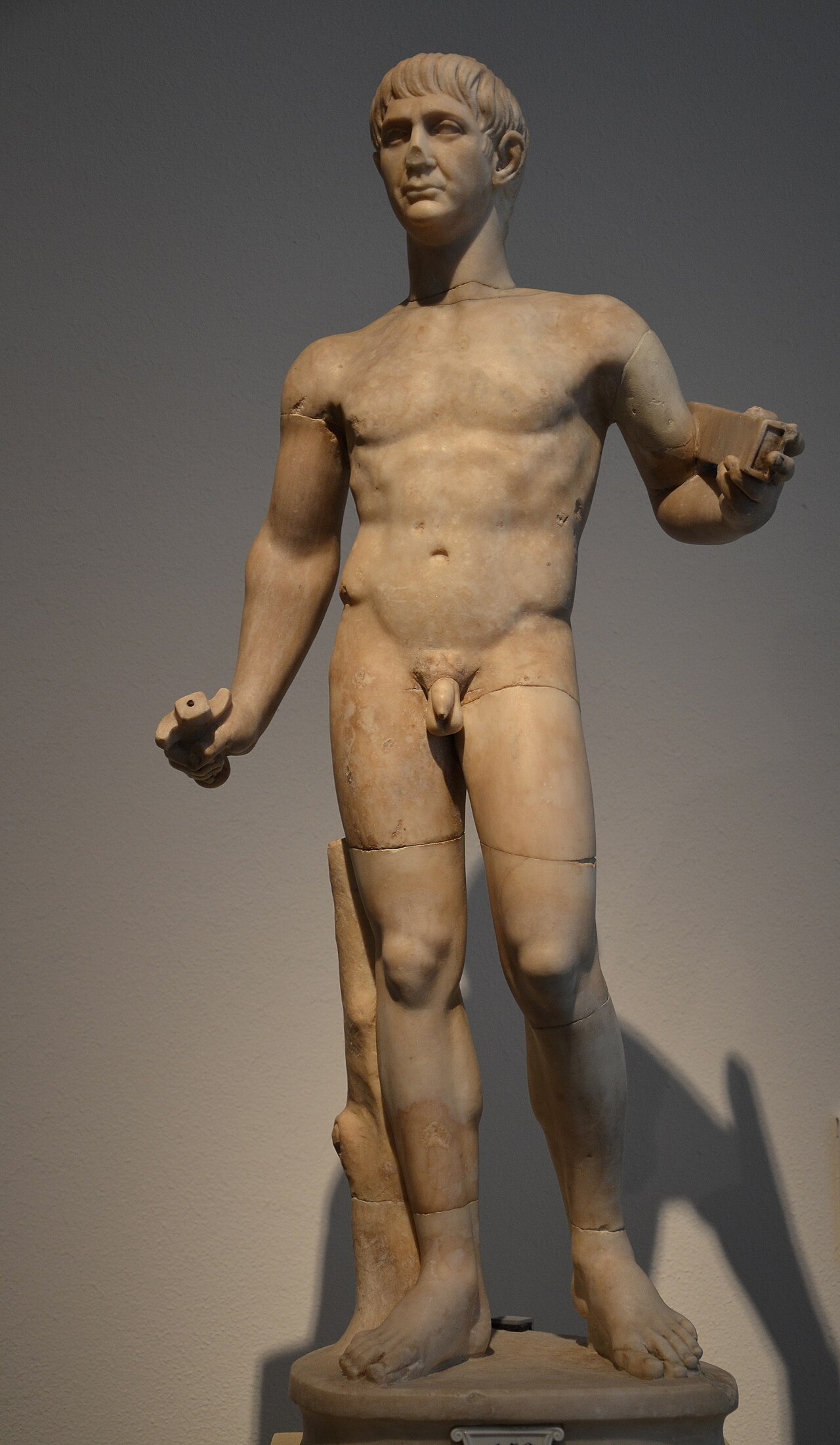
AI-generated symbolic cover. A conservator examines an invented ancient marble portrait head and draped statue with a separate circular socket; symbolic reconstruction, not a specific archaeological object.
Some Roman portrait statues combined a separately carved body with a head inserted into a cavity at the neck. This allowed a familiar costume or pose to be joined to the face of a particular person. Not all Roman statues used this construction: figures carved together with their heads from a single block are also known.
A separate head could technically be replaced, but the joint alone does not prove it was routinely changed with every new ruler. Later restoration adds another complication: in early modern times, inappropriate heads were sometimes attached to ancient torsos, giving statues mistaken identities.