How Frost Patterns Form on a Window
Window frost forms when moisture from the air settles on sufficiently cold glass and turns into ice. When the glass is colder than the frost point, water vapor can change directly into ice crystals (deposition); under other conditions, a thin film or droplets of condensate may form first and then freeze.
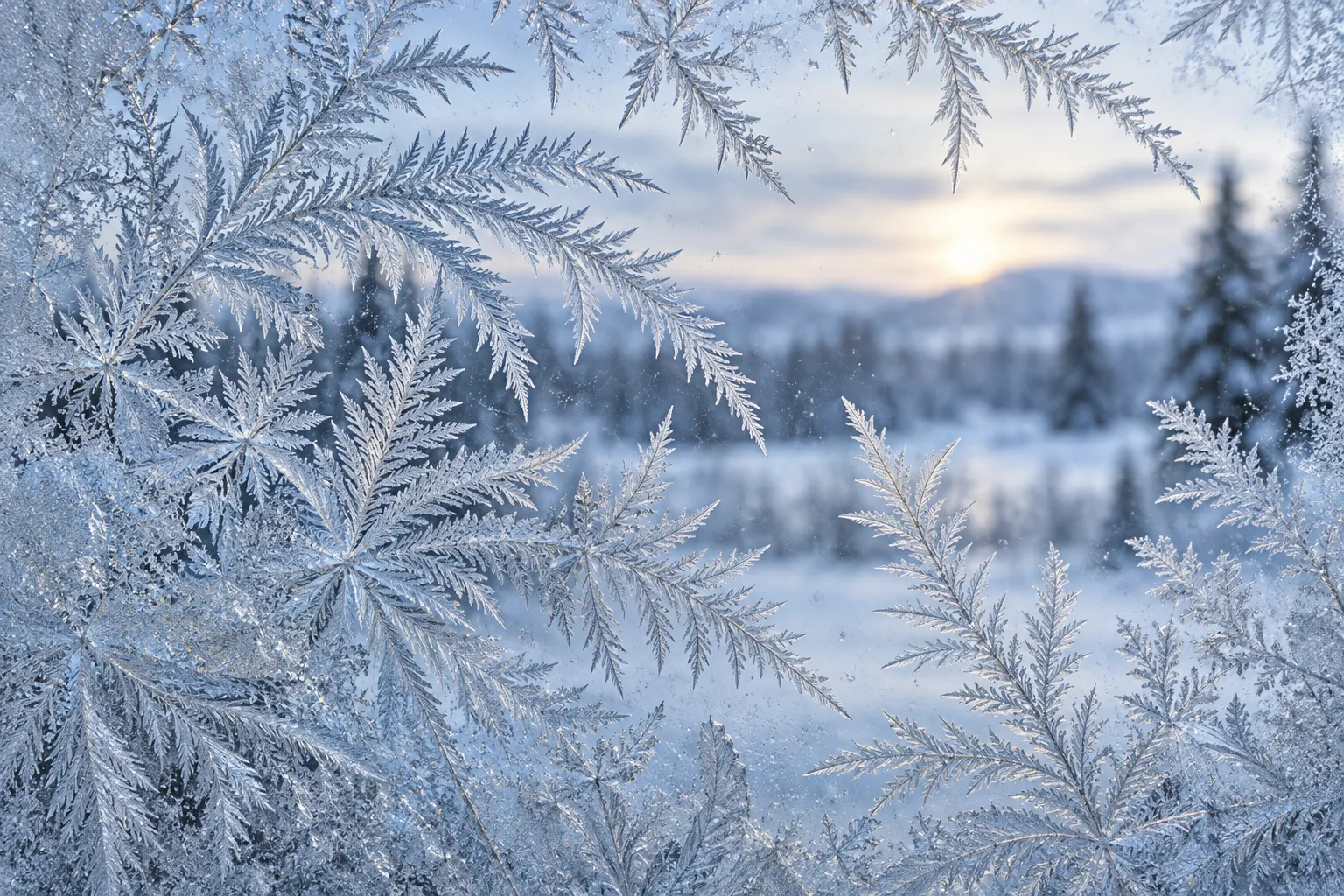
Crystal shapes depend on temperature and humidity, air movement, and the properties of the surface. Scratches, dust, and other irregularities can provide nucleation sites and influence growth. That is why patterns vary from window to window and night to night; the simplified “condensation, then freezing” description is not the only pathway.