How The Last Judgement acquired later draperies
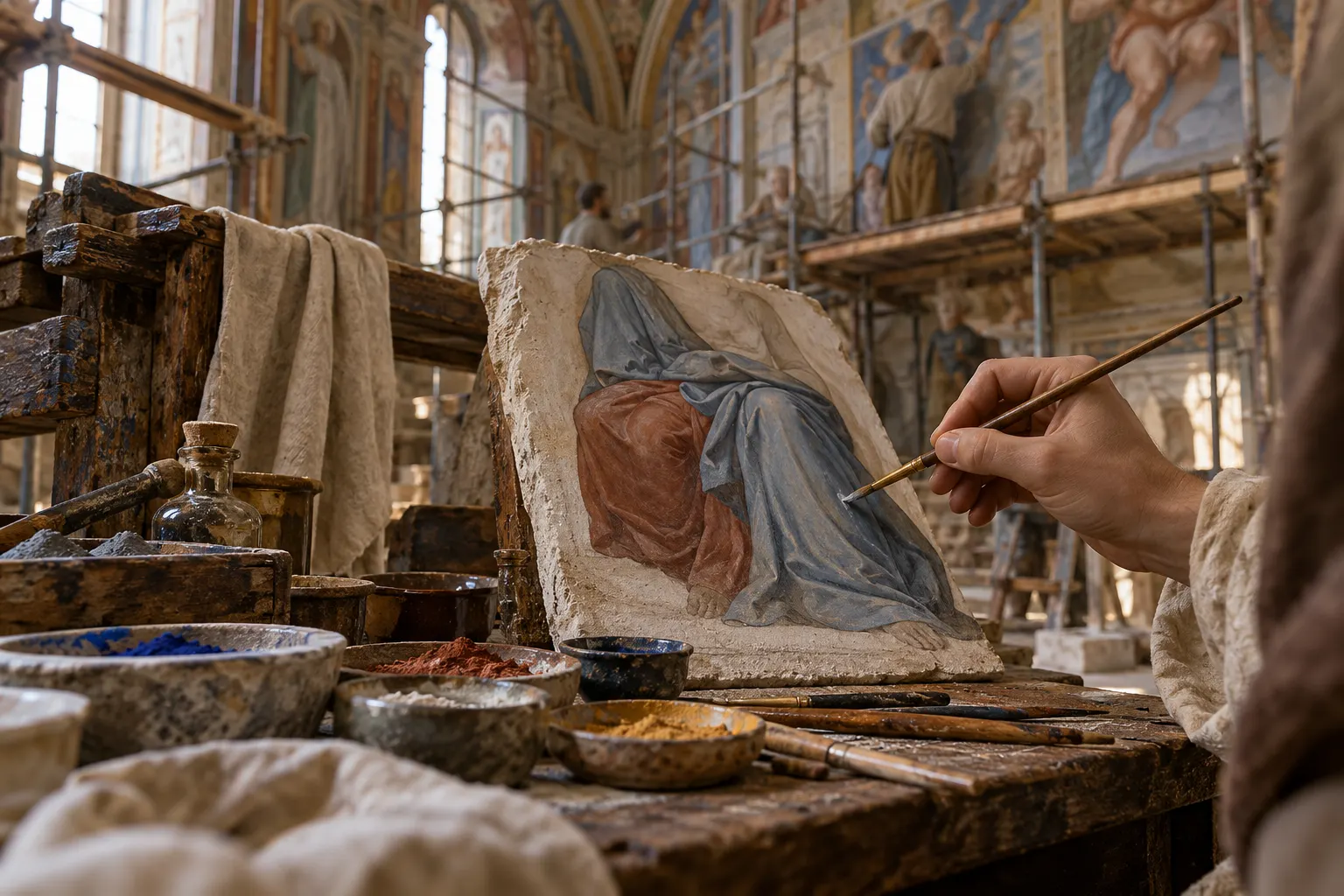
Титульна AI-згенерована ілюстрація / AI-generated cover illustration. Symbolic Renaissance fresco-workshop scene with a restorer painting drapery on a small plaster study; not an authentic historical intervention or actual Michelangelo fragment.
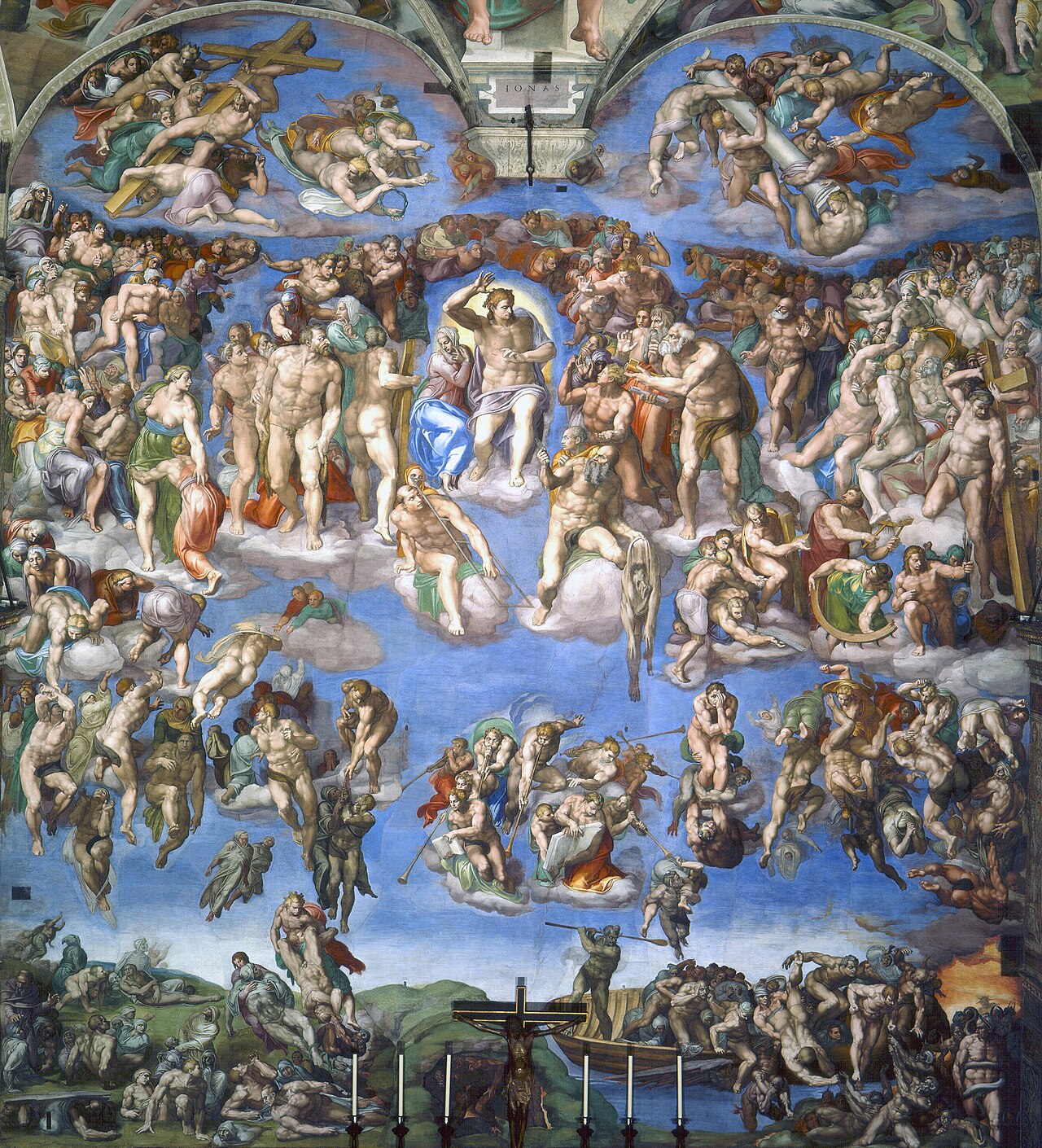
Michelangelo painted The Last Judgement on the altar wall of the Sistine Chapel between 1536 and 1541. The painting itself therefore took approximately five years, rather than seven. With Christ at its centre, the large composition depicts resurrection and judgement.
Its nude figures later became the subject of ecclesiastical censorship. In 1565, Daniele da Volterra began adding draperies to cover parts of their bodies. These alterations belong to a different artist and a later period: the wall contains both Michelangelo’s original conception and traces of subsequent intervention.