Beaver “testicles” as birth control: an uncertain folk account
A popular history of contraception mentions that women in New Brunswick, Canada, drank a tincture made from dried “beaver testicles.” But that source does not date the practice to the sixteenth century, and ethnographic records describe beaver castor glands—historically mistaken for testicles—as a folk remedy, including to induce menstruation, not as a proven contraceptive. Its effectiveness is unsubstantiated; this is not medical advice. The illustration is AI-generated.
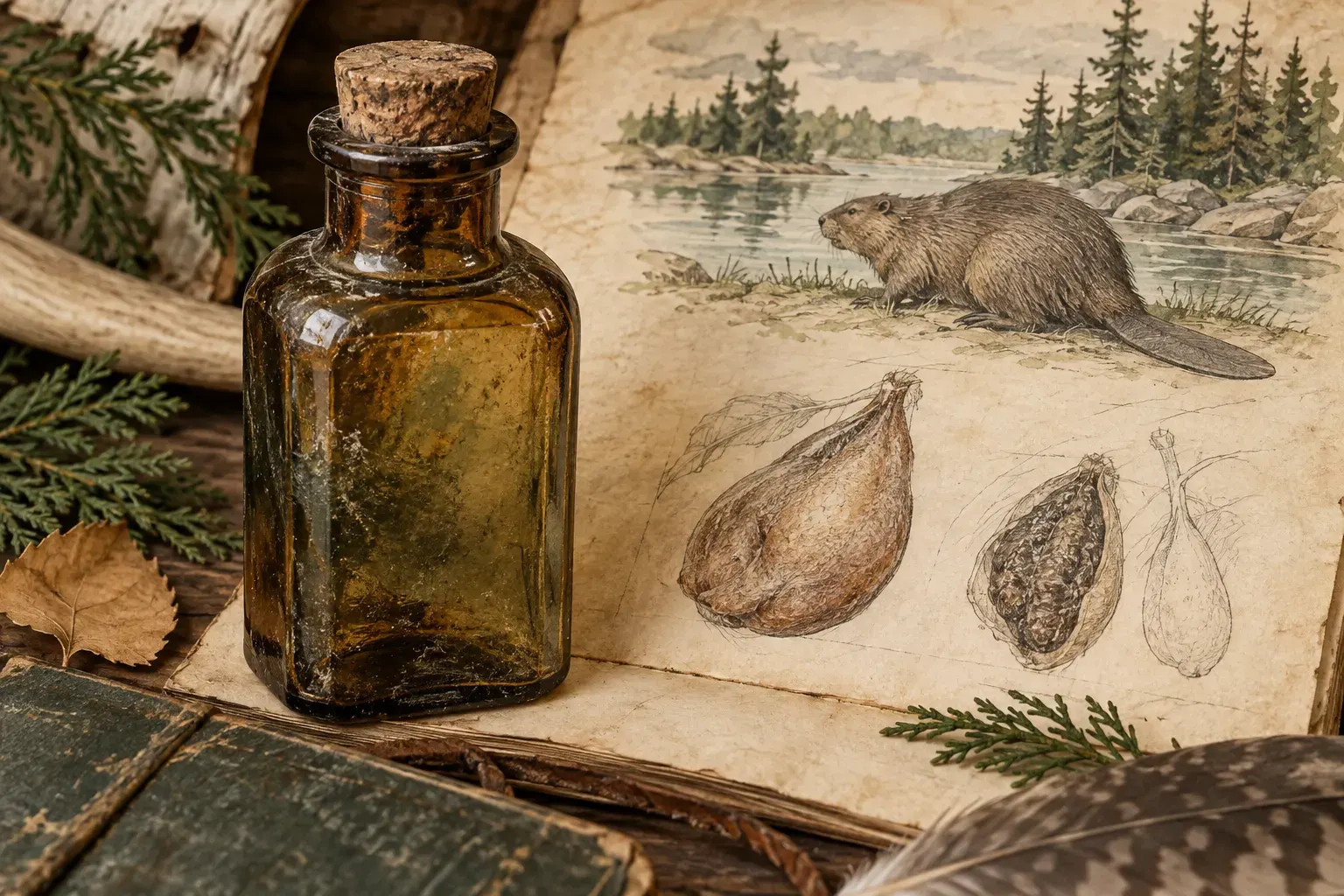
синтетична редакційна ілюстрація старої пляшки настоянки, натуралістичного ескізу бобра й схематичного зображення castor-залоз. Створено OpenAI image generation 12 жовтня 2026 року. Prompt: “Respectful museum-style editorial illustration for an uncertain historical folk-remedy account in New Brunswick; old glass tincture bottle, naturalist sketch of North American beaver castor gland, archival notes; no readable words, no Indigenous artifact, no medical recommendation, no scientific depiction of contraception.” Не є артефактом, документальним доказом чи медичним зображенням.