WattSearch
Your WattLeaderboard
Language
Autoplay narration
Appearance

Feedback

Have a question or an idea? Something not working? Send us a message.

What would you like to share?
Up to 3 files, 5 MB each, 12 MB total.
Or contact us directly

Direct contacts open a separate chat or email. Files attached here are not included.

arohalya@gmail.com
A little wonder, every day

Wells’s fictional optics

AI-generated cover: a generic blank red-bound book beside a prism, symbolizing Wells’s optical explanation. It does not represent a working invisibility device or reproduce the first edition. Prompt: “Photorealistic editorial cover for H. G. Wells's The Invisible Man and the science of optical cloaking: an old red-bound blank novel beside a glass prism and a small object subtly distorted by light on a laboratory table, vertical 4:5. Symbolic only, no actual invisibility technology claim, no readable text, no human figure, and no reproduction of the 1897 book cover.” Generated 2026-10-19.
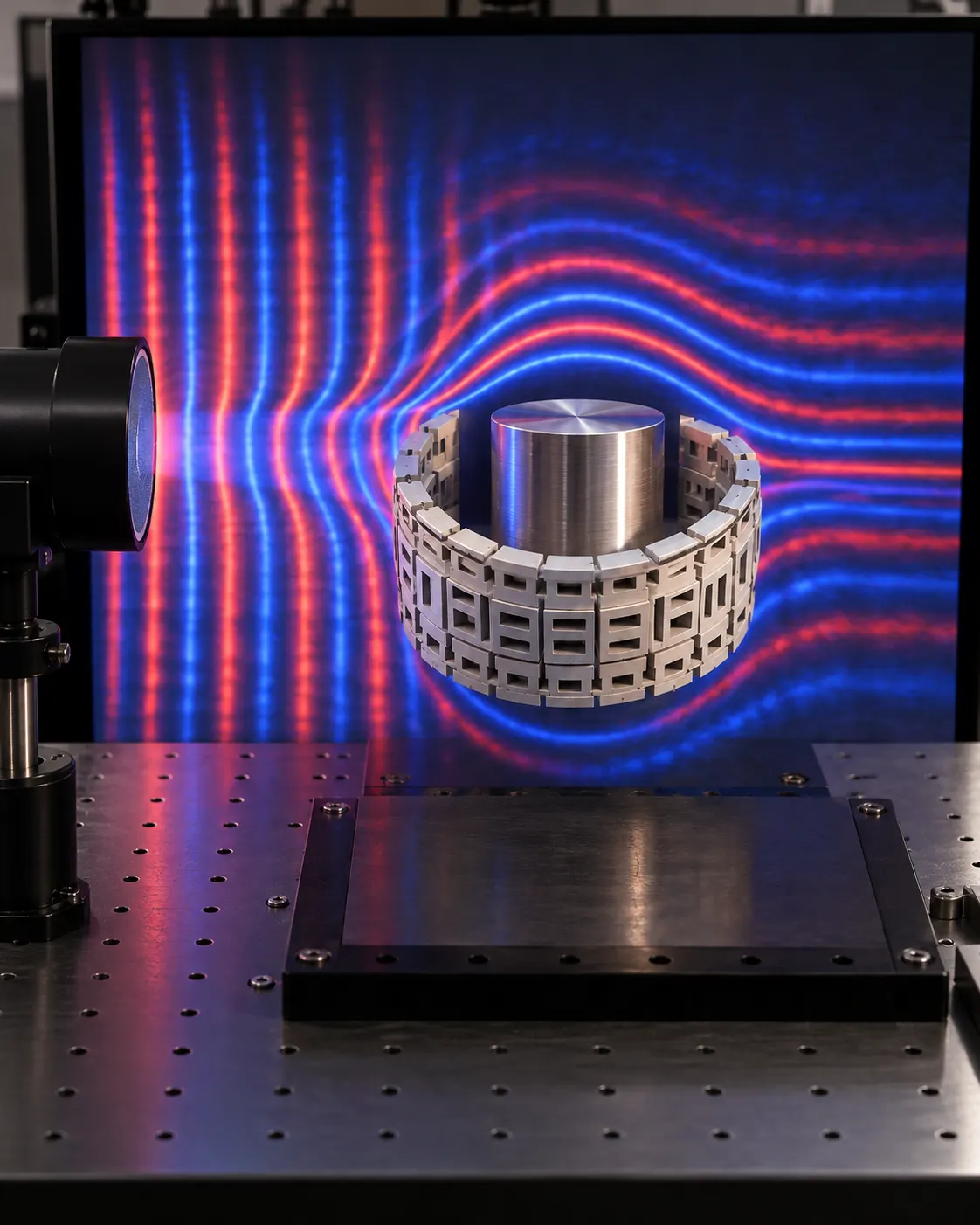
AI-generated educational visualization of electromagnetic waves bending around a patterned shell; not an actual experiment or functional cloak. Prompt: “Photorealistic editorial reconstruction of a physics laboratory demonstration of a metamaterial wave-bending shell: small metal cylinder enclosed by a patterned ring of engineered material, visible red and blue wavefront lines curving around it on a screen, vertical 4:5. Educational visualization, not an actual cloak or invisibility device, no labels, logos, or claim to reproduce a specific experiment.” Generated 2026-10-19.
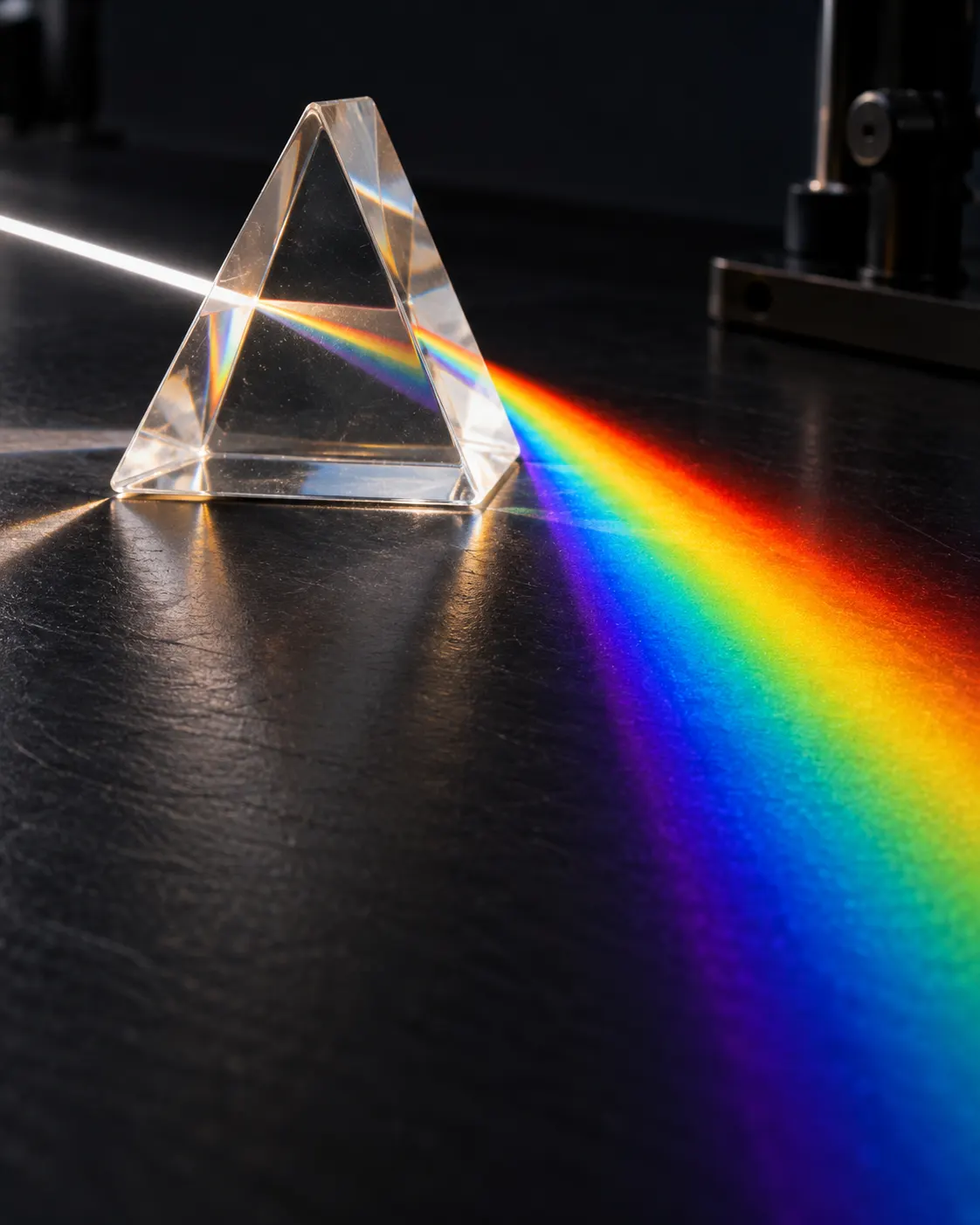
AI-generated image of a prism splitting white light, an optics demonstration relevant to refraction but not invisibility. Prompt: “Photorealistic editorial close-up of a glass prism bending a narrow beam of white light into a spectrum across a dark laboratory surface, physics optics demonstration, vertical 4:5. No text, no people, no claim this creates invisibility.” Generated 2026-10-19.
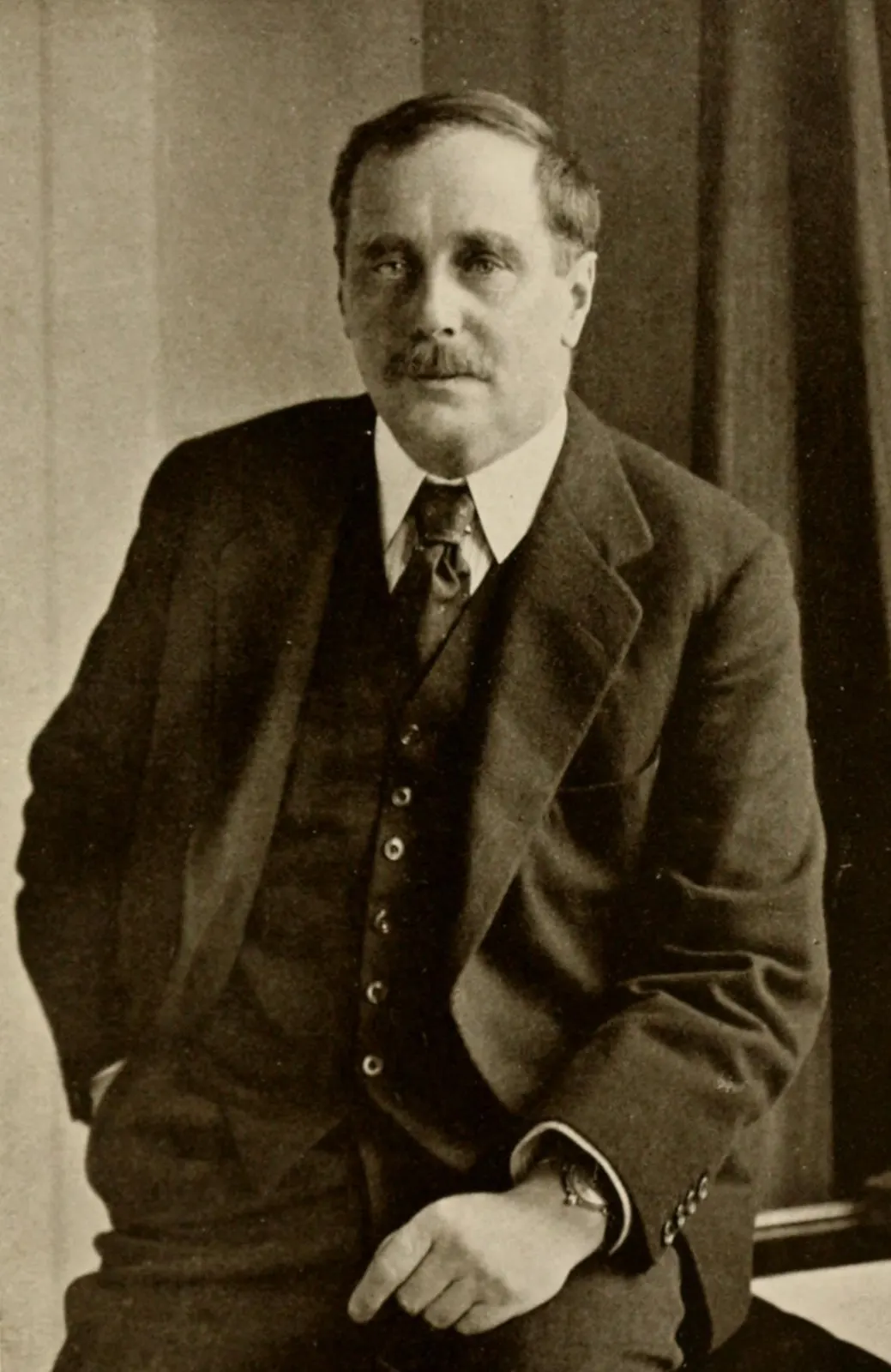
period portrait of H. G. Wells from an anonymous photograph published in *The Story of the House of Cassell* (1922). The image page identifies the original book and marks the scan public domain in the United States; the unknown photographer and publication date support public-domain status in Ukraine under the 70-year term for anonymously published works in Law No. 2811-IX, Article 31. Source page: https://commons.wikimedia.org/wiki/File:Portrait_of_H._G._Wells.jpg. Credit the source book / Cassell & Company; no crop or retouch.
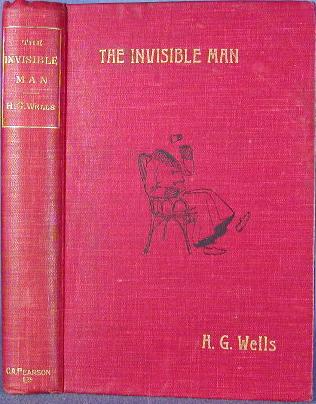
cover of the 1897 first London edition of *The Invisible Man*; cover artist unknown; source citation on Commons points to an antiquarian booksellers’ record. Commons marks it public domain in its country of origin and provides a Public Domain Mark. Source page: https://commons.wikimedia.org/wiki/File:Wells_The_Invisible_Man.jpg. Credit “unknown cover artist, 1897 first edition”; no edits.

AI-generated cover: a generic blank red-bound book beside a prism, symbolizing Wells’s optical explanation. It does not represent a working invisibility device or reproduce the first edition. Prompt: “Photorealistic editorial cover for H. G. Wells's The Invisible Man and the science of optical cloaking: an old red-bound blank novel beside a glass prism and a small object subtly distorted by light on a laboratory table, vertical 4:5. Symbolic only, no actual invisibility technology claim, no readable text, no human figure, and no reproduction of the 1897 book cover.” Generated 2026-10-19.

Listen to fact0:00 / —

In H. G. Wells’s 1897 novel *The Invisible Man*, the scientist Griffin explains invisibility by changing a body’s optical properties: its refractive index would have to become nearly the same as air’s. This is a fictional mechanism, not a description of working technology. A century later, researchers began developing metamaterial shells that steer electromagnetic waves around an object. They share the aim of making an object undetectable to waves; the novel is not an established source of these technologies and does not describe modern radar stealth.