WattПошук
Твій WattРейтинг
Мова
Автоозвучення
Оформлення

Зворотний зв’язок

Є питання чи ідея? Щось не працює? Надішли нам повідомлення.

Про що хочеш написати?
До 3 файлів, 5 МБ кожен, 12 МБ разом.
Або зв’яжися напряму

Прямі контакти відкривають окремий чат або лист. Прикріплені тут файли через них не передаються.

arohalya@gmail.com
Щодня щось дивовижне

фантастична оптика Веллса
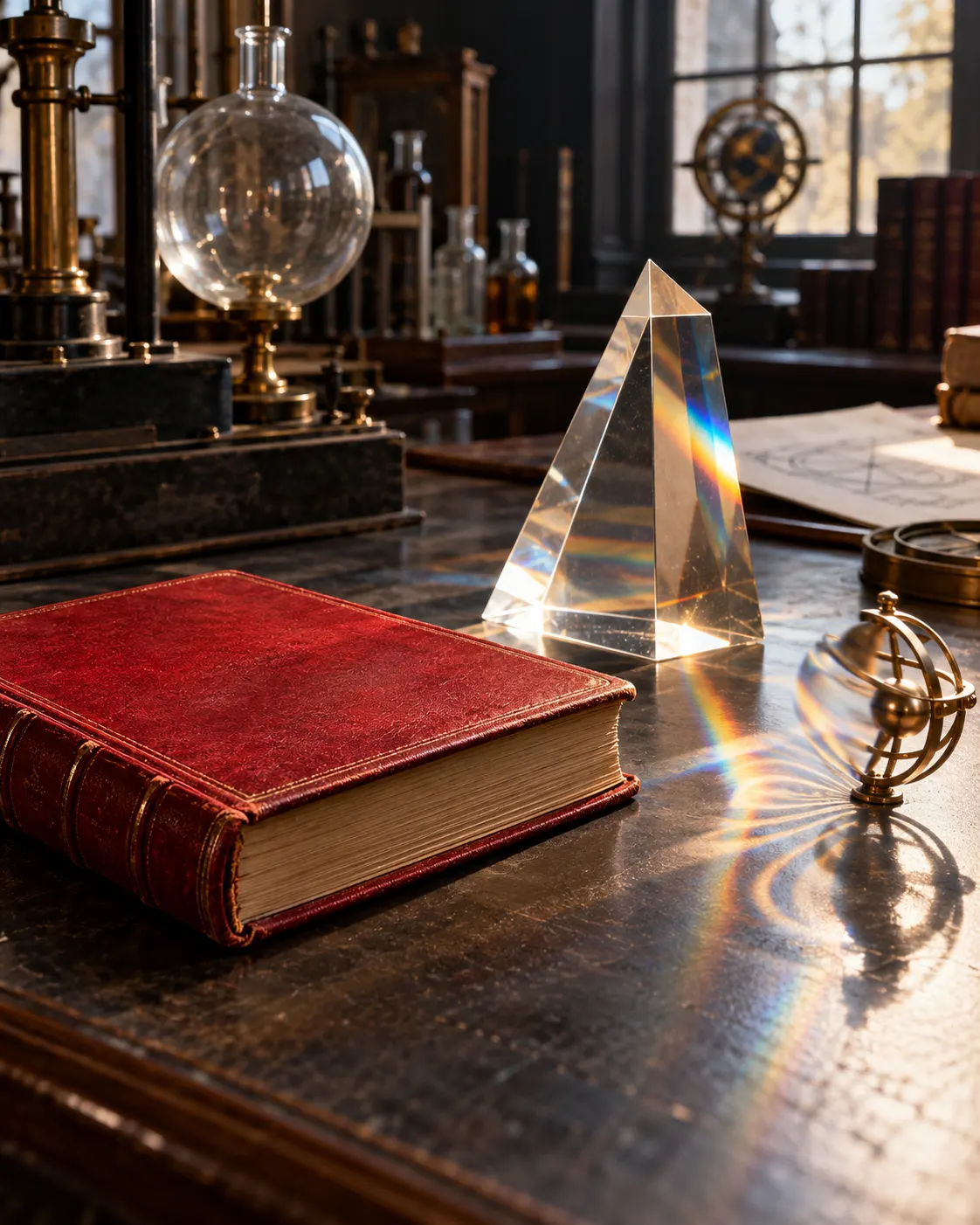
AI-generated cover: a generic blank red-bound book beside a prism, symbolizing Wells’s optical explanation. It does not represent a working invisibility device or reproduce the first edition. Prompt: “Photorealistic editorial cover for H. G. Wells's The Invisible Man and the science of optical cloaking: an old red-bound blank novel beside a glass prism and a small object subtly distorted by light on a laboratory table, vertical 4:5. Symbolic only, no actual invisibility technology claim, no readable text, no human figure, and no reproduction of the 1897 book cover.” Generated 2026-10-19.
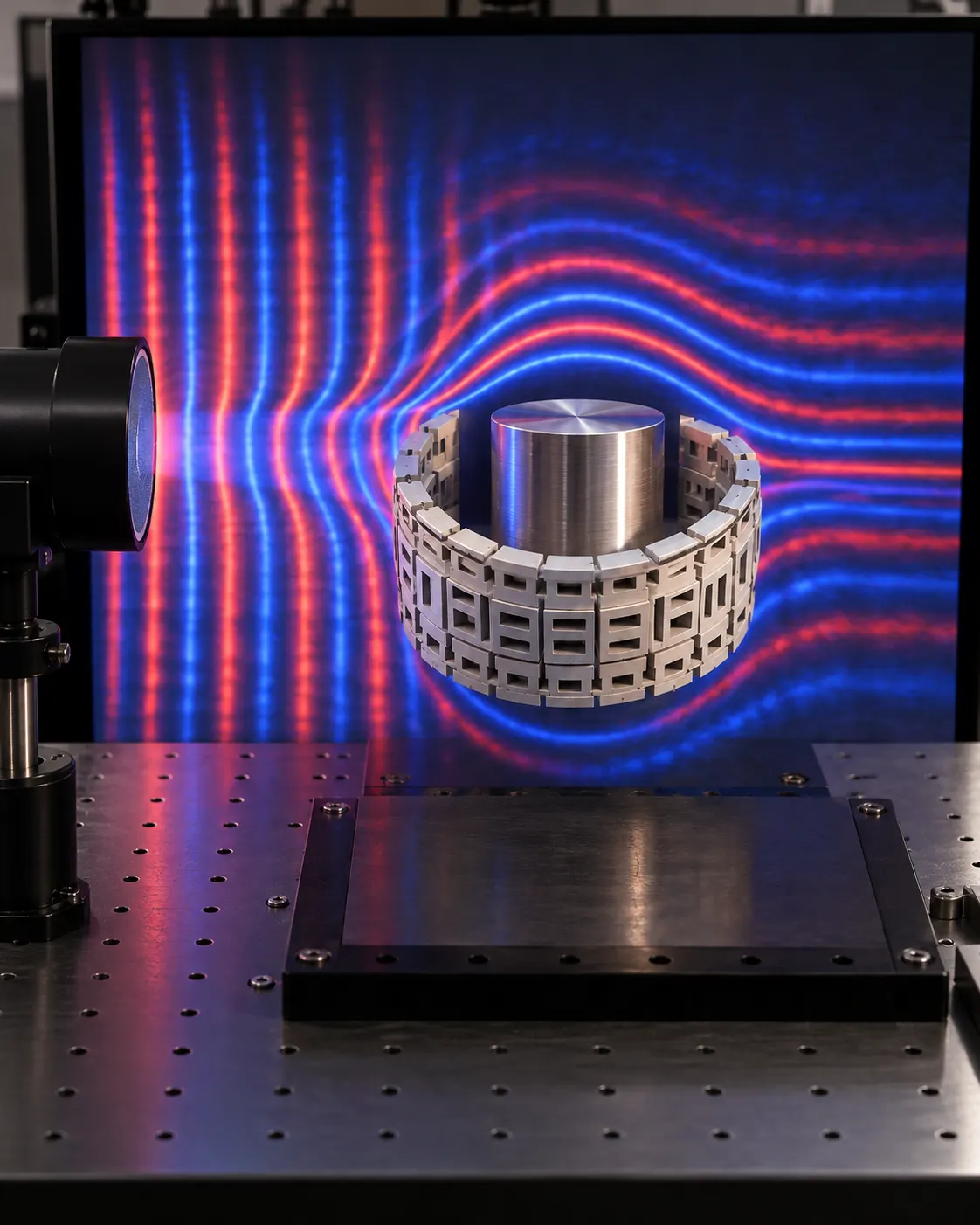
AI-generated educational visualization of electromagnetic waves bending around a patterned shell; not an actual experiment or functional cloak. Prompt: “Photorealistic editorial reconstruction of a physics laboratory demonstration of a metamaterial wave-bending shell: small metal cylinder enclosed by a patterned ring of engineered material, visible red and blue wavefront lines curving around it on a screen, vertical 4:5. Educational visualization, not an actual cloak or invisibility device, no labels, logos, or claim to reproduce a specific experiment.” Generated 2026-10-19.
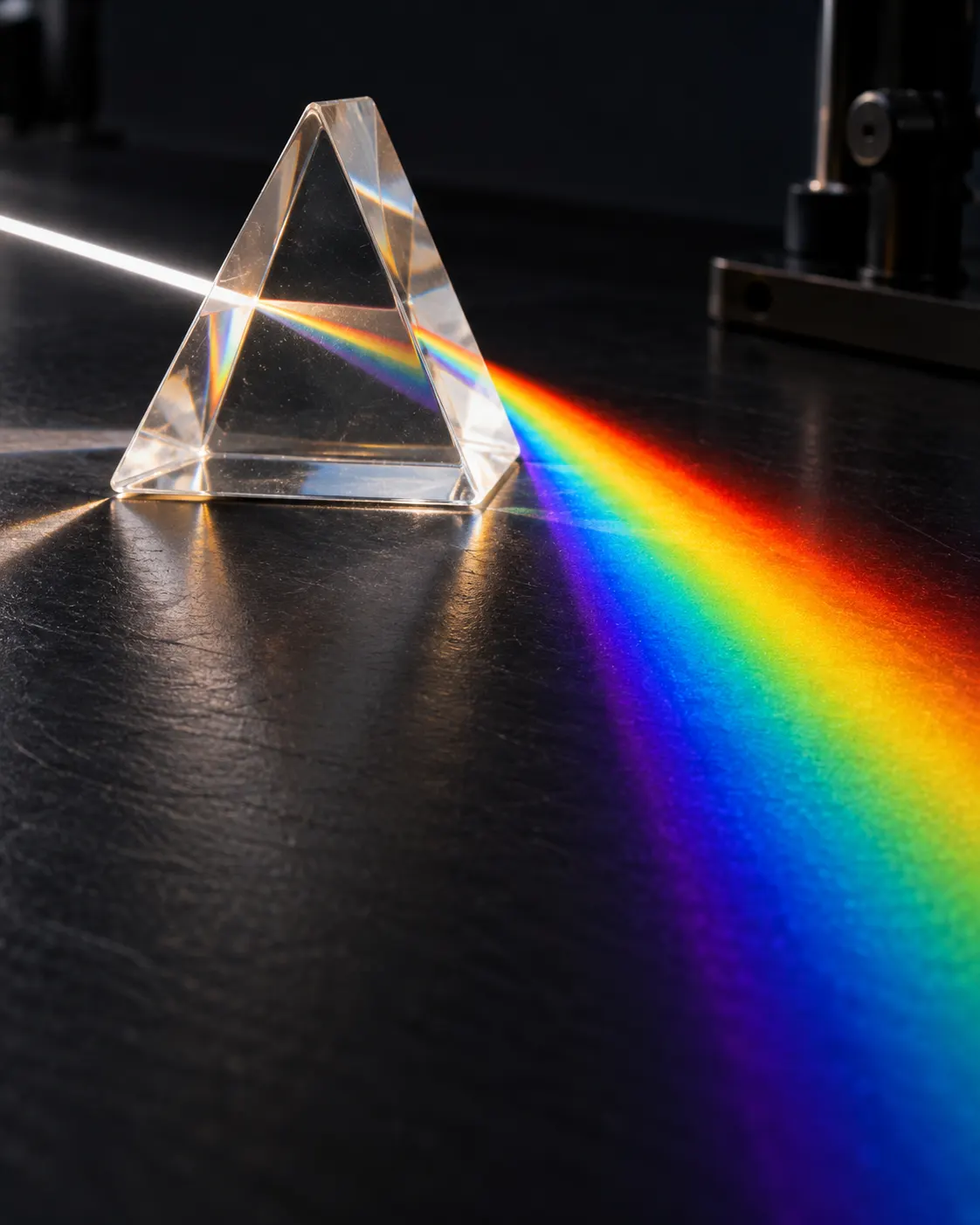
AI-generated image of a prism splitting white light, an optics demonstration relevant to refraction but not invisibility. Prompt: “Photorealistic editorial close-up of a glass prism bending a narrow beam of white light into a spectrum across a dark laboratory surface, physics optics demonstration, vertical 4:5. No text, no people, no claim this creates invisibility.” Generated 2026-10-19.
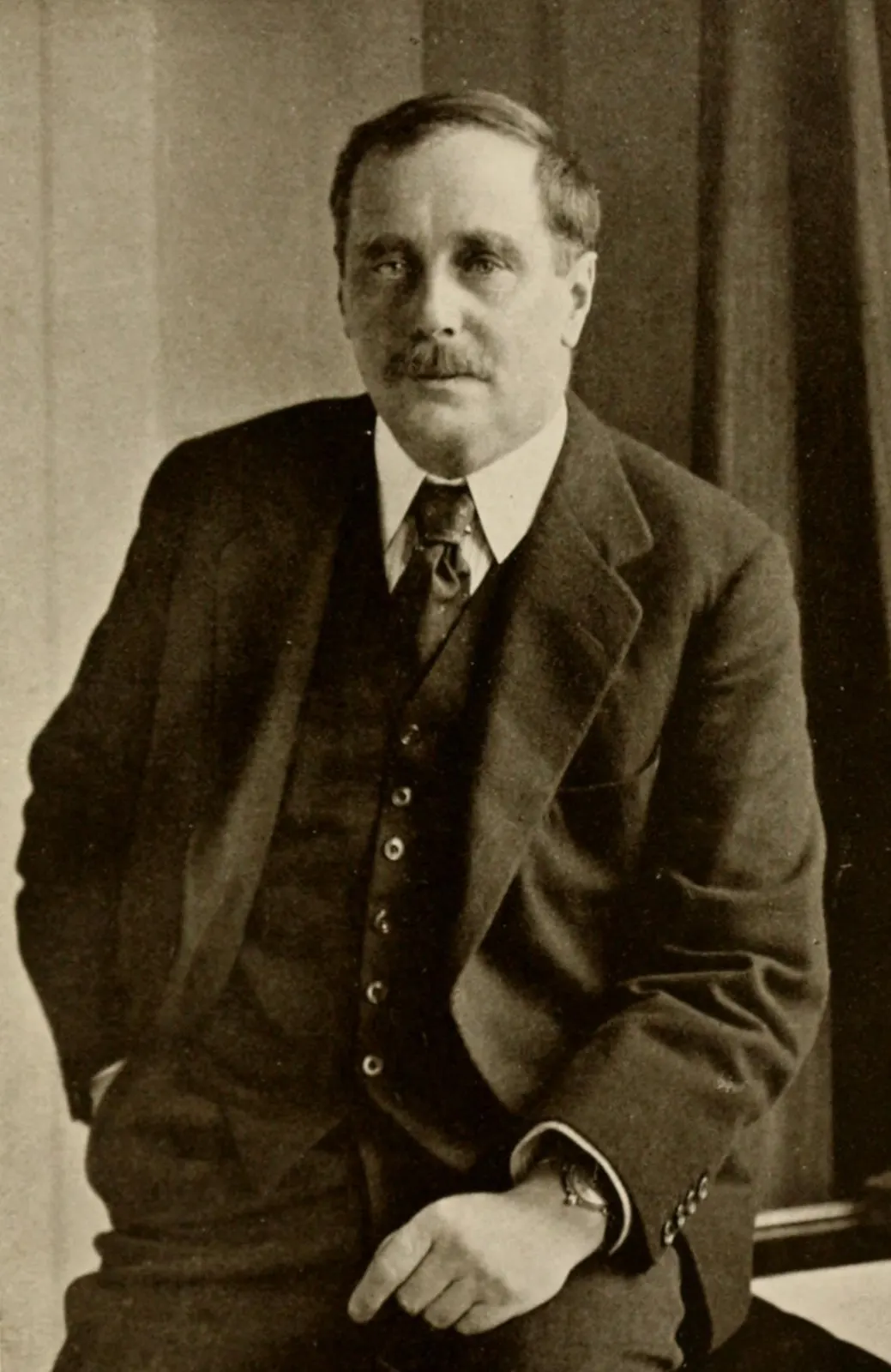
period portrait of H. G. Wells from an anonymous photograph published in *The Story of the House of Cassell* (1922). The image page identifies the original book and marks the scan public domain in the United States; the unknown photographer and publication date support public-domain status in Ukraine under the 70-year term for anonymously published works in Law No. 2811-IX, Article 31. Source page: https://commons.wikimedia.org/wiki/File:Portrait_of_H._G._Wells.jpg. Credit the source book / Cassell & Company; no crop or retouch.
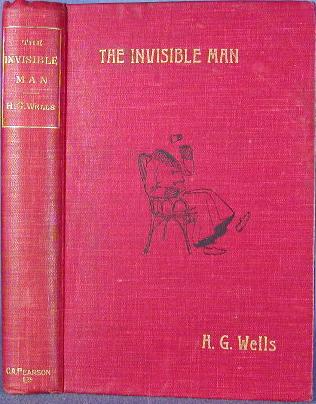
cover of the 1897 first London edition of *The Invisible Man*; cover artist unknown; source citation on Commons points to an antiquarian booksellers’ record. Commons marks it public domain in its country of origin and provides a Public Domain Mark. Source page: https://commons.wikimedia.org/wiki/File:Wells_The_Invisible_Man.jpg. Credit “unknown cover artist, 1897 first edition”; no edits.

AI-generated cover: a generic blank red-bound book beside a prism, symbolizing Wells’s optical explanation. It does not represent a working invisibility device or reproduce the first edition. Prompt: “Photorealistic editorial cover for H. G. Wells's The Invisible Man and the science of optical cloaking: an old red-bound blank novel beside a glass prism and a small object subtly distorted by light on a laboratory table, vertical 4:5. Symbolic only, no actual invisibility technology claim, no readable text, no human figure, and no reproduction of the 1897 book cover.” Generated 2026-10-19.

Слухати факт0:00 / —

У романі Герберта Веллса «Людина-невидимка» (1897) учений Гріффін пояснює невидимість зміною оптичних властивостей тіла: його показник заломлення мав стати майже таким, як у повітря. Це художній механізм, а не опис робочої технології. Через століття дослідники почали розробляти метаматеріальні оболонки, які спрямовують електромагнітні хвилі навколо об’єкта. Спільна риса — прагнення зробити об’єкт непомітним для хвиль; роман не є доказаним джерелом цих технологій і не описує сучасний радарний стелс.