WattПошук
Твій WattРейтинг
Мова
Автоозвучення
Оформлення

Зворотний зв’язок

Є питання чи ідея? Щось не працює? Надішли нам повідомлення.

Про що хочеш написати?
До 3 файлів, 5 МБ кожен, 12 МБ разом.
Або зв’яжися напряму

Прямі контакти відкривають окремий чат або лист. Прикріплені тут файли через них не передаються.

arohalya@gmail.com
Щодня щось дивовижне

Переважна більшість бактерій не спричиняє хвороб у людини
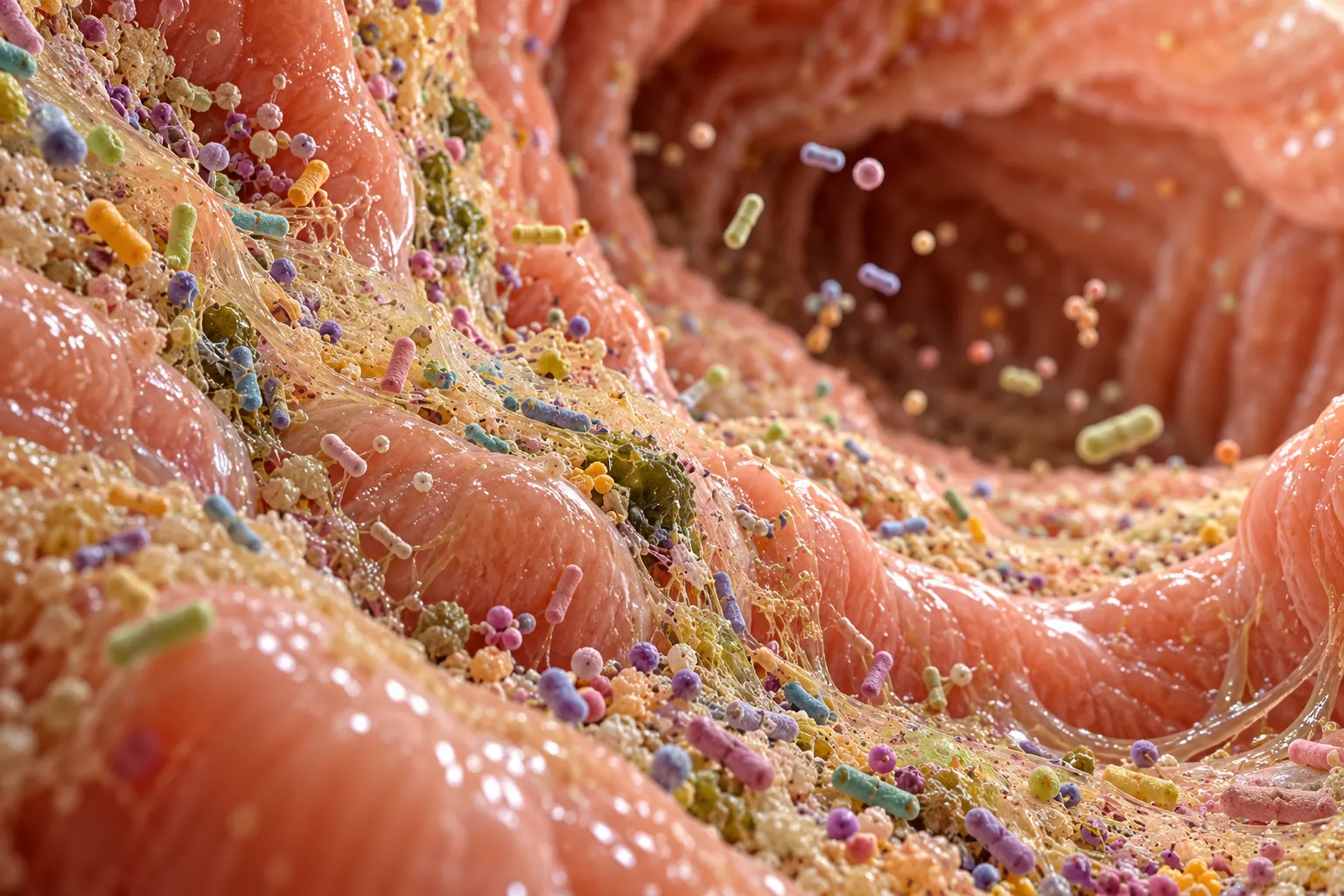
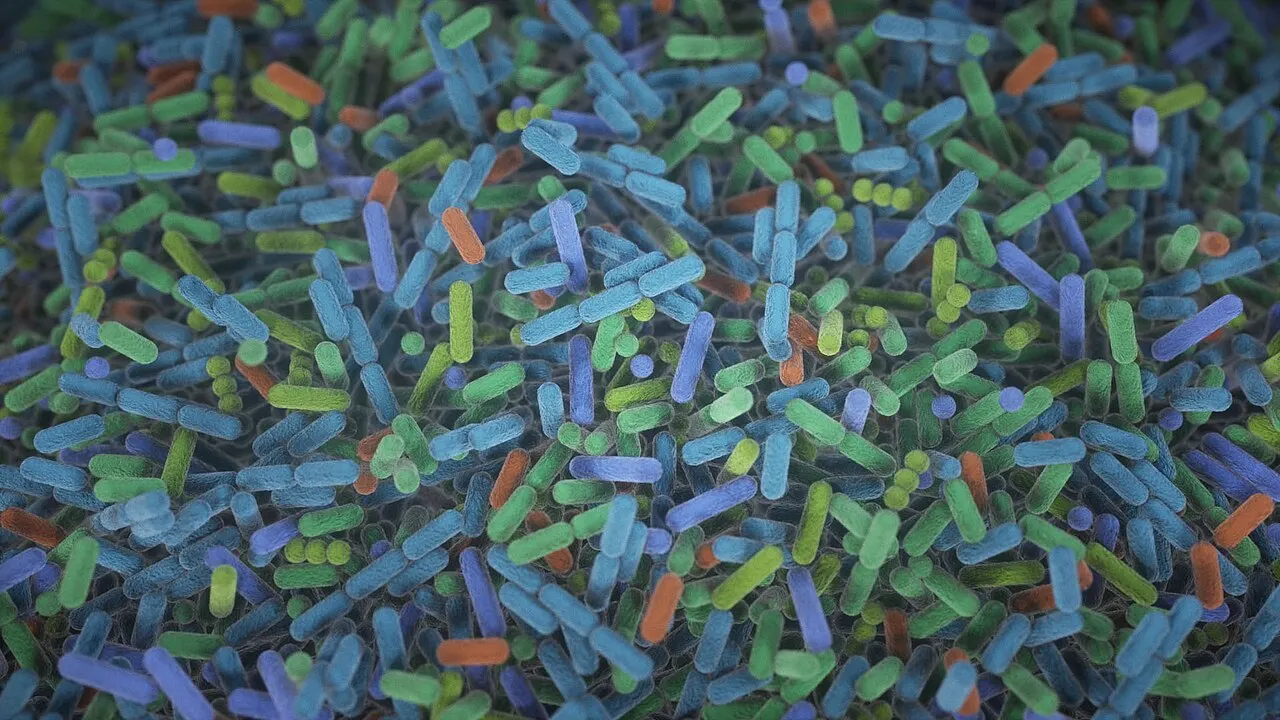
realistic AI-generated educational visualization of the inner surface of the large intestine with diverse bacteria; organisms illustrative and not to scale, not a microscopy photo. Created for fact 046 and reused here. Prompt: “Photorealistic educational cover image about the human gut microbiome. A medically plausible, respectful close-up visualization of the inner surface of the large intestine with a natural mucus layer and many tiny diverse bacteria attached and floating nearby, based on realistic scientific microscopy, warm soft tissue tones, bacteria shown as subtle small rods and spheres, no cartoon faces, no oversized organisms, no labels, no text, no gore, no diagrams, wide 3:2 landscape composition. Make it look like a high-quality scientific editorial photograph, with depth and clean lighting; organisms are illustrative and not to scale.” Visually checked 2026-10-21.
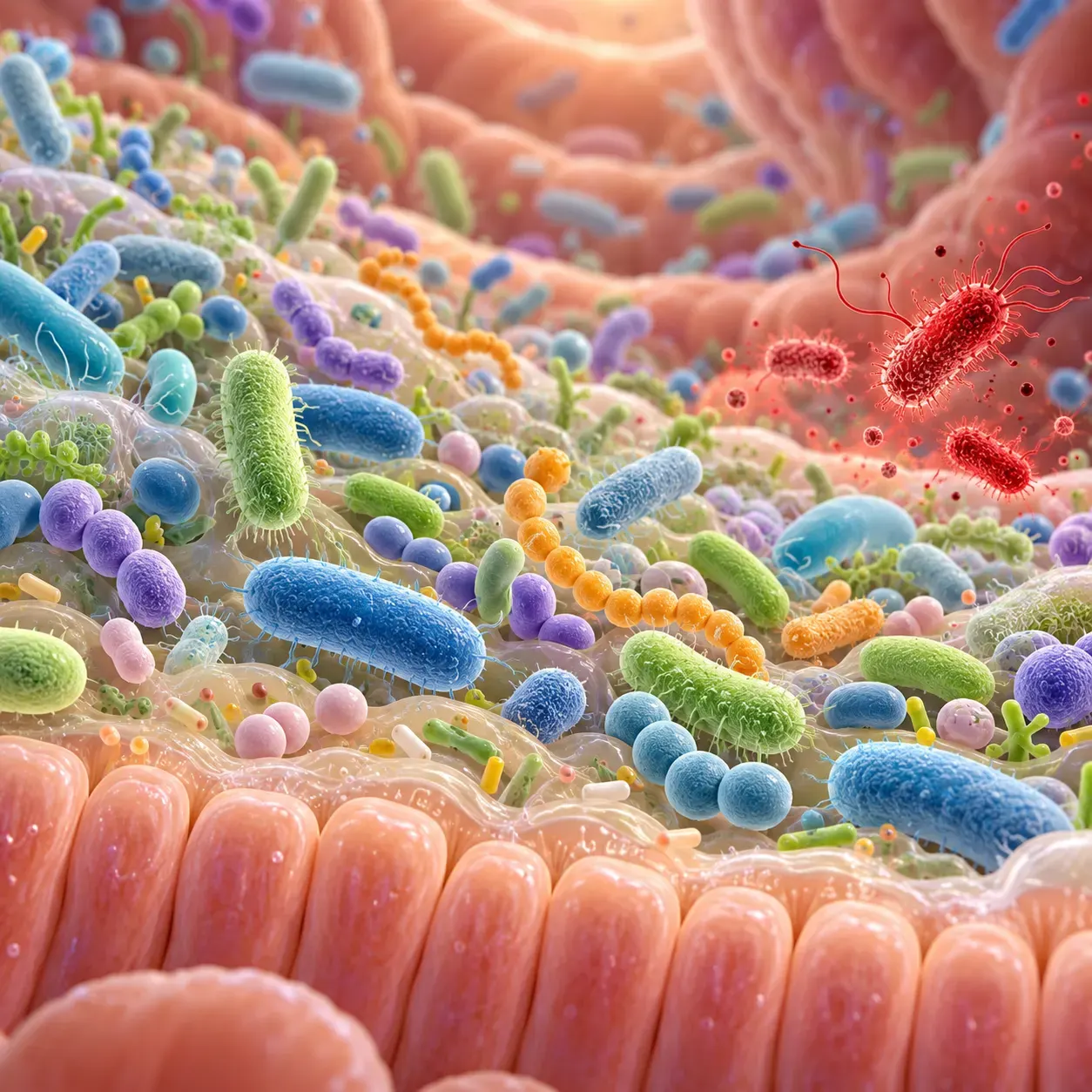
AI-generated microbiome concept image, not microscopy. Existing conceptual image; exact prompt not retained.
NIH illustration of bacteria and other microbes in the human gut; conceptual, not a literal sample or image of all disease-causing bacteria. Source: https://commons.wikimedia.org/wiki/File:Bacteria_in_the_gut.jpg . Original NIH Flickr source: https://www.flickr.com/photos/nihgov/53006111880/ . NIH Image Gallery credit Donny Bliss; CC BY 2.0. Downloaded 1280-pixel-wide derivative. Checked 2026-10-16.
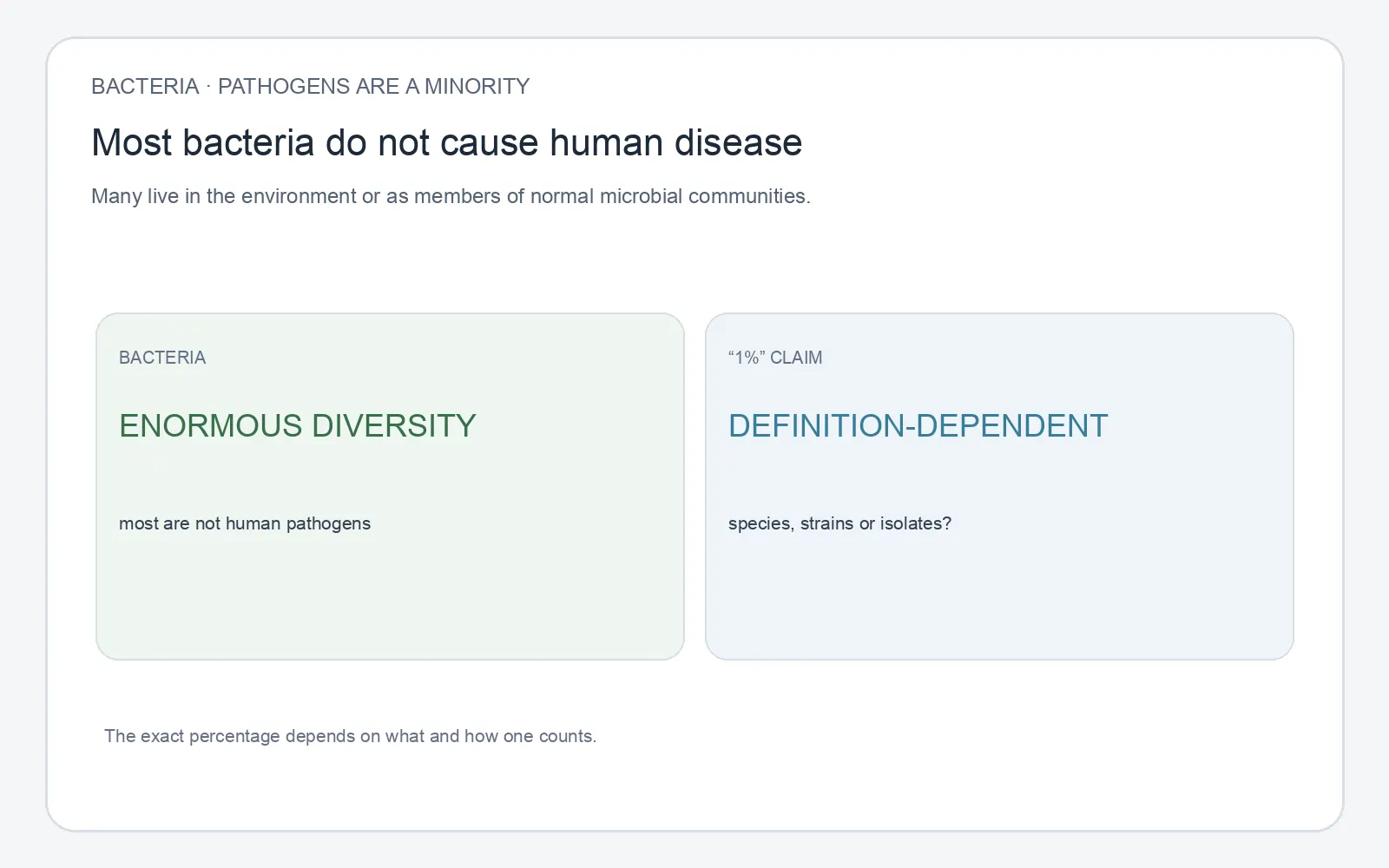
custom educational infographic created 2026-10-19 and visually checked; explains that minority pathogenicity is robust while exact one-percent estimates depend on definitions.
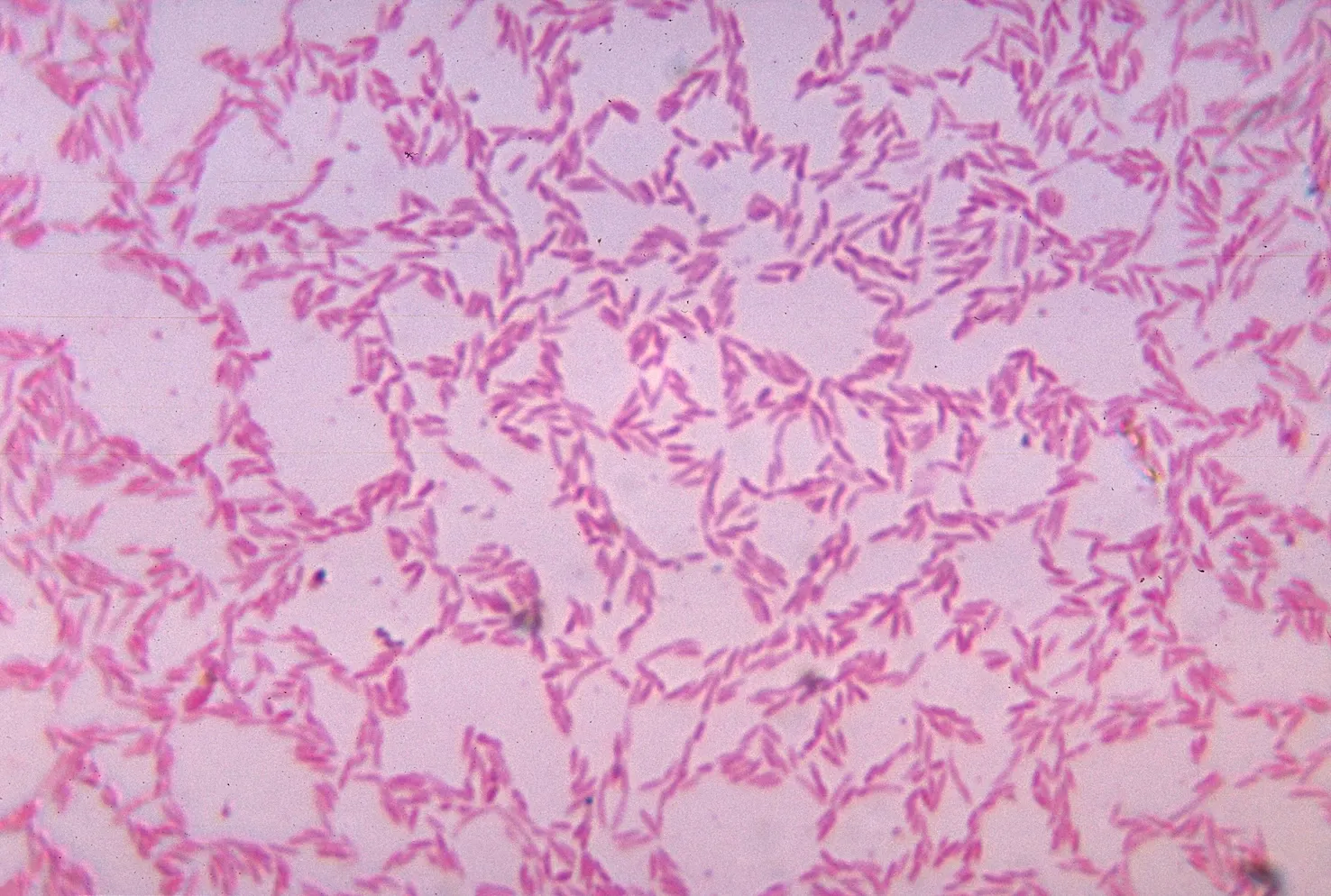
culture of *Bacteroides biacutis*, a representative gut anaerobe, grown on blood agar. Source: https://commons.wikimedia.org/wiki/File:Bacteroides_biacutis_01.jpg ; CDC Public Health Image Library #3087: https://phil.cdc.gov/Details.aspx?pid=3087 . Credit CDC / Dr. V. R. Dowell, Jr.; U.S. federal work, public domain in the United States. No edits. Copied from fact 046; checked 2026-10-21.
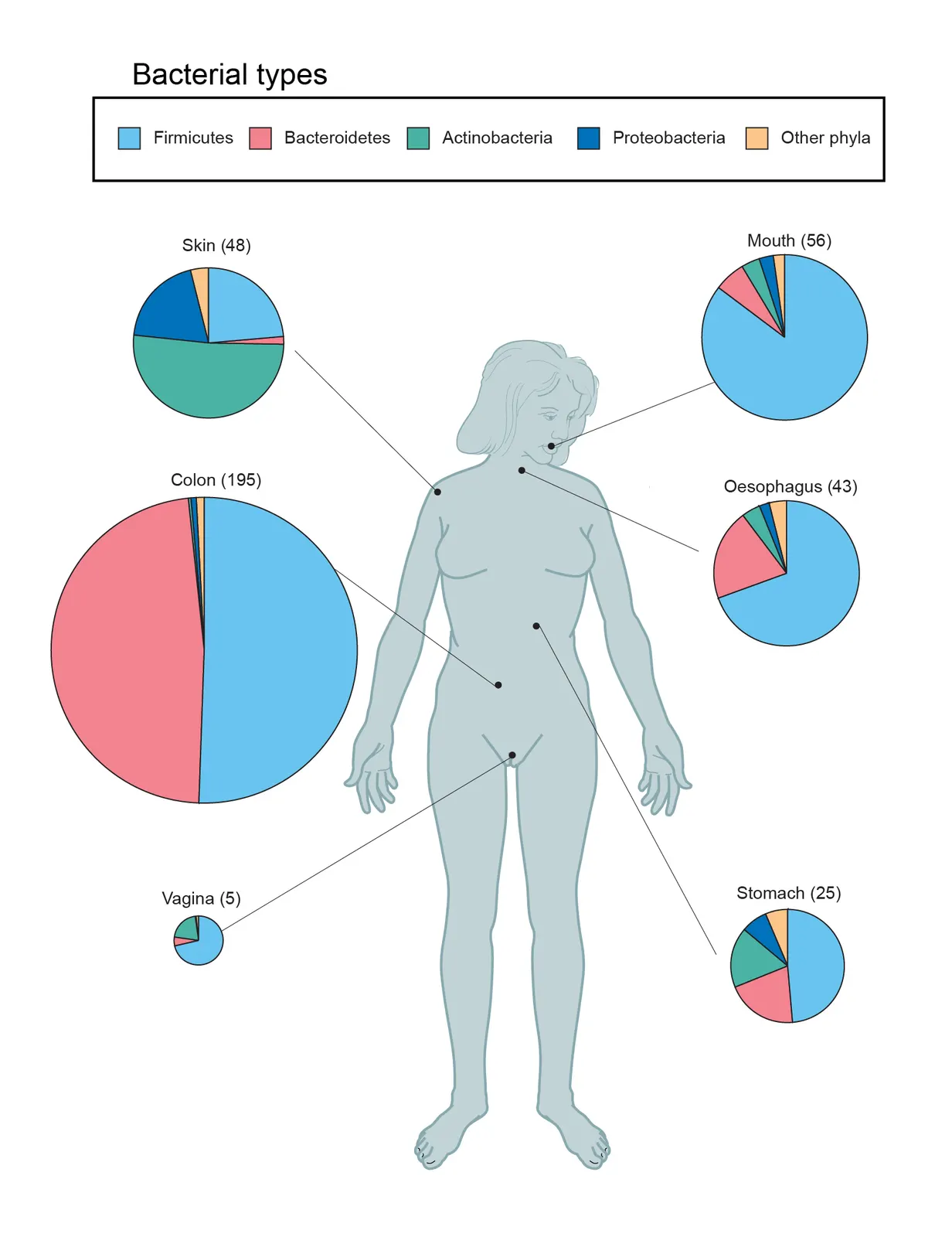
NHGRI illustration of the human body and predominant bacteria by body site. Source: https://commons.wikimedia.org/wiki/File:Human_microbiome_NHGRI.jpg ; original source https://www.genome.gov/sites/default/files/tg/en/illustration/microbiome.jpg . Creator/rights holder NHGRI, NIH; U.S. federal work, public domain. No edits. Copied from fact 046; checked 2026-10-21. It is not a global census of bacteria or a count of pathogens.

realistic AI-generated educational visualization of the inner surface of the large intestine with diverse bacteria; organisms illustrative and not to scale, not a microscopy photo. Created for fact 046 and reused here. Prompt: “Photorealistic educational cover image about the human gut microbiome. A medically plausible, respectful close-up visualization of the inner surface of the large intestine with a natural mucus layer and many tiny diverse bacteria attached and floating nearby, based on realistic scientific microscopy, warm soft tissue tones, bacteria shown as subtle small rods and spheres, no cartoon faces, no oversized organisms, no labels, no text, no gore, no diagrams, wide 3:2 landscape composition. Make it look like a high-quality scientific editorial photograph, with depth and clean lighting; organisms are illustrative and not to scale.” Visually checked 2026-10-21.

Слухати факт0:00 / —

Здорова людина може носити бактерії, відомі як потенційні збудники, і водночас не мати від них хвороби. У проєкті NIH «Мікробіом людини» дослідники відібрали 242 здорових добровольців у США й зібрали понад 5 000 зразків із 15 ділянок тіла чоловіків і 18 ділянок тіла жінок. Вони аналізували ДНК безпосередньо в зразках, а не лише бактерії, які вдалося виростити в лабораторії. Це показує, що виявлення потенційного збудника ще не означає активної інфекції. Проєкт описував мікроби людського тіла, а не вимірював частку всіх бактерій на Землі, тому він не підтверджує точне число «1%».