A model found powerful arm-lowering muscles in gorillas
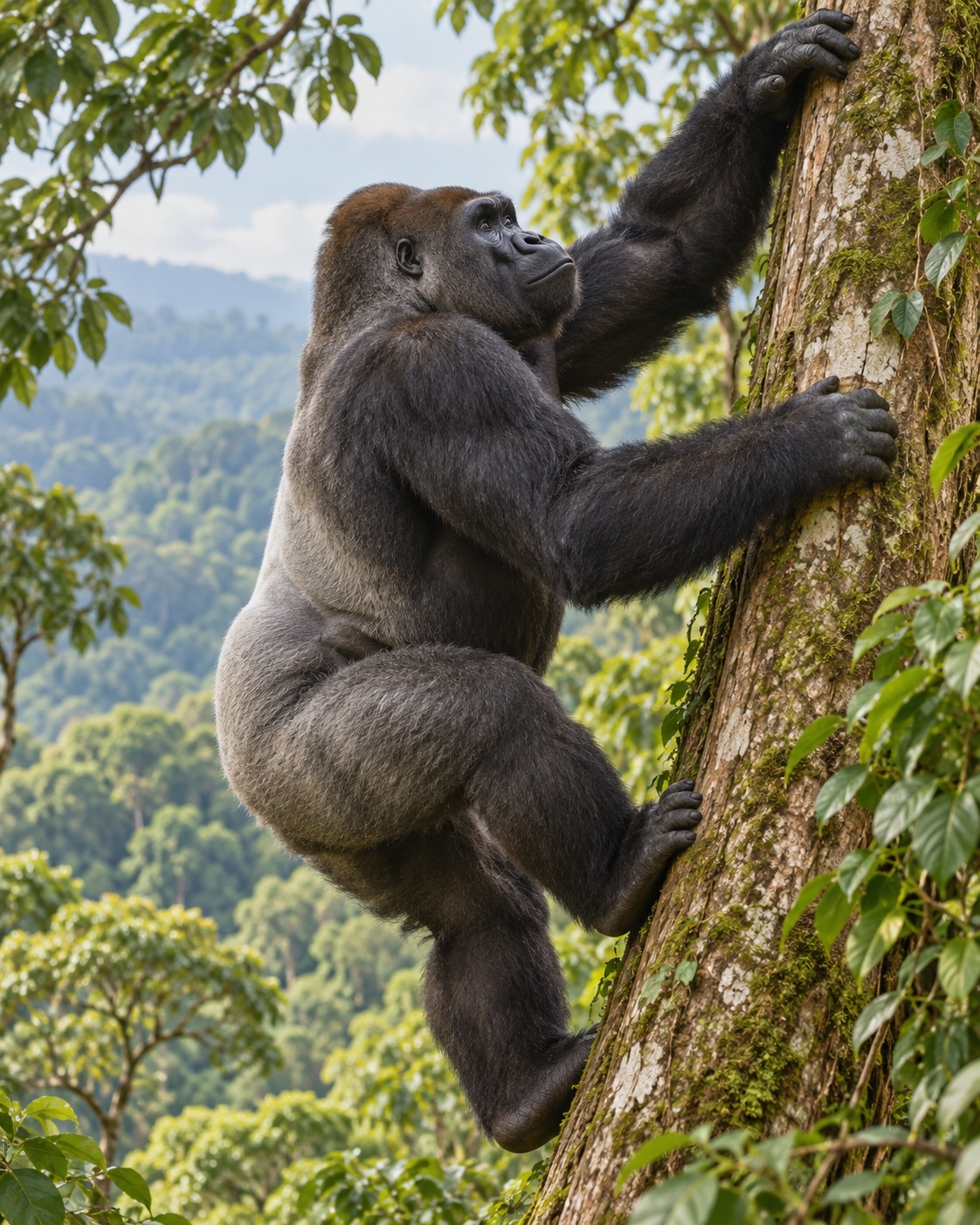
AI-generated conceptual natural-history illustration of a gorilla climbing, emphasizing arm use. It is not a biomechanical measurement, human comparison, or exact anatomical model. Prompt: “Vertical 4:5 educational natural-history illustration of an adult gorilla climbing a tree trunk, using strong arms to pull the body upward. Focus on shoulder and arm posture, with realistic gorilla anatomy and a forest canopy background. Museum-quality science illustration, natural color and calm composition. No human comparison, no arrows, no muscle labels, no measurement graphics, no text. Conceptual scene only, not a specific study subject or anatomical model.” Generated 2026-10-29; no external source or documentary role.
A 2022 comparative biomechanical model found that two gorilla shoulder muscles—the pectoralis major and teres major—can generate greater force for lowering the arm than in the human model. These muscles help during climbing, when an ape pulls its body upward. This is a model of specific muscles and a movement, not a measurement showing that a gorilla is generally 7–8 times stronger than a trained human.