Daylight, circadian rhythms, and light behind the knee
Claim in the list: Daylight helps the biological clock; researchers developed a device that directs light at the popliteal fossa to reset rhythms, including during long-distance flights.
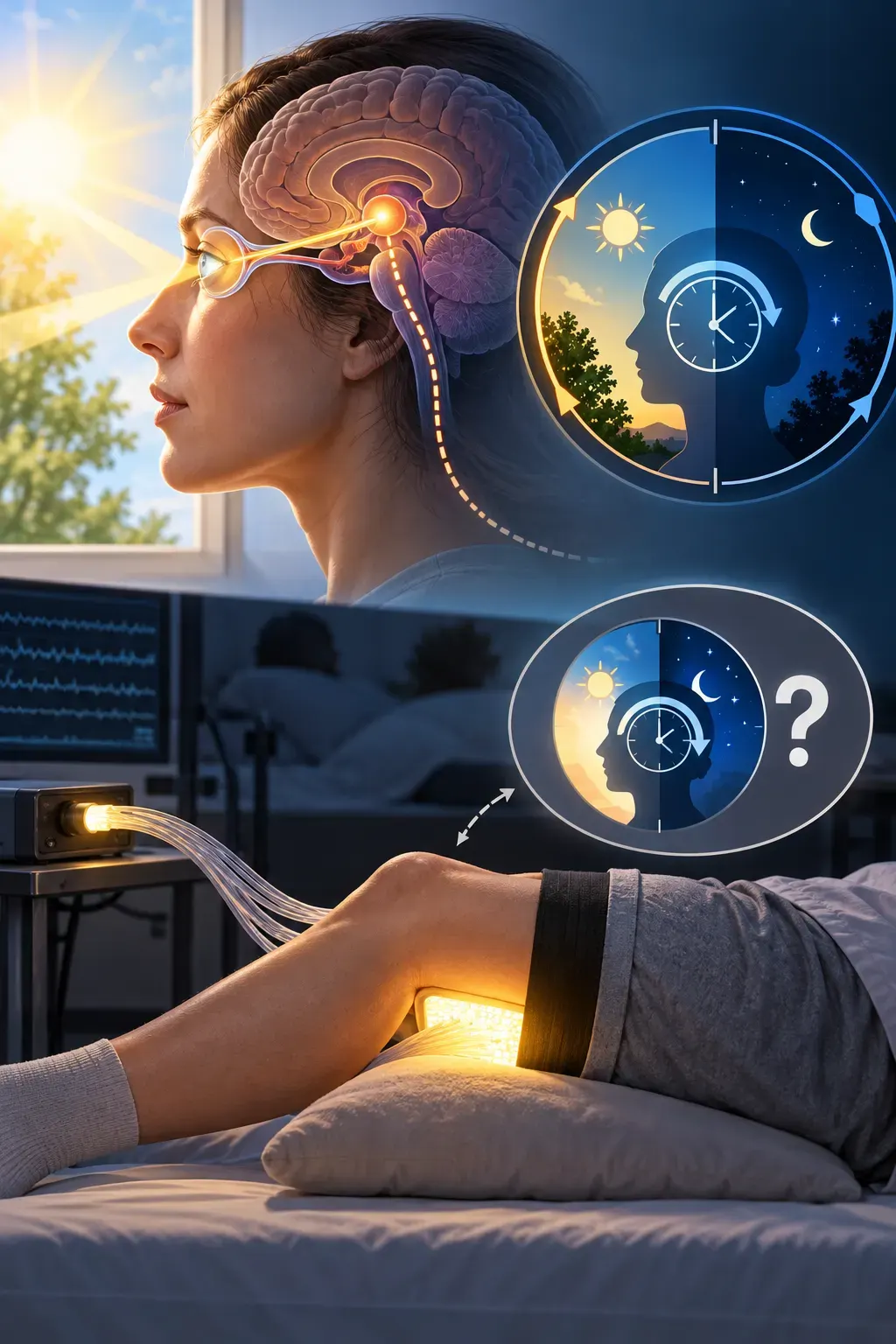
Verification: The first part is well established: light detected by the retina is an important signal for circadian entrainment. The second refers to 1990s experiments that reported a phase shift after illuminating skin behind the knees and used fiber-optic light pads. However, independent follow-up experiments found no reliable circadian phase shift or melatonin suppression from this extraocular illumination. It is therefore a historical experimental hypothesis, not an established jet-lag treatment.
Conclusion: Daylight reaching the eyes helps synchronize the biological clock. The behind-the-knee light idea was studied, but controlled replications did not confirm reliable efficacy.