WattSearch
Your WattLeaderboard
Language
Autoplay narration
Appearance

Feedback

Have a question or an idea? Something not working? Send us a message.

What would you like to share?
Up to 3 files, 5 MB each, 12 MB total.
Or contact us directly

Direct contacts open a separate chat or email. Files attached here are not included.

arohalya@gmail.com
A little wonder, every day

Three screen adaptations of Solaris
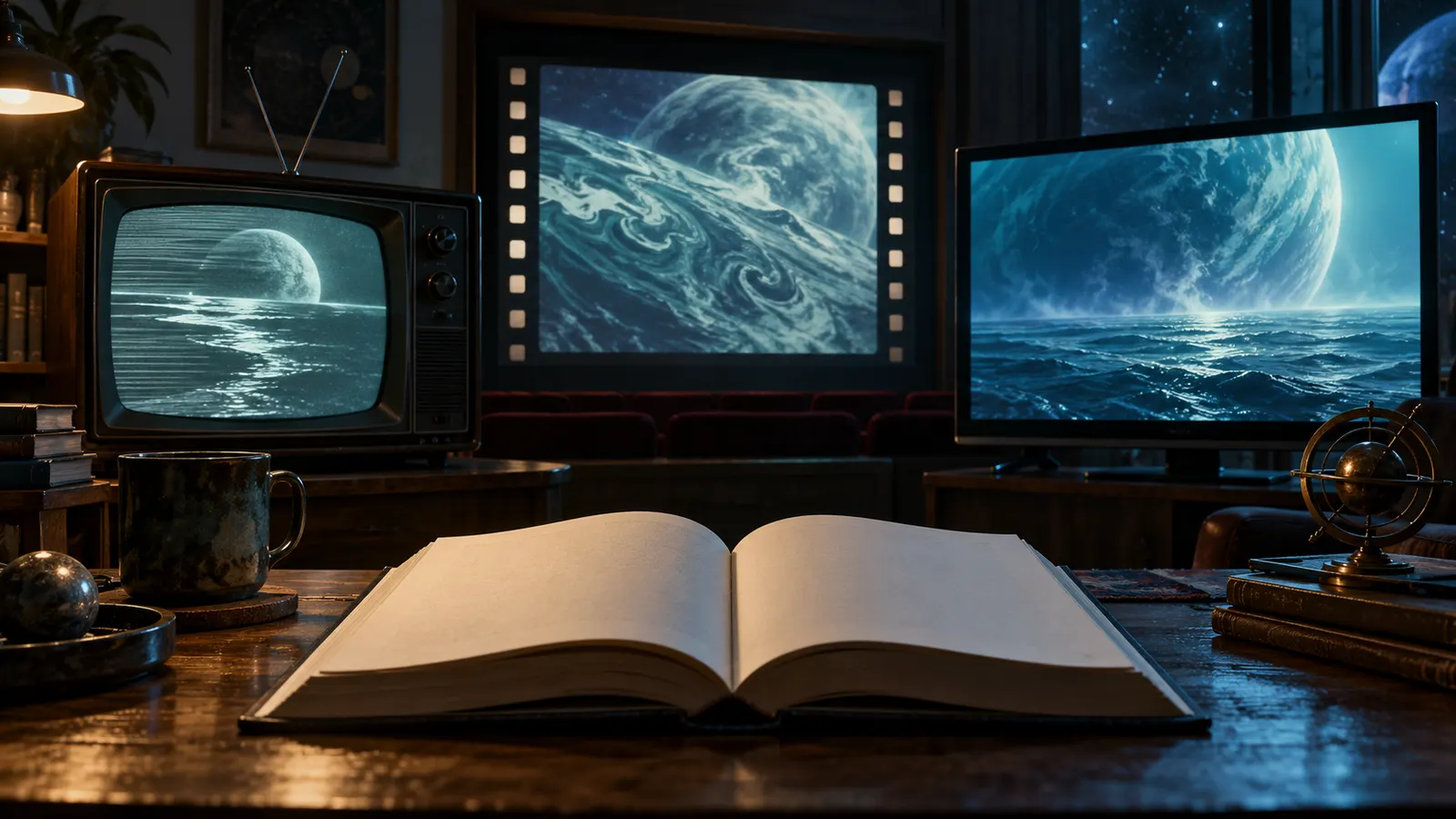
Титульна AI-згенерована ілюстрація / AI-generated cover illustration. Stanisław Lem’s novel is evoked alongside three different screen formats showing an imagined ocean planet.
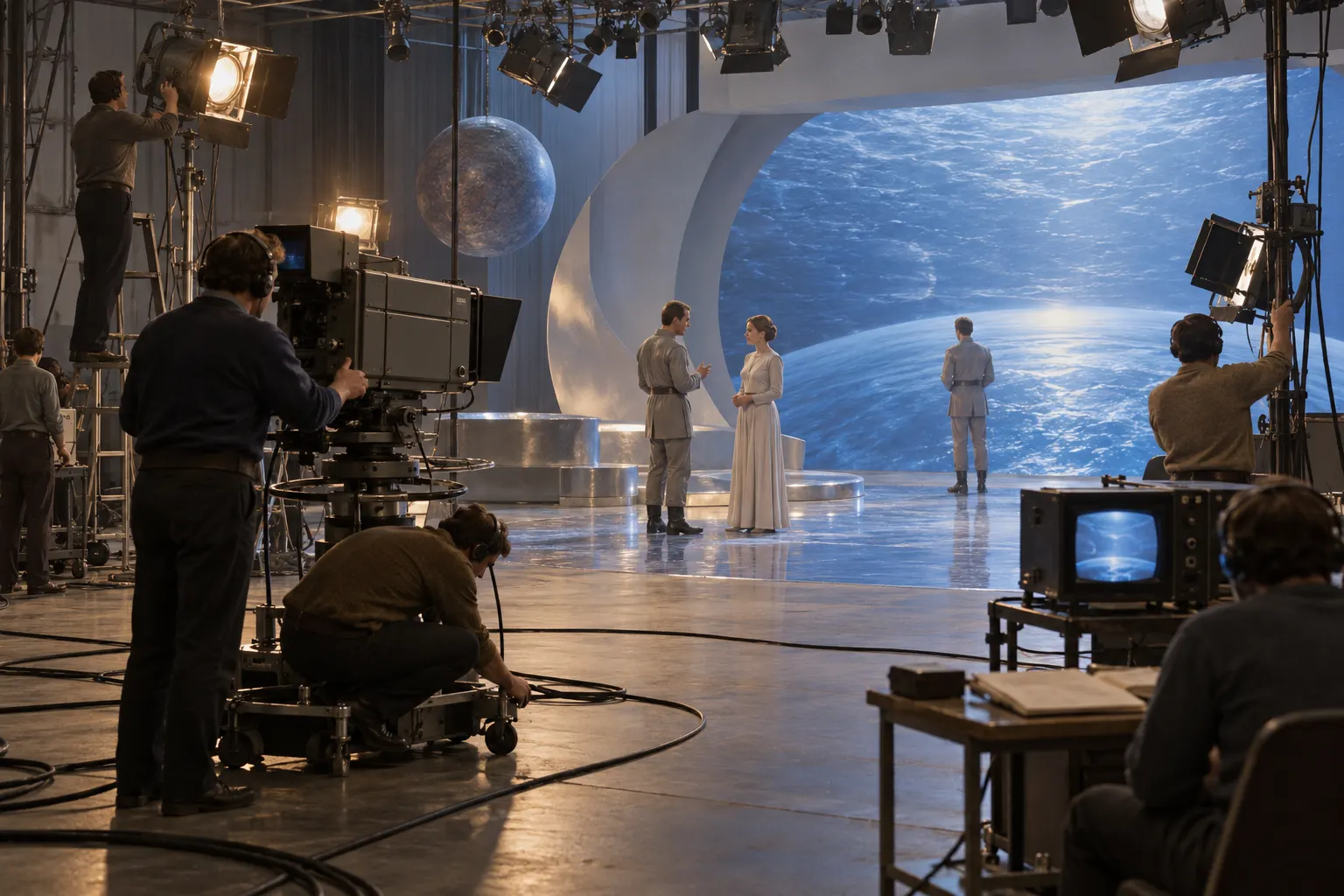
AI-generated symbolic reconstruction of a late-1960s television studio preparing a science-fiction production, representing the two-part 1968 television adaptation.
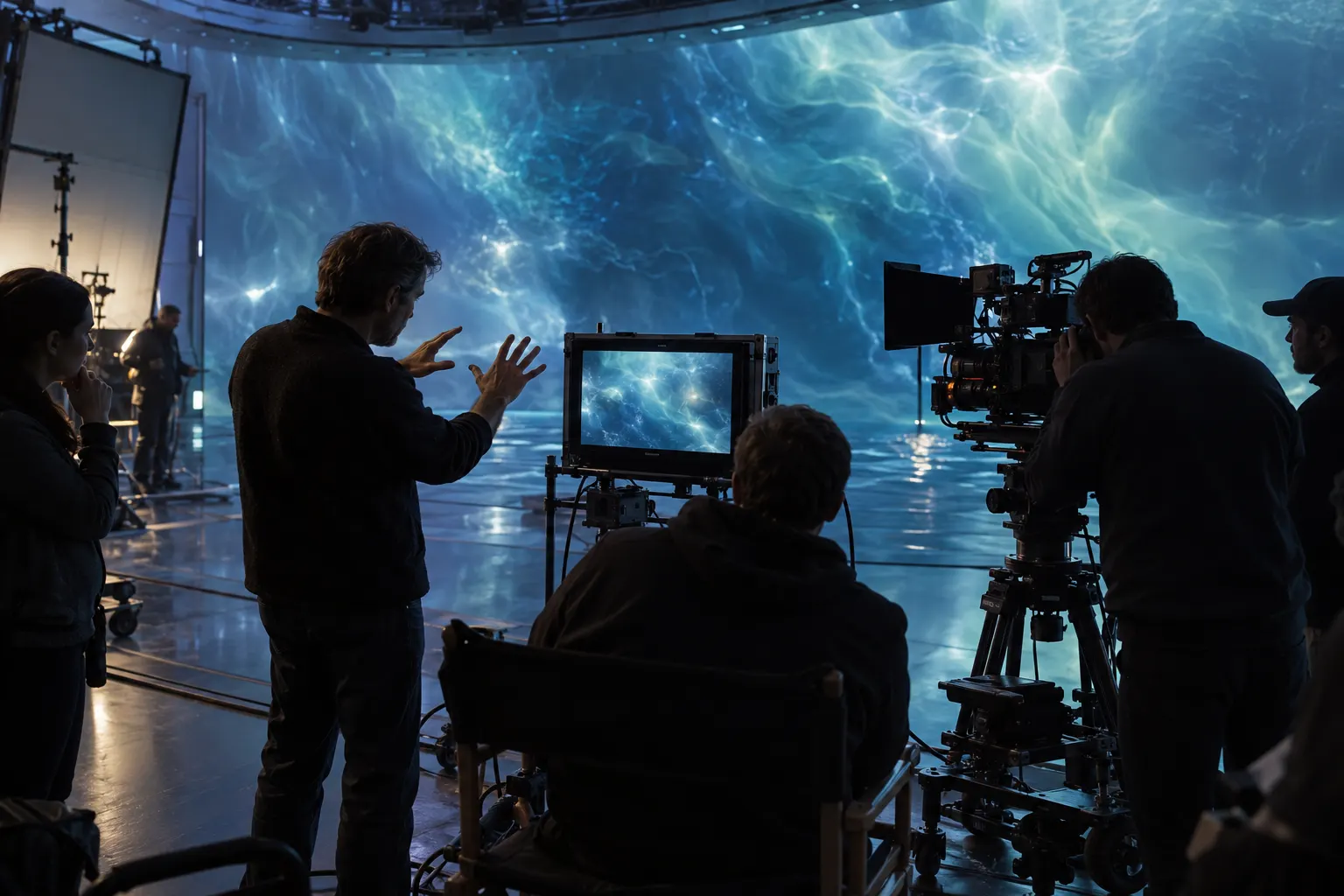
AI-generated symbolic reconstruction of an early-2000s film crew creating an abstract ocean-planet set, representing a later film adaptation.
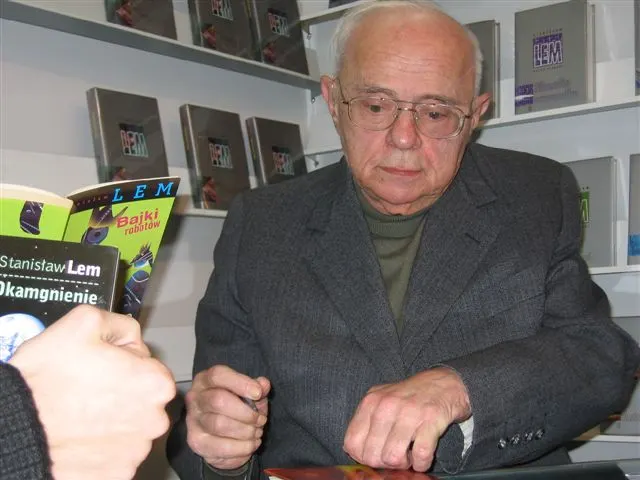
Portrait, 2005; Mariusz Kubik, CC BY 2.5. Attribution: Mariusz Kubik / CC BY 2.5. Original: https://commons.wikimedia.org/wiki/File:Stanislaw_Lem_by_Kubik.JPG. Reused without changes from #1707.
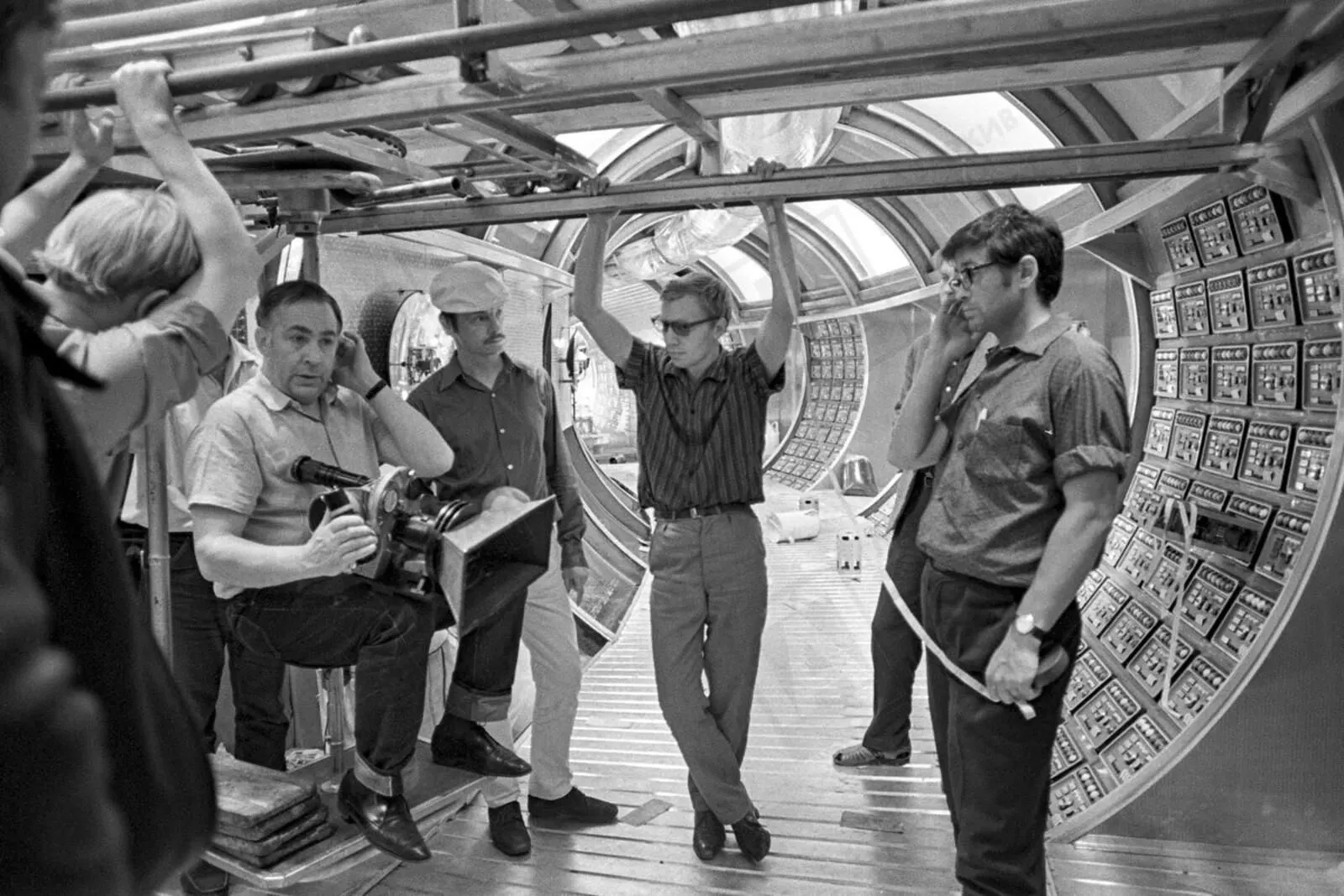
Archival photograph of Andrei Tarkovsky and crew on the set of *Solaris* in Moscow, 1972; photographed by Valentin Mastyukov and credited to the Main Archive of Moscow (Glavarkhiv Moskvy / Mos.ru). CC BY 4.0. Original asset: https://commons.wikimedia.org/wiki/File:Andrey_Tarkovsky_on_crew_of_Solaris.jpg; underlying institutional source: https://www.mos.ru/news/item/154431073/. Attribution: “Main Archive of Moscow (Mos.ru), photographer Valentin Mastyukov, CC BY 4.0.” No edits.

Титульна AI-згенерована ілюстрація / AI-generated cover illustration. Stanisław Lem’s novel is evoked alongside three different screen formats showing an imagined ocean planet.

Listen to fact0:00 / —

Stanisław Lem’s novel *Solaris* has been adapted for the screen three times in different formats. The first was a two-part Soviet television production by Boris Nirenburg and Lidia Ishimbaeva in 1968; it was followed by feature films by Andrei Tarkovsky (1972) and Steven Soderbergh (2002). [1–4]