WattSearch
Your WattLeaderboard
Language
Autoplay narration
Appearance

Feedback

Have a question or an idea? Something not working? Send us a message.

What would you like to share?
Up to 3 files, 5 MB each, 12 MB total.
Or contact us directly

Direct contacts open a separate chat or email. Files attached here are not included.

arohalya@gmail.com
A little wonder, every day

Nautilus and real diving gear
AI-generated cover image (created 2026-10-19), pairing an open blank antique science-fiction novel with vintage diving equipment. Generic editorial illustration; no historical identity implied. Exact generation prompt: “Photorealistic editorial cover for a fact about Jules Verne's fictional submarine Nautilus and real 19th-century diving equipment: an open blank antique science-fiction novel beside a brass-and-leather vintage diving helmet on a wooden chart table, with subtle deep-sea blue light, vertical 4:5. Historically plausible generic objects, no readable text, no recognizable book cover, no logos.”
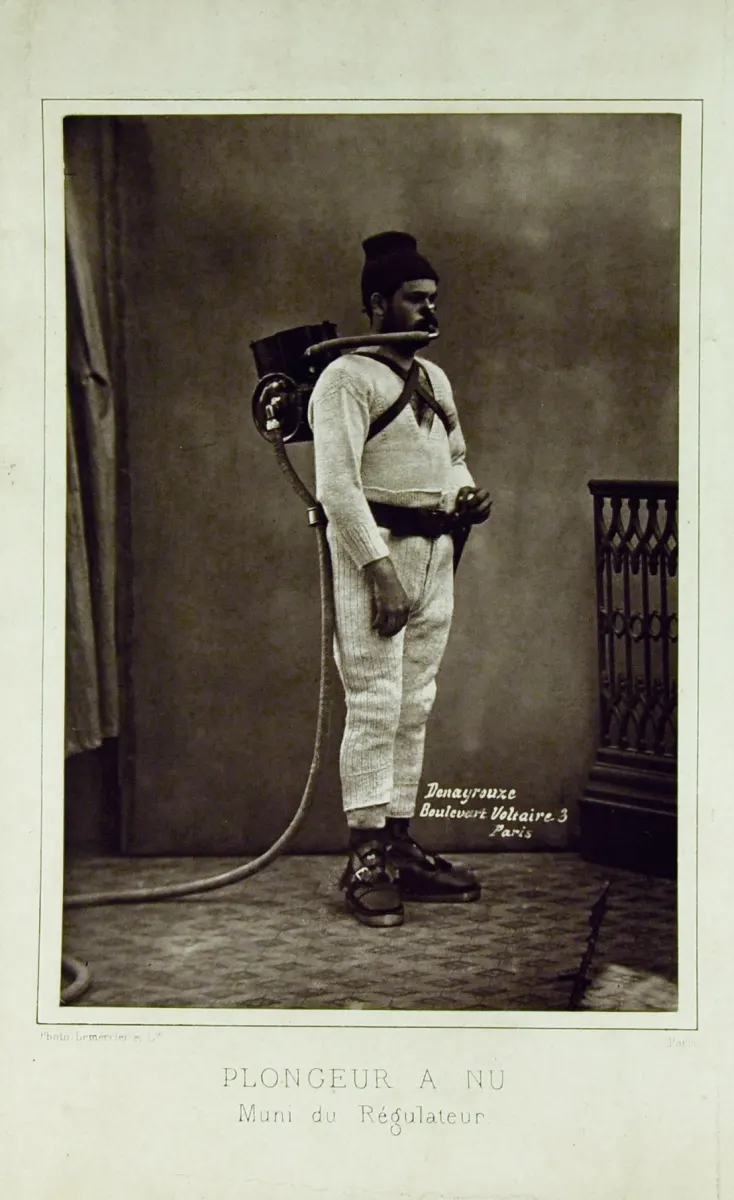
Documentary photograph/photoglyptie of a diver with the Denayrouze regulator, circa 1870; photographer Alfred Léon Lemercier. Commons file page: https://commons.wikimedia.org/wiki/File:Plongeur_%C3%A0_nu,_muni_du_R%C3%A9gulateur_(syst%C3%A8me_Denayrouze),_vers_1870.jpeg. Marked public domain in its country of origin and under the Public Domain Mark. Attribution: Alfred Léon Lemercier. File downloaded from linked original print at Rouillac; no edits.
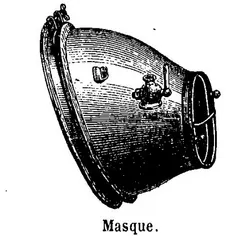
Historical engraving of the Rouquayrol–Denayrouze mask, from Auguste Denayrouze’s 1867 manual, digitized by Gallica/Bibliothèque nationale de France. Commons file page: https://commons.wikimedia.org/wiki/File:Masque_Rouquayrol-Denayrouze.png. Dedicated CC0 1.0; credit retained as “Auguste Denayrouze, 1867 manual via BnF/Gallica.” Downloaded 250 px Commons thumbnail; no edits.
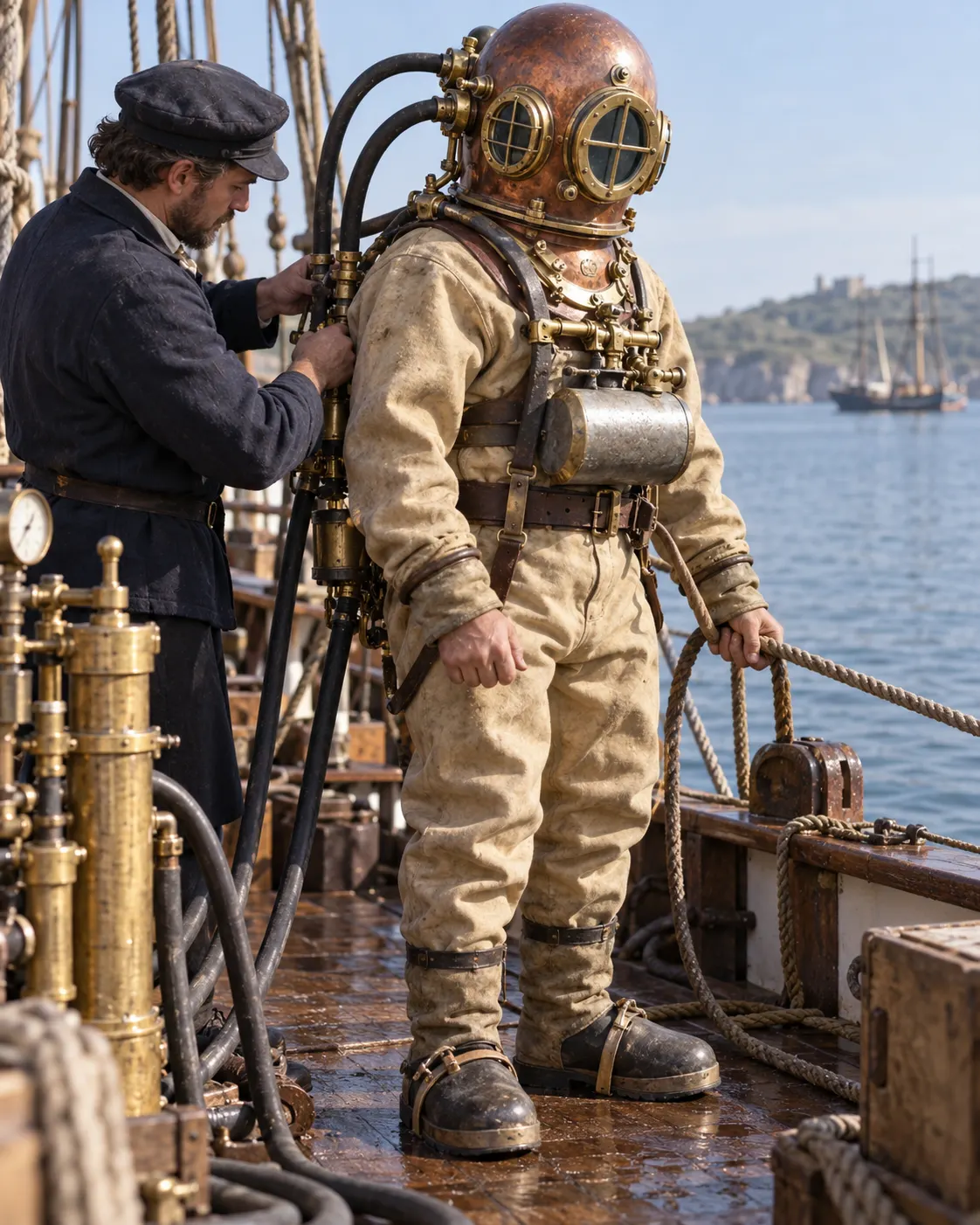
AI-generated editorial reconstruction (created 2026-10-19) of an anonymous diver preparing to enter the water in plausible 19th-century apparatus; not a historical photograph or portrait of a named individual. Exact generation prompt: “Photorealistic editorial reconstruction of a 19th-century Rouquayrol–Denayrouze diver preparing to descend, wearing historically plausible period diving equipment on a ship deck beside calm water, no readable text, vertical 4:5. Generic anonymous person, illustrative reconstruction, not a documented historical photograph.”
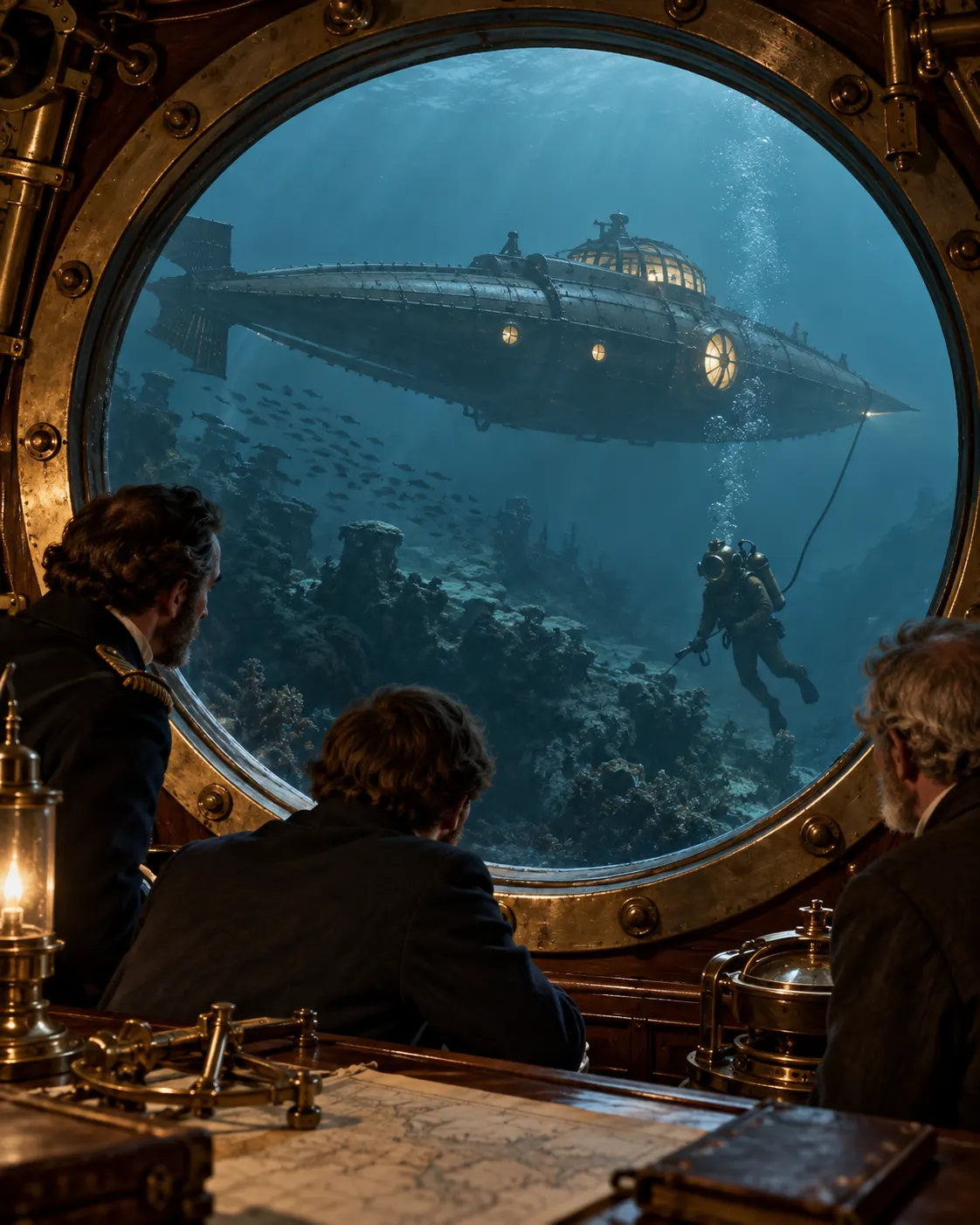
AI-generated imaginative editorial illustration (created 2026-10-19) evoking Verne’s fictional underwater world; it does not depict a real historical submarine. Exact generation prompt: “Photorealistic editorial scene of a Jules Verne-era submarine gliding beneath the ocean, seen through a large porthole from inside a 19th-century vessel, with a diver silhouette using period apparatus in the water, vertical 4:5. Evocative illustration of the novel, not a historical photograph; no readable text or logos.”

AI-generated cover image (created 2026-10-19), pairing an open blank antique science-fiction novel with vintage diving equipment. Generic editorial illustration; no historical identity implied. Exact generation prompt: “Photorealistic editorial cover for a fact about Jules Verne's fictional submarine Nautilus and real 19th-century diving equipment: an open blank antique science-fiction novel beside a brass-and-leather vintage diving helmet on a wooden chart table, with subtle deep-sea blue light, vertical 4:5. Historically plausible generic objects, no readable text, no recognizable book cover, no logos.”

Listen to fact0:00 / —

In Jules Verne’s novel *Twenty Thousand Leagues Under the Seas*, published in installments in 1869–1870, the *Nautilus* is Captain Nemo’s fictional electric submarine. Verne did not present its diving equipment as his own invention: Nemo uses the real Rouquayrol–Denayrouze apparatus, adapted for the novel. Decades later, the first U.S. nuclear-powered submarine was named USS *Nautilus* after the vessel in Verne’s story, but this does not mean modern submarines descended from Verne’s fiction.