WattSearch
Your WattLeaderboard
Language
Autoplay narration
Appearance

Feedback

Have a question or an idea? Something not working? Send us a message.

What would you like to share?
Up to 3 files, 5 MB each, 12 MB total.
Or contact us directly

Direct contacts open a separate chat or email. Files attached here are not included.

arohalya@gmail.com
A little wonder, every day

Fact 2255 — crossbow advantages and tradeoffs
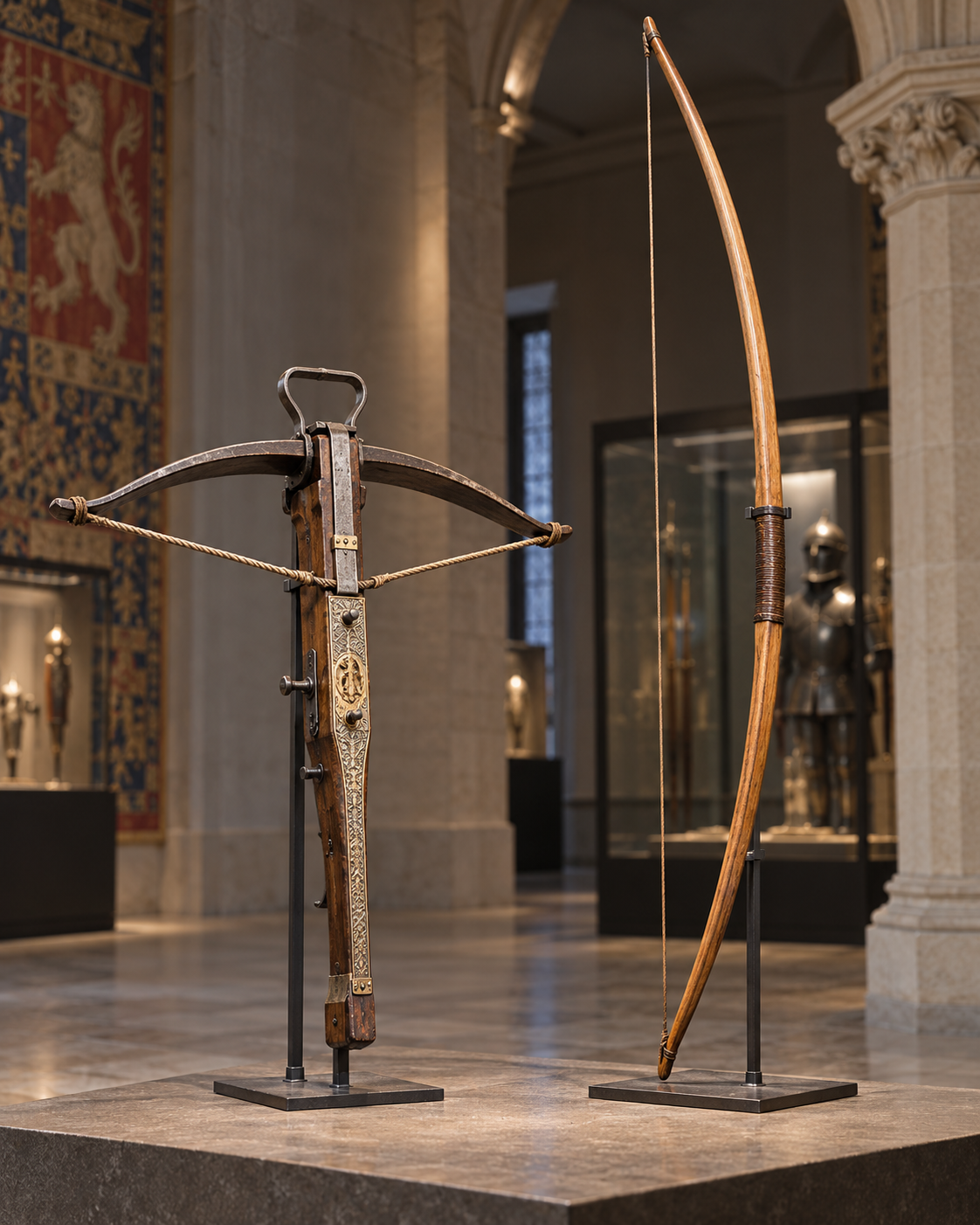
AI-generated with OpenAI image generation. Prompt: “Photorealistic editorial cover for a history article about medieval crossbows and longbows. Two distinct historical bows displayed side by side in a museum gallery: a compact crossbow and a long English longbow, no bolts or arrows, no people, no combat, no text or logos. Neutral artifact lighting, portrait 4:5.”
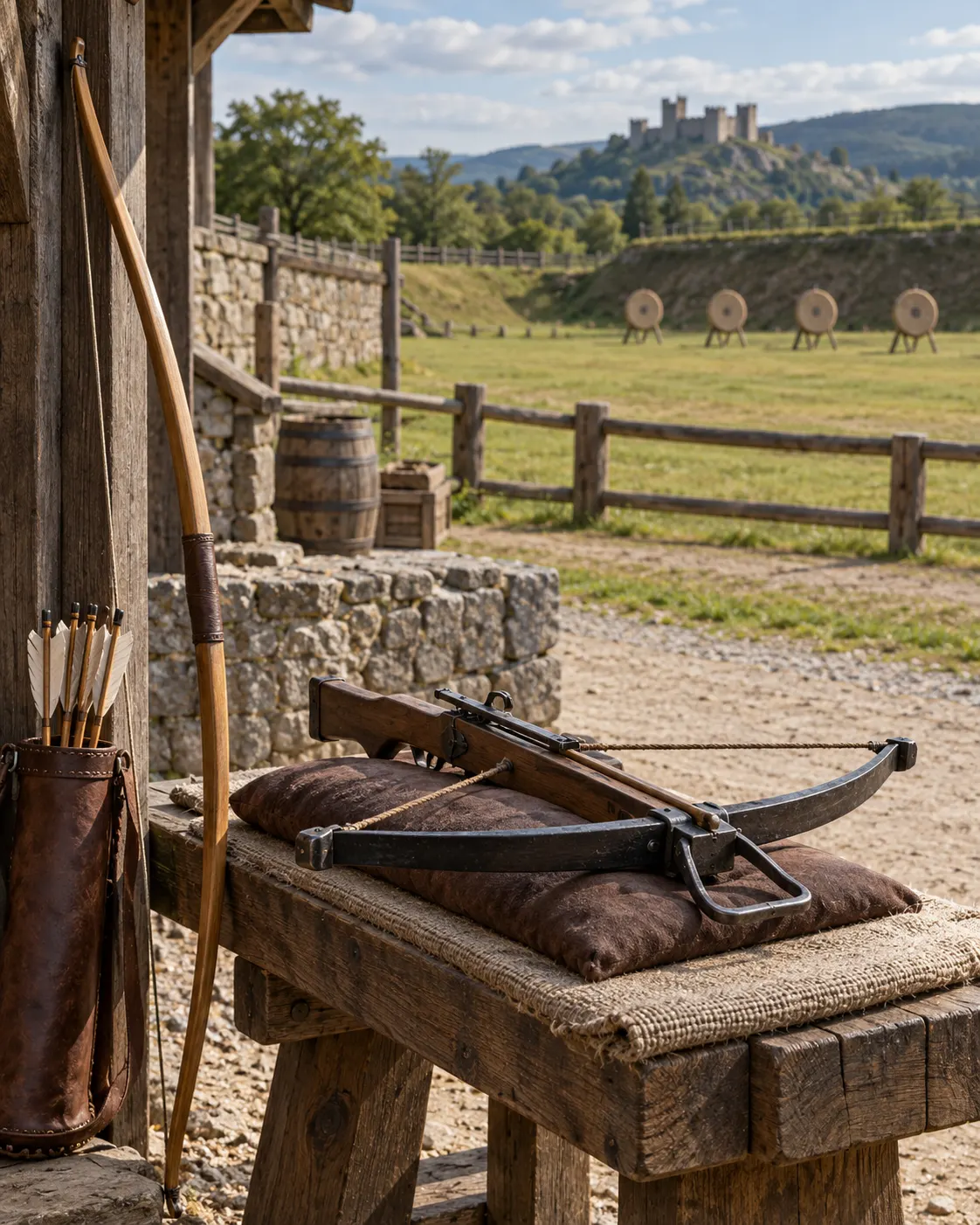
AI-generated with OpenAI image generation. Prompt: “Distinct photorealistic medieval history reconstruction of an archery practice yard: a crossbow resting safely on a padded wooden bench and a longbow leaning nearby, distant empty target field, no people, no shooting, no battle, no readable text or logos. Calm educational documentary style, portrait 4:5.”

AI-generated with OpenAI image generation. Prompt: “Photorealistic editorial cover for a history article about medieval crossbows and longbows. Two distinct historical bows displayed side by side in a museum gallery: a compact crossbow and a long English longbow, no bolts or arrows, no people, no combat, no text or logos. Neutral artifact lighting, portrait 4:5.”

Listen to fact0:00 / —

Crossbows and longbows demanded different skills. The Fitzwilliam Museum notes the crossbow’s relative ease of use but also its slower rate of fire: at Crécy in 1346, English archers could shoot roughly five or six arrows for every crossbow bolt. Performance depended on the weapon type, spanning mechanism, and archer’s training; a universal formula such as “stronger, cheaper, or easier to maintain” does not describe every crossbow.