Forests and Atmospheric Oxygen
The taiga, Amazon, and African equatorial forests photosynthesize and release oxygen, but they should not be called the planet’s main “lungs” in the sense of net oxygen supply. In mature ecosystems, most oxygen produced is consumed by organism respiration and decomposition, so a biome’s net contribution to atmospheric oxygen is close to zero. Roughly half of gross global oxygen production is associated with the ocean, including photosynthesis by microorganisms. Forests are vital for climate, the carbon cycle, and biodiversity, but not because they supply the “lion’s share” of the oxygen we breathe. [1–3]
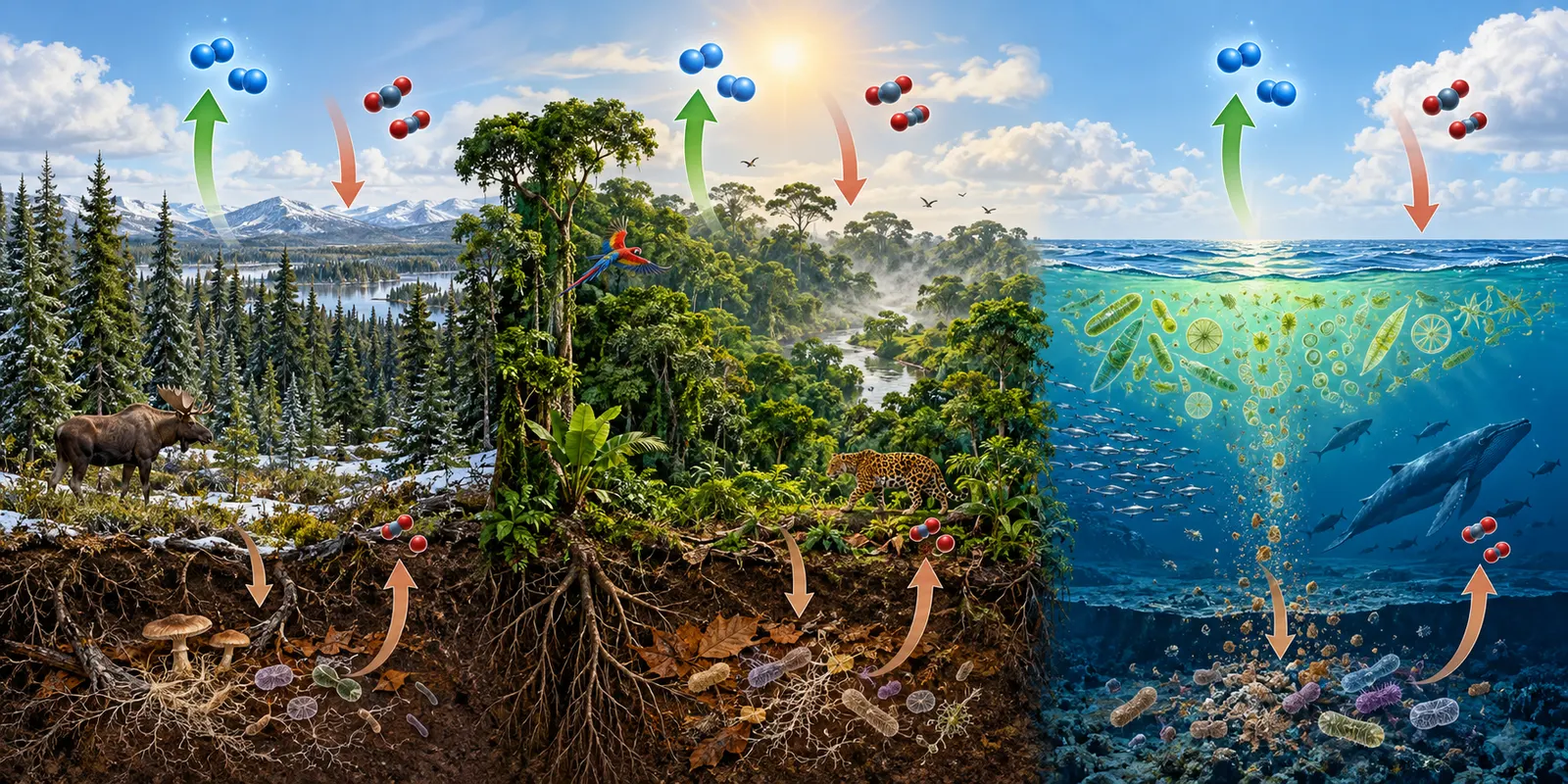
Forests matter for climate and biodiversity; a mature biome’s net oxygen balance is near zero.